
Insight
The brand war in the health market has already begun.

The global big health and medical economy reached a historic high of $6.8 trillion in 2024 and is expected to approach $10 trillion in 2029. This isn't news. What's truly noteworthy are the structural shifts happening behind this figure.
Over the past decade, the competitive logic of the greater health industry has been clear: formula, distribution channels, and price.
But now, these three moats are being lost simultaneously – formulas can be quickly replicated, distribution is shifting from store dominance to a co-constructed trust between clinics and doctors, and there will always be someone who can offer a lower price in a price war.
When the moats are simultaneously shallowing, what determines victory is no longer just the product, but the brand.
I. From Treatment to Prevention: What's Happening in the Global Healthcare Industry
Consumers have changed, but most businesses haven't realized it yet.
According to McKinsey & Company’s 2025 Health Consumer Survey, 84% of consumers view health as their top priority in life, yet only 13% believe they have truly achieved their health goals. This gap highlights one key point: while consumers are placing increasing importance on health, existing brands have not yet been able to effectively meet these expectations.
The problem isn't the product, but that the brand hasn't connected with consumers' hearts yet.
McKinsey & Company further points out that by integrating preventive healthcare, personalized health management, and the longevity economy, there is a potential to create an additional 45 billion high-quality, healthy life-years for humanity globally in the next decade. Behind this figure lies a market demand waiting to be truly addressed.
A deeper change is the shift in consumer decision-making logic: consumers are gravitating towards brands that demonstrate scientific expertise. Claims supported by science or data, and recommendations from trusted sources, are becoming key differentiators for brands. In other words, before making a purchase, consumers first judge whether a brand is worthy of trust. Trust is built before a purchase occurs.
What does this mean for the major health industry? Exposure gained through advertising is rapidly losing effectiveness. Trust accumulated by the brand is the sustainable, compounding asset.
Strong technical capabilities do not necessarily equate to a powerful brand.
In today's information-saturated market, consumers increasingly value the source and credibility of information. "Who says it" often carries more weight than "what is said," which is the core foundation of brand trust.
Pro has served many large health companies and observed a common phenomenon: strong product capabilities, weak brand voice. Many companies have solid research and development and have passed strict international certifications, but consumers' impressions of the brand remain vaguely "professional" or "reliable" – and in the market, almost all brands use these two words, which do not provide a reason for anyone to choose.
What's the problem? Most health and wellness companies' branding efforts remain at the "product level" – equating brand with packaging updates and promotional material creation. However, the core of a brand is the long-term trust and perception accumulated between a company and its consumers. Products can be replicated, but "trust" cannot.
Technical strength has not translated into brand equity, meaning that each round of competition requires rebuilding trust, which is extremely costly and inefficient.
II. Taiwan Market: Kept up with trends, but brand power hasn't kept up
The market is expanding, and so is the competition.
Taiwan’s healthcare industry is also expanding rapidly. Between 2024 and 2025, the annual output value of Taiwan’s health food market has exceeded NT$150 billion and continues to grow steadily at a rate of 5 to 7 percent per year; the total industry output value is expected to exceed NT$300 billion in 2025.The number of clinics reached 23,394 by the end of 2024, marking a 20-year high.
The market is rapidly expanding, and competition is accelerating. Since the pandemic, the number of health brands has increased by over 600, and individual clinics are facing the scale pressure from chain brands and healthcare systems. According to the 2024 Trustworthy Brand Survey by CommonHealth Magazine, nearly 90% of consumers say their purchasing criteria have changed. The logic for brand selection has shifted from "where is it convenient to buy" to "who is trustworthy." The Taiwanese health and wellness market is entering a new phase of competing for trust, professionalism, and content, moving beyond just competing for channels. This transformation is the true starting point of the brand war.
Three brand crises currently happening in the healthcare industry
Consumer behavior in Taiwan's healthcare industry is highly synchronized with global trends. However, Taiwanese companies are still significantly behind market changes in terms of brand building. Most companies are stuck in a "product mindset," equating marketing with ad placement and simplifying brands to packaging design. In contrast, international brands have long invested in brand positioning, brand architecture, and consumer relationships.
Process has served companies in the great health and medical field, and continues to observe global and Taiwanese brand cases. We have found that whether great health brands succeed or fail often isn't due to the quality of their creativity, but rather how they respond to the following brand crises.
We are specifically observing three expanding brand crises:
Brand expansion leads to a blurred brand image.
There is a common pitfall for growing health and wellness companies: in an effort to capitalize on every market opportunity, they continuously expand their product lines, only to end up blurring consumers’ perception of the brand. Whether it’s health supplements, medical aesthetics, or long-term care, each decision may make business sense on its own, but without a clear brand architecture to support it, every expansion dilutes existing brand recognition. Brand equity isn’t accumulated; it’s diluted.
2. Old customers stay, but new customers don't come in.
Many major health brands have a group of loyal long-term customers with high repurchase rates, but they are always unable to break through their existing customer base. This is not a product issue; it's that the brand cannot clearly tell new consumers "who I am and why I am relevant to you." The bottleneck in acquiring new customers often stems from unclear brand positioning.
Generational cognitive gaps
Gen Z and Millennials account for 25% of all health consumers but contribute over 40% of market spending. This group’s criteria for evaluating brands differ sharply from those of previous generations—they demand scientific validation, prioritize brand values, and are highly immune to marketing hype. If brands fail to adapt in advance, this perception gap will ultimately translate into a disparity in the rate at which brands age.
In the context of continuous market expansion, product line extension, and rapid changes in consumer structure, brands are no longer just external communication tools. Instead, they have become key assets that influence whether a company can be continuously chosen by consumers and accumulate competitive advantages. Brands that fail to positively respond to the aforementioned challenges will gradually lose their existing market position in the competitive process.
What did companies that made branding a strategy do right?
In industry-leading companies, the role of brands has shifted from being an extension of products or services to establishing long-term consumer relationships. The gap between companies is no longer derived from a single creative idea or marketing campaign, but from their ability to establish a clear and stable brand position in the minds of consumers through different channels. The following real-world examples illustrate this:
Mayo Clinic: Building Brand Equity Through Content Operations
The Mayo Clinic is one of the most successful examples of global healthcare brand strategy. Their core strategy is very clear: build the brand on knowledge and trust, rather than advertising and exposure.
The "Sharing Mayo Clinic" blog is the starting point for this strategy, creating a continuously producing digital ecosystem with patient stories, physician perspectives, and medical expertise. Their Facebook and YouTube attract millions of views monthly, not through purchased advertising, but through the consistent output of valuable content. They also send personalized health advice to individual patients based on their age, lifestyle, and health status, making consumers feel valued.
Mayo Clinic is positioned in the minds of consumers as "a top-tier medical institution, yet a partner I can trust." This leads consumers to choose them at a much higher rate than competitors when facing serious illnesses.
Kaiser Permanente: More Than a Healthcare Lifestyle
Kaiser Permanente is one of the largest non-profit integrated healthcare systems in the United States, serving over 12 million members. Its brand strategy is built on the core strength of "vertical integration," bringing together insurance, hospitals, physicians, and digital services under a single brand, creating a consistent and seamless healthcare experience.
Its brand campaign "Thrive Your Way" does not promote medical services, but rather conveys a lifestyle—healthy, positive, and holistic care. Through this transformation, the brand shifts consumers from "passive recipients of care" to "proactive health managers," directly responding to contemporary consumers' expectations for autonomous health.
Kaiser Permanente's key to success lies in its brand not just staying at the communication level, but being systematically implemented throughout its entire service—from brand promise to actual experience, every touchpoint conveys the same set of brand values.
Hims & Hers Health: Using Design to Remove the Stigma of Asking for Help
Hims & Hers is one of the most influential cases in healthcare brand design in recent years. Founded in 2017, the brand identity eschews white, blue, and a clinical, cold feel. Instead, it opts for bold colors and product-focused photography. This results in Hims & Hers packaging that looks more like a high-fashion skincare product than a medicine bottle, allowing it to be a part of one's "taste" even when placed on a bathroom vanity. They successfully address a fundamental consumer pain point related to self-esteem – seeking treatment is no longer embarrassing but an act of everyday self-care.
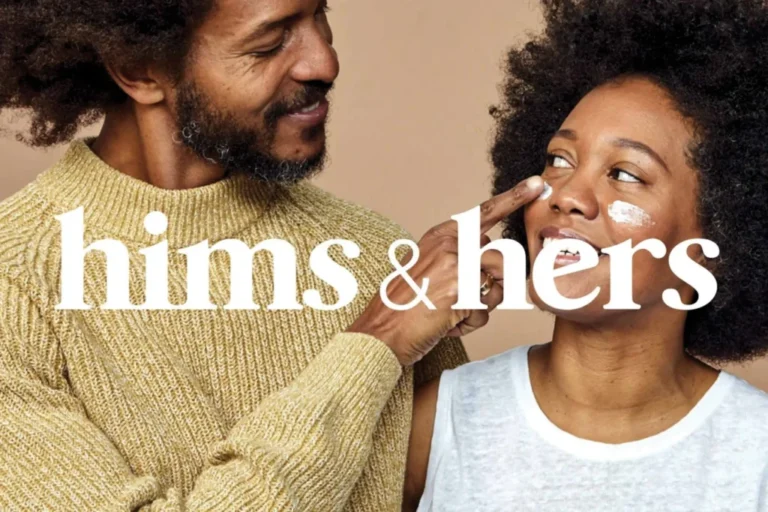
For socially taboo topics like male hair loss and erectile dysfunction, Hims packages them with lighthearted, direct, and low-pressure visual language, significantly reducing the psychological barriers consumers face when seeking help. Hers, on the other hand, uses slightly softer curves and tones to create a brand personality that is feminine yet equally straightforward. Together, they form a clear brand family. Every design decision serves to make the target consumer feel comfortable and recognized, a model that countless brands have emulated since, but few have surpassed.

Looking back at the Taiwanese market
From the cases above, it can be seen that whether it is building trust through content, integrating relationships through experience, or responding to emotions through design, the essence of brand competition always lies in whether long-term and stable relationships can be established with consumers.
Returning to the Taiwanese market, this kind of brand strategy gap remains evident. Most local health and wellness brands still focus on optimizing a single aspect. Whether it's product, design, or marketing communication, they often lack unified brand thinking, making it difficult to systematically accumulate brand value.
This gap also signifies opportunity. When most brands haven't established a complete brand system, any entry point that can prioritize strengthening brand recognition has the potential to amplify influence.
Among these, visual identity is often the most direct and easily perceived starting point. In a market where competing brands generally lack a design language, brands that are the first to establish a clear and consistent visual expression will gain attention and be more easily remembered. However, more crucially, design should not be viewed as a standalone optimization item, but rather as a part of the overall brand system. Only when it operates in alignment with content and experience can it truly be transformed into sustainable brand assets.
6. Brands are the compound interest of time, and now is the earliest beginning.
Brands may need to get involved sooner than you think.
Many decision-makers in large health companies tend to seriously focus on branding only when their performance hits a bottleneck. This point in time is often too late. The essence of brand building is accumulation. Consumer recognition of a brand is not built through a single advertising campaign, but through continuous reinforcement at every touchpoint. Mayo Clinic builds trust with content, Kaiser Permanente builds relationships with integrated experiences, and Hims & Hers redefines communication with design language—their paths may differ, but they share one commonality: they all started earlier than their competitors and never stopped.
The earlier you start, the greater the compound effect. The later you start, the higher the cost of catching up. In the Taiwanese market, brand competition is still in its early stages – this is both a risk and an opportunity. Companies that are first to establish a clear brand positioning will occupy an indispensable place in consumers' minds, and that place cannot be built on products alone.
If your brand disappeared tomorrow, what would consumers regret losing?
It's not that a product is missing, but rather a perspective, a way of life, or a relationship of trust that has already been established.