
Insight
Brand experience shapes the memories and imagination between customers and brands.

(Written by: Wei Hong-ie / Brand Consultant, Process Pro Brand Taiwan)
Weekend, you and your friends in the bustle of the department store strolling between the counter, chatting with a burst of fresh fragrance, you and your friends coincidentally looked up and began to explore, because you know: in this neighborhood around the corner, there should be an Aesop store.
As expected, there is an Aesop store just around the corner in front of us, with large white ceramic tiles decorated with green herbs and plants, the clean and retro-inspired look of the store perfectly blends in with the old neighborhood next to the park. Inside the store, the brand's staff is carefully guiding customers to experience the products under the warm yellow light, while outside the store, three or two customers are waiting patiently, looking forward to entering the space and experiencing the brand's atmosphere.
When it comes to brand experience, Aesop is probably the first brand that comes to mind for many people. Apart from the recognizable fragrance that always pervades the space, is it the same thing that strikes everyone the most during the process of interacting with the brand's various "touch points"?
Is it a simple, artistic store with local elements?
Is it the elegant and delicate manner, the soft-spoken but passionate service staff?
Or how about the delicate and delightful ideas of the store's tea, music, lighting, and quarterly themed visuals ......?
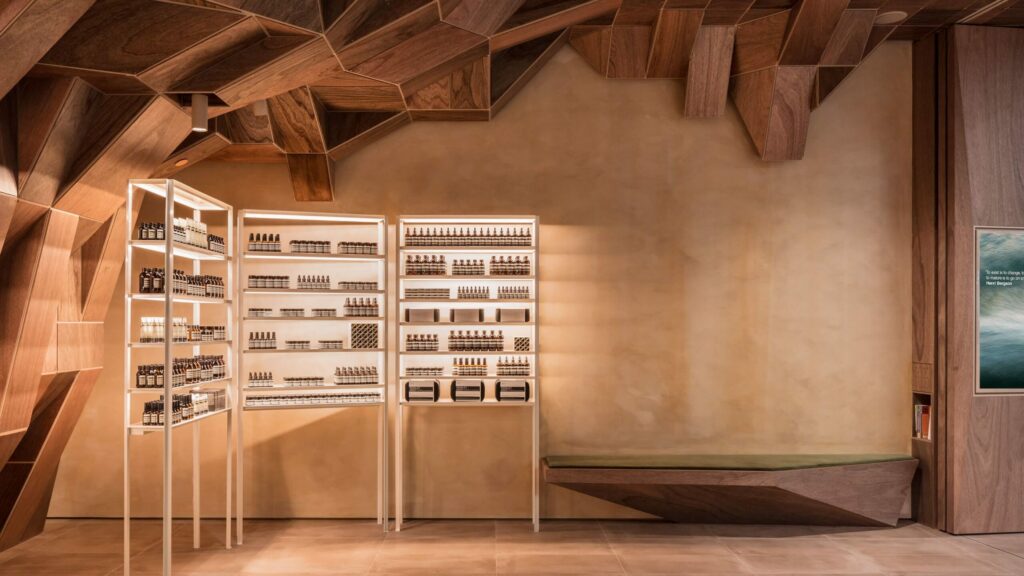
(Source: Aesop official website)
The Soul of Brand Experience: Brand Thinking
Every brand engages and interacts with people in its own space, but in the spaces where Aesop operates, we always seem to get a subtle sense of the brand's thinking and philosophy.
We can find this description on the Aesop website:
"We believe that well thought out designs make life better."
Unlike many brands that communicate directly with the public with a slogan, perhaps due to the fact that the founder majored in aesthetics and philosophy, or that Aesop was founded on the idea of "breaking the rules of the beauty industry", Aesop's brand philosophy is less limited by a clear framework and more like a philosophy that begins with a delicate humanistic observation and continues to expand. Therefore, in addition to the basic logic of thinking, it is able to incorporate more diversified elements: the aesthetics of space, style, or art, literature, environment and social issues, which not only makes the brand communication not limited, but also gives people a sense of the brand's cultural heritage and mysterious aura.
Its emphasis on "humanism, art and aesthetics" stems from its attitude towards "people", both its customers and internal members.
Suzanne, co-founder of Aesop, mentioned in a past interview that one of the key points in fostering the company culture is to have lunch with all the members during the lunch hour. She hopes that by interacting with members over lunch and allowing them to observe the exchange of ideas between executives, they will be able to better recognize the brand's ideas and ways of thinking about different issues. She also believes that by respecting the uniqueness of each individual, Aesop is able to maintain its own identity.
Creating brand experiences: unique culture, observing people in detail
Because brands are experienced by people, in this era of information explosion and rapid change, the key to a deeper brand experience is not only to create a unique culture, but also to be able to "observe the people".
Shaping a unique culture
Whether it is through external consulting firms, with an objective perspective and branding tools, to jointly establish the brand vision and mission, brand positioning, value proposition...and other brand strategy foundations, or internal communication and discussion from an open and inclusive perspective, to produce a unique brand strategy that can resonate with the company, all of these are things that need to be carefully thought out and confirmed prior to communicating externally, and before brand experience is conducted, in order to This is to avoid that the effort spent on experience and communication only becomes the incidental information of promotion or the noise in the sea of information in the consumer's mind.
Observing people.
Similarly, in order to understand how the target group thinks, you can obtain more in-depth, structured consumer insights through customer surveys conducted by external consulting firms. Or internally, through sales and customer service personnel, the company can collect information to obtain insights on its own. Through the insights, we can penetrate into consumers' minds to find out what pain points we can solve besides the "functionality" of the product. What kind of beautiful imagery can we give them? Through the insights from the consumer journey, we also know what experiences we should create and what messages we should convey at each "touch point". With limited resources, we are able to determine which "key touchpoints" a brand should focus on to achieve twice the result with half the effort.
Brand uniqueness translated into real-world experience
Let's go back to the short description of the Aesop store at the beginning of this post, and we'll actually find that every detail is an embodiment of the brand's philosophy, a successful example of the brand's ability to translate its ideas in a subtle way.
Serving the community at large Premium Supermarket Mia C'bon For example, after completing the brand foundation with the brand team, we developed a new identity system according to the strategy. In addition to designing brand fonts that match the brand's "modern, energetic, and friendly" personality to be applied to experience touchpoints such as the signage, uniforms, and carrier bags, we also created a dedicated sound identity to give consumers a textured and energetic brand atmosphere as soon as they step into Mia C'bon.
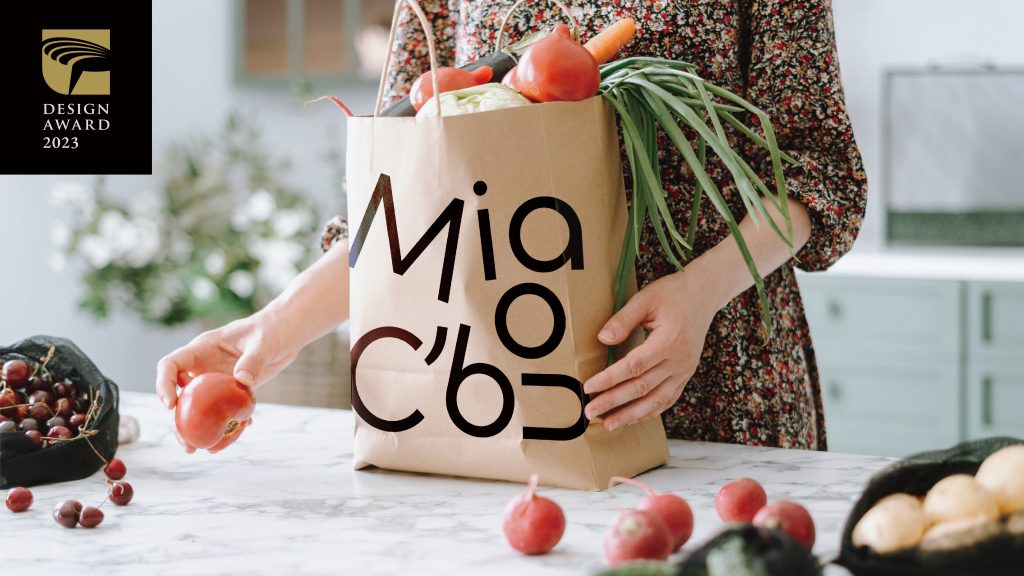
The slogan "Because I choose it, it makes a difference" is the brand's response to consumers' expectations that while pursuing taste, they also want the world to be a better place. In Mia C'bon, you can also find many local small farmers' products, which are cultivated with sustainable farming methods and raised with animal-friendly farming methods, so that consumers can feel the brand's vision in the products that they choose.
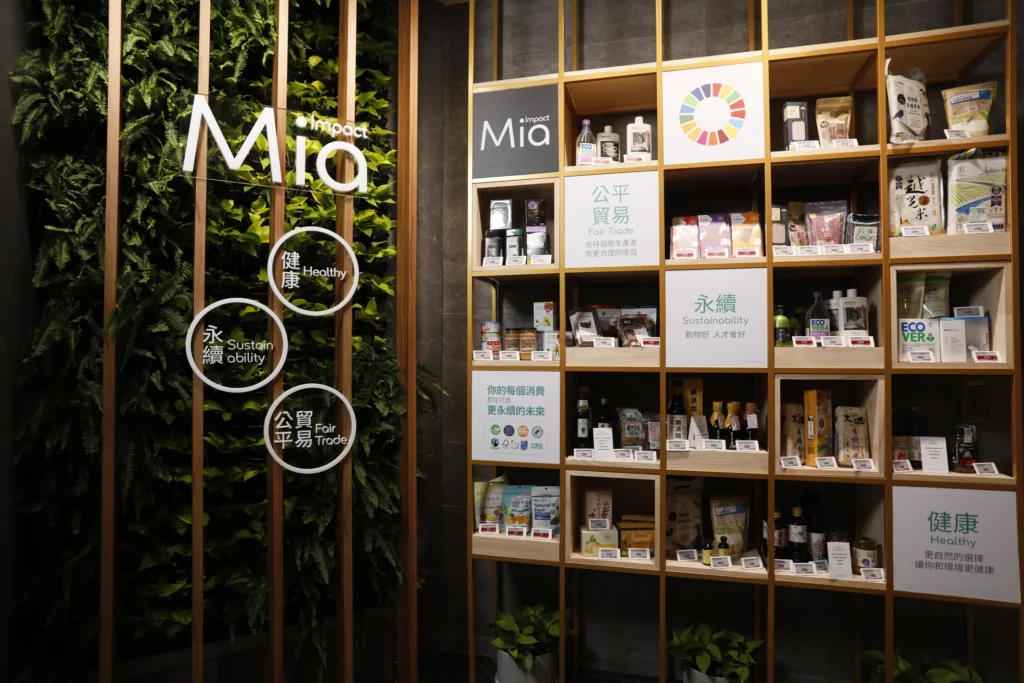
(Source: GQ Taiwan)
Creating a brand experience for customers is more than just communicating externally.
In fact, the most difficult part of brand experience shaping is "people".
It is often found that the same brand store will be received by different staff, resulting in a huge difference in experience. This is because a brand should be built on the common beliefs of all brand-related members. Therefore, in addition to "brand lovers", the recognition of "brand internal members" is also very important. When a brand is successfully internalized in the minds of internal members, their words and actions will reflect the brand's image, and create a suitable brand experience for customers.
As quoted at the beginning of the Aesop brand book:"If you want to build a ship, you don't gather people together to gather wood, divide up the labor, and tell them what to do. Instead, teach them to yearn for the endless expanse of the ocean."
Antoine de Saint-Exupery, author of The Little Prince.
Branding is a never-ending process of dreaming and realizing, and brand experience is what makes this dream accessible.
Because we share the same yearning for the ocean, the boat builder will look at the wood and hammer it with anticipation, and the boat rider will touch the same piece of wood, marvel at its suitability, and look forward to hoisting the sails and sailing with the brand to the faraway place it promises.
