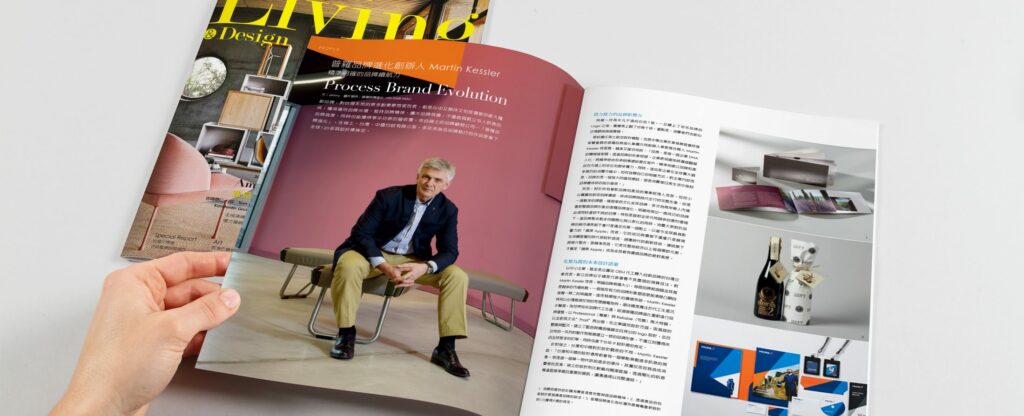
Insight|Event
Let your brand tell a good story

"Why don't consumers buy our products when they are so good?" Many enterprises often wonder why their products do not sell as well as expected even though they have spent a lot of money on promotion, or why they fail to impress consumers in a competitive market. In this branding salon, we not only invited Martin Kessler, founder of Process, Jules Li, former general manager of Process, and Sophia Tseng, general manager of Lianyi Public Relations, to share their rich experience in the industry and successful cases at home and abroad, and to share their experiences on how brand strategy and design can create a branding DNA for a company, and how to utilize the power of public relations. They will share their rich experience in the industry and successful cases both at home and abroad on how branding strategy and design can create a brand DNA for enterprises and utilize PR's communication power and brand management to accurately convey the brand image to enhance the brand value and ensure the sustainable operation of the enterprise.
Before the seminar, we asked Sophia and Jules to briefly explain the importance of brand identity design and public relations as two integral elements of modern business.
Brand Identity Design = Finding the DNA of your corporate brand
Jules: Whether you are starting your own business, transforming from an OEM to a private label, or a well-established company wanting to break through to the next level, you need to build a very clear brand positioning. Therefore, through our professional analysis, we find the USP (Unique Selling Point) of the enterprise, shape the DNA of the brand, and then provide the main strategies to design an overall corporate identity system (CIS), which can be further divided into BI (Behavior Identity), VI (Visual Identity), and II (Identity). If subdivided further, it can be divided into BI (Behavior Identity), VI (Visual Identity), and MI (Mind Identity).
Many companies do whatever comes to their mind due to lack of experience; or because of budgetary constraints, they contract different parts of the design process to different teams, resulting in "patchwork design": store space, products, website, and even the behavioral style of the staff are each in their own way; there are also companies that just follow fashion trends, which makes it impossible for consumers to feel the consistency and identity of the brand, and of course, the unique character is lost. Some companies just follow the fashion trend, which does not let consumers feel the consistency and recognition of the brand, and of course, lose its unique character.
PR = Tell a good story for your brand
Sophia: Brands have lives, they can't just be created and ignored. The responsibility of PR is not only to "tell a good story for the brand", but also to continue and develop its brand spirit. Therefore, if a company has established a clear brand strategy and a clear foundation of identity, the PR agency can more accurately market to the target audience. On the other hand, if a company does not have a clear brand DNA, the PR agency will have to spend a lot of time figuring out the brand's personality, tone and voice. If a different PR agency is called in for each marketing campaign, it is likely that each agency will have a different interpretation of the brand, which will blur the brand image even further. As a result, even if a large amount of money is spent on advertising and marketing, the effect is often discounted and not fully reflected in the expected sales results.
A corporate brand is like a living organism that requires long-term care and maintenance in order to grow and thrive.
Tsang Sau Yee, General Manager, Luen Yee Public Relations
UNIQLO, for example, has a very clear corporate identity and brand strategy, so everything from the writing of press releases to the visual design of promotional campaigns must be in line with the brand's restrained, down-to-earth character. One of the very important central ideas is the "Power of Clothing", which includes the work ethic that Japan is proud of, but also extends to local care programs. For example, in Taiwan, there is a yearly "clothing recycling and redonation to disadvantaged families in Taiwan" fundraising program, and there are also one-day sales clerks for children in remote villages, so that these children can gain more positive and active power from the program, which has also been successful. It has also successfully planted the corporate brand's sustainable and caring image in people's hearts.
Jules: This also reminds me of the well-known brand "Cuisinart", which has made adjustments to its brand identity in response to market demand during the past global marketing process. However, as time goes by, in the increasingly globalized and digitalized environment, the brand strategy has changed to a more concise and consistent image to communicate with consumers. Therefore, the Process Shanghai and Taipei offices have been working on the brand identity for Cuisinart in China and Taiwan respectively, so that Cuisinart can have the same look regardless of the markets of the U.S., Japan, China, and Taiwan, and laying the foundation for the subsequent marketing promotions and communications. It also lays the foundation for subsequent marketing and communication so that the brand's story can be better told.
Generally speaking, local enterprises do not have such a clear brand strategy and identification as international enterprises. When I was working as a marketing public relations officer, I sometimes felt that the branding standards of these international companies had a framework and that there was limited room for public relations, but in fact, if we look at the results, a good branding strategy and corporate standards will indeed lead to better marketing communications.
In the digital age, PR takes on the responsibility of brand management
Sophia: Apart from publicity and marketing, PR is also responsible for helping companies manage their brands. Especially in the digital era, where the Internet is spreading faster and wider, PR has two important roles to play in brand management:
1. Defense.
When brands and products are successfully marketed, parallel imports and imitations will appear one by one, causing consumer confusion and even negative comments. If these products are ignored or just deleted hastily, it is very likely to cause more damage. How to face these problems that will affect the brand of a company, and how to minimize the damage through public relations operations.
2. Prevention of potential crises.
By working closely with a trusted PR firm, potential crises can be identified in advance through systematic and organized analysis and research, and a crisis alert protection network and crisis management SOPs can be established in order to prevent and eliminate crises, and even discover opportunities in crises and take advantage of them to further operate as successful marketing. Jules: To put it simply, brand strategy and design are the essence and foundation, while PR and marketing are the continuous irrigation. I think both need the ”3Cs” in order for a corporate brand to be healthy and strong.
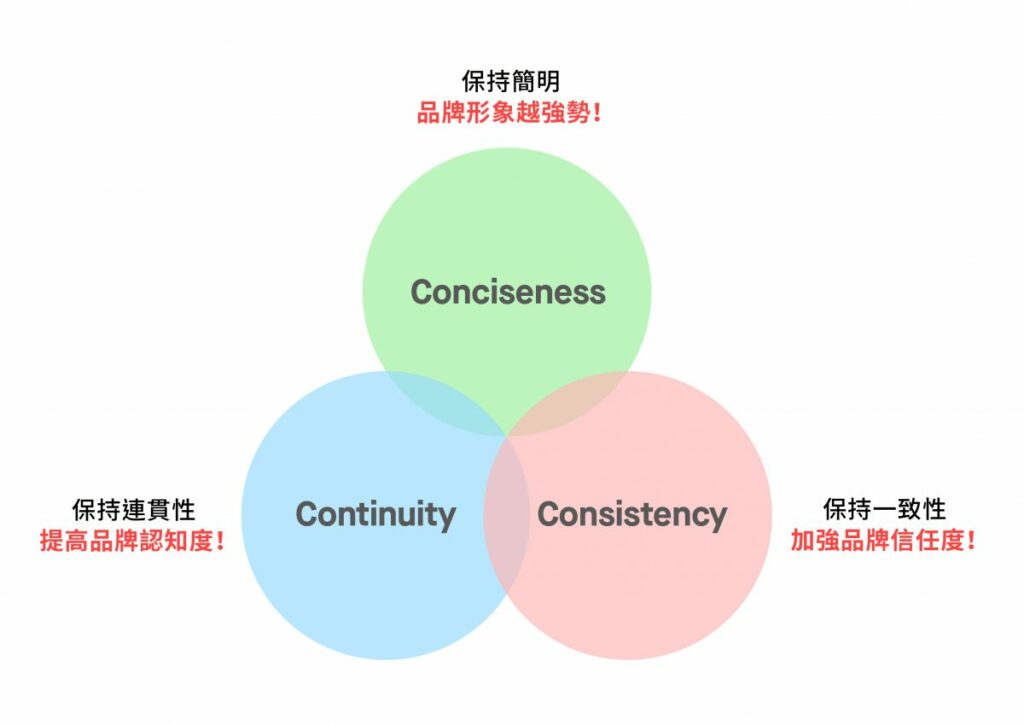
With branding strategy and design, the unique selling points of the core of the product/service are first presented concretely, and then relayed by public relations for continuous dissemination and continuity, in order to substantively enhance the business value of the enterprise and gain greater revenue.
Insight