News
The Big Demystification! Protecting Brand Value, What You Should Know About Trademarks
It is not an easy process to build and design a brand that represents the image and reputation of an enterprise. However, many enterprises often because of weak brand planning awareness, or a moment of negligence, did not register its trademark in time to protect the brand, the result is that other enterprises registered first or imitation, which not only brings enterprises huge economic losses, but also will make the enterprise painstakingly operated by the brand reputation and image of the serious damage.
In order to protect the brands and products that are hard-designed and operated, the registration of trademarks and patents is a very important step in the whole process of brand building. Sean Cheng, who is currently working as a consultant at Alltech International Patent & Trademark Office and is also a patent attorney in Mainland China, pointed out that there is no specific law called "Intellectual Property Law" in Taiwan, but rather, there are different laws such as the Patent Law, the Trademark Law, the Copyright Law, and the Trade Secrets Law, etc., which are used in different areas to protect the intellectual property rights.
As long as it is a distinctive sign that can identify a certain commodity, service, or a specific individual or enterprise related to it, whether it is a graphic, mark, word, sound, color, motion, or three-dimensional image, it can be called a trademark. For example, Nike's check mark or the bell of the automatic door of a family convenience store are all trademarks. Therefore, in terms of protecting a trademark, in addition to the above elements that constitute a trademark, the most important thing is that it should have a distinctive character that is not easily confused.
The key to trademark registration is "identifiability".
When designing brand and trademark elements, you should first consider the factor of "whether the trademark can be registered", and avoid "non-identifiable" graphics or text elements, so that when filing an application, the chances of approval for registration will be higher.
According to Cheng Wing-cheung, the main function of designing a trademark is to allow the buyer to recognize the source of the product or service, that is, to allow people to tell at a glance "who sells it". Generally speaking, such recognizability can be divided into two types: innate and acquired. "Innate recognizability" refers to the fact that a trademark can be immediately recognized without being used. For brand designers, there are several directions to follow if they want to design a logo with innate recognizability, in order of recognition strength:
| Original Logo | Most recognizable | A term that is created by the use of ingenuity and is not based on an existing word or thing, does not have a specific existing meaning, and is created for the purpose of identifying and distinguishing the source of its goods or services. | For example, "Google" is used in search engine services, and "Proton" is used in television and audio products. |
| Arbitrary Labeling | Medium Recognition | It is composed of existing words or things, but has nothing to do with the goods or services themselves, or with their quality, function or other characteristics. Because this type of labeling does not convey information about the goods or services, and does not have a descriptive meaning, consumers will treat it directly as an indication and distinguishing source. | For example, "apple apple" is used for 3C products such as computers and cell phones; "white horse" is used for tiles, floor tiles and wall tiles. |
| suggestive labeling | Weak recognition | Implied metaphors suggesting the quality, utility, or other characteristics of the goods or services, such as ingredients or properties, that are more readily recalled by consumers, but are not necessary or customary in competing industries to describe the goods or services. | For example, "Quick Translate" is used in electronic dictionary products, "Foot Sharp" is used in athlete's foot medicine products. |
The so-called "acquired identity" means that after a long period of time in the market, the relevant consumers have already regarded it as a mark to distinguish its origin. At this point, the mark has the function of a trademark, and of course, it can also apply for trademark registration to protect the interests of the brand. The most well-known example is "Burberry Check". Since the brand has been established for more than one hundred years, it has been using the black, red and beige interweaving check pattern as the basic pattern of its merchandise, which is used in the production of clothes, handbags, clothing accessories and other merchandise, and has been widely publicized and advertised in various media, and has its recognition and popularity in the whole world, therefore, the check pattern is also used as the basic pattern of its merchandise. This check pattern was later approved for trademark registration.
Create brand uniqueness and increase the success rate of trademark registration
When creating a "brand", many owners often only care about whether it sounds good, reads well, and is memorable, but do not consider whether it can pass trademark registration, or even just follow the trend at the time. For example, the names "Jia Lai Bao" (similar to "Jia Lai Bao") and "Ning Jiuling" (similar to "Zero Scar Ninh"), which are used for the same goods/services, or the names of other brands are directly used for other goods/services such as "Dongson Mineral Water", which can easily confuse consumers and lead to misidentification. Or directly using other brand names, but using them for other goods/services, such as "Tonson Mineral Water", etc., which is easy to confuse and mislead consumers. Cheng reminded that, in order to protect consumers and the rights and interests of the original registered trademark, if the uniqueness and distinctiveness of the trademark is not obvious enough, the chances of passing the examination will be very low, and in the end, one will have to spend a lot of money on modifying the brand name, or even be sued by the original trademark company, etc., so one has to be careful.
Therefore, it is very important to seek professional assistance when creating a brand," said K.R. Lee, Honorary Consultant of Process Branding Taiwan, who pointed out that a professional branding design company will help owners analyze competing brands to find out the commonalities and differences of the industry, and then design a brand logo with uniqueness and identity in the market. At the same time, the owner will also be advised to conduct a trademark search with the assistance of a firm specializing in intellectual property rights to provide the most suitable trademark registration proposal to ensure that the brand name is free from any infringement.
Mr. Cheng Wing-cheung also added that some owners, after designing the name and trademark, searched the official database on their own and found that there was no identical trademark, so they happily sent in the application, but in the end, the application was still returned.This is because the owner may have excluded only the "same" part of the case while ignoring other "similar" cases. Or, in the application, if only part of the trademark may be similar to other trademarks registered first, you can apply for reduction or division of the same or similar part of the goods/services in order to exclude the conflict of confusion and misrecognition. In addition, if the applicant is going to develop in a foreign market in the future, the differences in laws and regulations of different countries and whether the trademark has already been registered by the local enterprises, etc., these various "frowns" when applying for trademark registration can be discussed with the trademark and patent firms to improve the success rate of trademark registration.
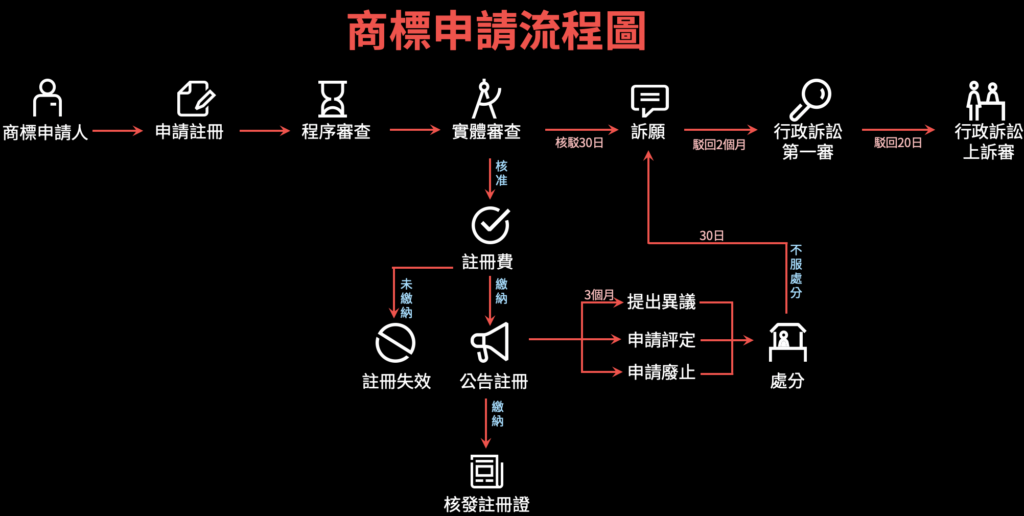
"Trademark registration is determined by the time of application.
He also re-emphasized that in practice, it is often encountered that the applicant's "brand" has been marketed for a period of time, and "only then" thought of or "only then" prepared to apply for a trademark. Therefore, enterprises and companies are reminded that, once they confirm the name and trademark, in addition to the business registration, they also have to remember to register the trademark with the Wise Financial Services Bureau (WFSB). This is because trademark registration is usually a "first to win, first to win" process. If the trademark is successfully registered by someone else, not only will they lose the ownership and use of the trademark, but they will also be sued by others for trademark infringement and have to pay a huge amount of compensation.