
Insight
Digital communication for branding

(Translation: EPILEDS YEH / Creative Director, Process Pro Brand Taiwan)
In 2018, the internationally renowned brand Burberry unveiled a brand new image, with a more simple and recognizable visual language to break the established impression of 20 years, Burberry with a more vivid and flexible communication system, combined with digital communication mode, with a new and diversified attitude to face the future market.

Burberry brand image (Image source: Farest Fashion)

Burberry's old (left) and new (right) logos (image source: Hagopian Ink)
In addition to providing good products and services, how to continuously communicate with customers is also an important issue in the long-term operation of a good brand. Nowadays, digital media has become a necessary channel to connect with the world. Digital communication in the context of brand building can help brands to be more effective in the market.
Why do brands need to digitize their communication?
With the prevalence of mobile devices in recent decades, social media has become the main medium of communication in the market, and people's habits in receiving information are also different. This year, Taiwan's telecommunication companies, in response to the policy and the needs of the times, have carried out 5G services after the launch, human beings will enter the high-speed Internet life, in this new milestone Bei, in response to the trend of the consumer group has been changed, the brand's digital communication is even more important.
Recently, the impact of the COVID-19 epidemic has greatly reduced the effectiveness of offline contact points such as paper books, exhibitions, stores, etc., while increasing the importance of online contact points such as e-commerce. If a brand has established a good digital communication mechanism, it will be able to keep in touch with its customers when the physical pipeline is in a state of flux, fill in the gaps in cash flow and information flow, reduce the negative impact of the epidemic, and even grow against the trend.
How should brands respond to the wave of digitalization?
Since the rise of the Internet, many brands in various industries have adopted digital communication. In today's digital environment, how do you effectively communicate your brand's unique strengths? We propose three key points:
1. Make the brand a media center
Brands now have to be proactive and present to their customers all the time. In the early days of banking, transactions were limited to the hours of 9:00 to 15:30, but in the digital age brands have moved towards year-round service through the use of apps or other online service mediums.
“There are many opportunities for us to be more proactive in connecting with and fulfilling multi-dimensional promises to our consumers or customers when we utilize the many opportunities that self-media can provide for us, and we can't just think of our brand's website as the embodiment of an online catalogue.”
Based on the characteristics of its own industry, each brand can choose the appropriate media channels or forms of expression for communication and continue to develop content or stories to maintain interaction with customers. Therefore, the digital communication of brands breaks through the limitations of traditional media, not only communicating directly with consumers in a more flexible and real-time manner, but also accumulating relevant consumer behavior data as the basis for subsequent re-marketing.
Before creating your own media, it is still necessary to define your brand, find out the "high relevance" of your main customer groups (read more: why understanding your target groups is so important to your brand), formulate a brand strategy, define your own brand message, stick to your brand message regardless of the communication channels, and communicate in a consistent but flexible way, so as to continue to build up your brand equity.
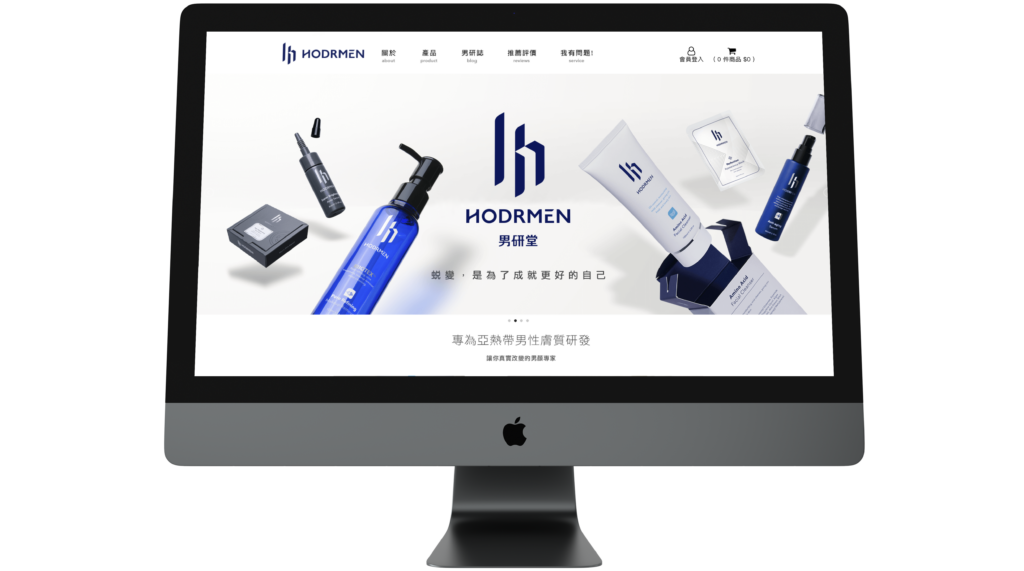
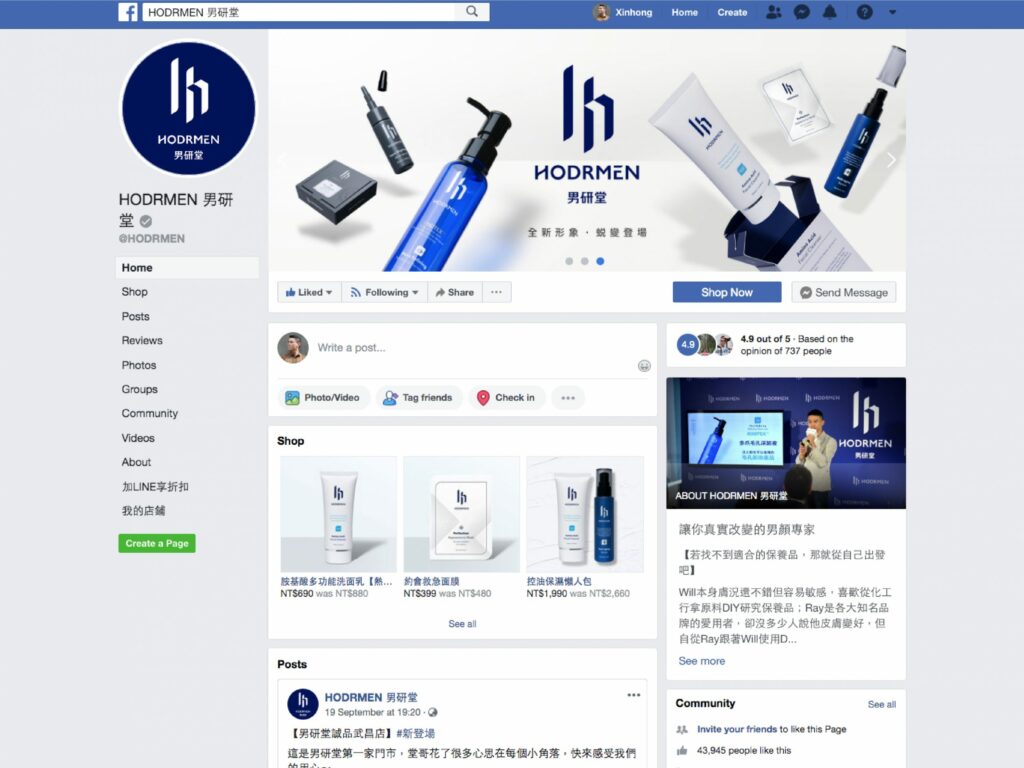
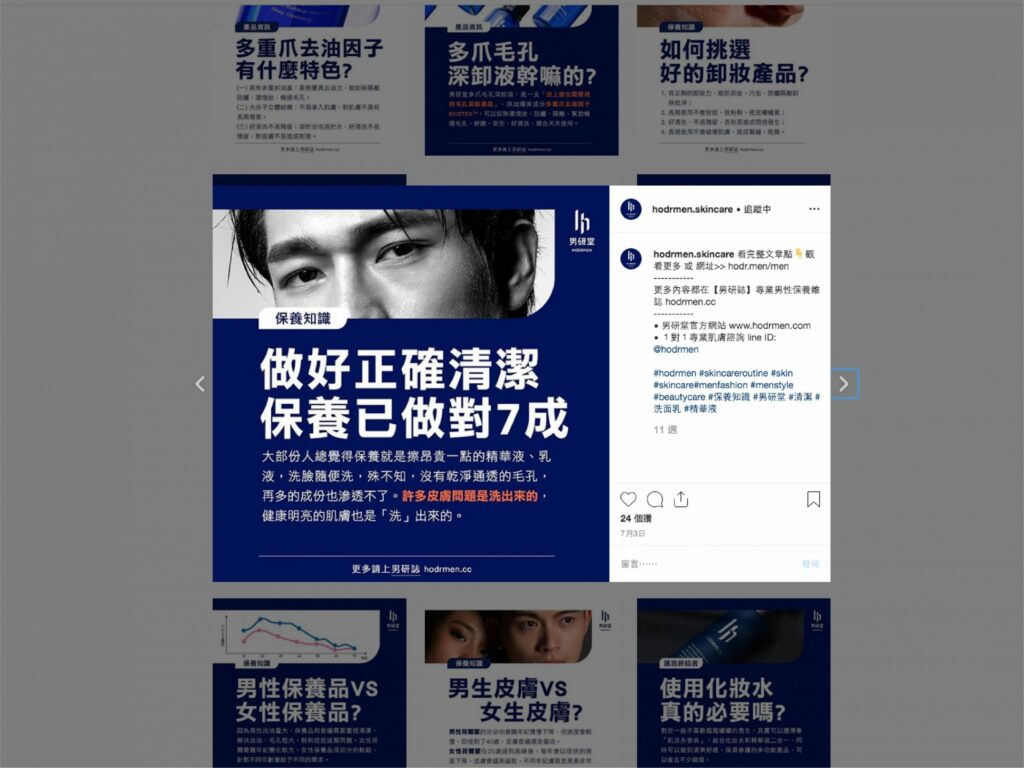
ProcessPro Branding assists HODRMEN Men's Study Hall® in executing the processes of front-end analysis, brand strategy foundation, brand identity strategy, brand design application, and brand management, so that Men's Study Hall, which uses self-media as the core of its communication, can maintain its connectivity with its customers.
2. create a flexible brand identity
In the face of digital communication, the field of brand identity application will become more rich and diversified with the evolution of media, from the existing website and electronic banner in the early days to the booming new technology applications such as moving image, video, online interaction, and even AR, VR, etc., which are expected to become more and more popular in the 5G era. In the face of this situation, brand identity must change from the original thinking of graphic design to understanding the nature and characteristics of multimedia, and establish a systematic use of design in order to continue to accumulate the brand impression of consumers.
Digital communication opens the door to greater flexibility and variability for brands. A good brand identity can accurately represent the brand message at each digital touch point through specific visual behavior, but it still needs to adhere to a coherent and systematic branding specification. On the other hand, if a brand develops its design only according to the current fashionable vocabulary, its uniqueness will disappear over time.
Here, I would like to remind you that, no matter the development of online or offline communication channels, we need to make good use of the brand's spirit, story, or the characteristics of the industry to create inspiration, and develop unique identifiers to help differentiate between competitors, and one brand, one language is the most fundamental principle in order to effectively increase the consumer's memory of the brand.
In the process of brand identity construction in the digital environment, we need to have the following two points to think about:
a. Visual Communication Dynamization:
Visual graphics play an important role in branding applications. In response to the dynamic reading environment of modern digital platforms, brands need to develop a dynamic identification system based on different social media or websites to effectively attract customers' eyes and stay in the vast sea of the Internet through distinctive and flexible visual effects. Video Player
(Case 1: Chun Hing Aquatic Products) Chun Hing's dynamic identity can be applied to websites, videos, and social communication through the infinite expansion effect and multi-directional development of dynamic performance.

(Case 2: CYP Technology) The CYP logo takes the shape of a product cube and incorporates the three letters of CYP as a symbol, realizing the characteristics of the product's square shape and incorporating the imagery of a tree's annual cycle, conveying the company's stable and strong trajectory, and enhancing the connection between the symbol and the company's name and industry characteristics.
b. The interface between the design elements and the digital environment:
Traditional printing methods have limited our imagination of color application, but the digital environment has broadened our application of brand color gamut. When constructing corporate standard colors, we can define and match them with rich variations, such as gradient color variations and fluorescent color application, which are difficult to achieve with traditional printing, can be richly presented in the digital pipeline. In addition to color, fonts are also an important element in the evolution of the interface. We need to choose fonts that are suitable for viewing on the screen in a more delicate way, which is more friendly to help the viewer feel more comfortable when viewing, and helps the willingness to read for a long period of time.

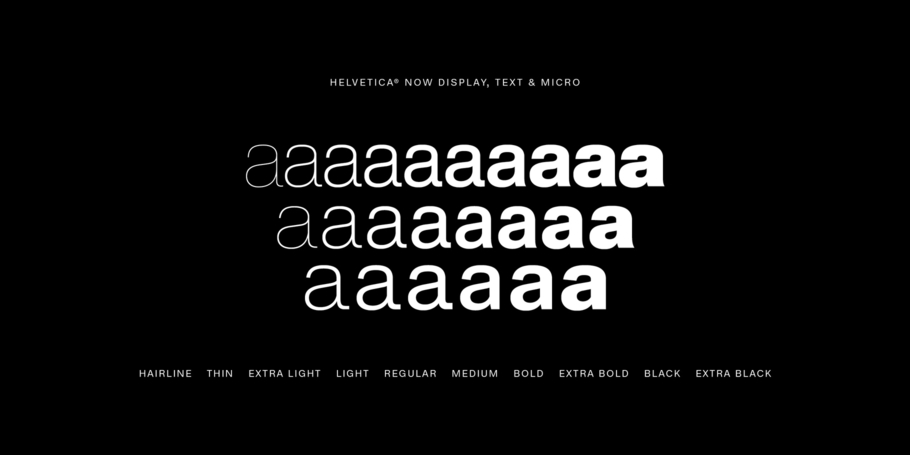
Helvetica presents Helvetica Now, a set of fonts for multiple platform environments, of which the Micro series can be used for browsing on small digital devices. (Source: Monotype)
3. Customer journey into digital experience
Modern digital technology is changing day by day, we can directly choose and apply more diversified ways, including VR, AR, full-image projection, APP...etc. The construction is very perfect, how to "choose" the right tool to apply in brand digital communication?
“We can focus on brand strengths through customer experience journeys and let digital usage add to the brand, we must first identify the ”sweet spot' where our established strengths combine with digital tools, not just do it for the sake of doing it."
In other words, based on the attributes and benefits of the customer's original preferences for the brand, the use of digital tools to further enhance, or even boldly explore, new needs, expand the customer's imagination of the brand, and bring a familiar yet new “vision“.
Rink Bingo, transforms the ice hockey rink into a bingo game, creating more interaction with consumers and offering them more discounts and offers on consumer products. (Source: ICE HOCKEY CLUB DAVOS)