
News
Foresight 2020 Strategy Summit: Welcoming Taiwanese Businesses and Creating Wealth in Taiwan
To welcome Taiwanese businessmen to create wealth in Taiwan, the health industry and circular economy are most favored by all walks of life.
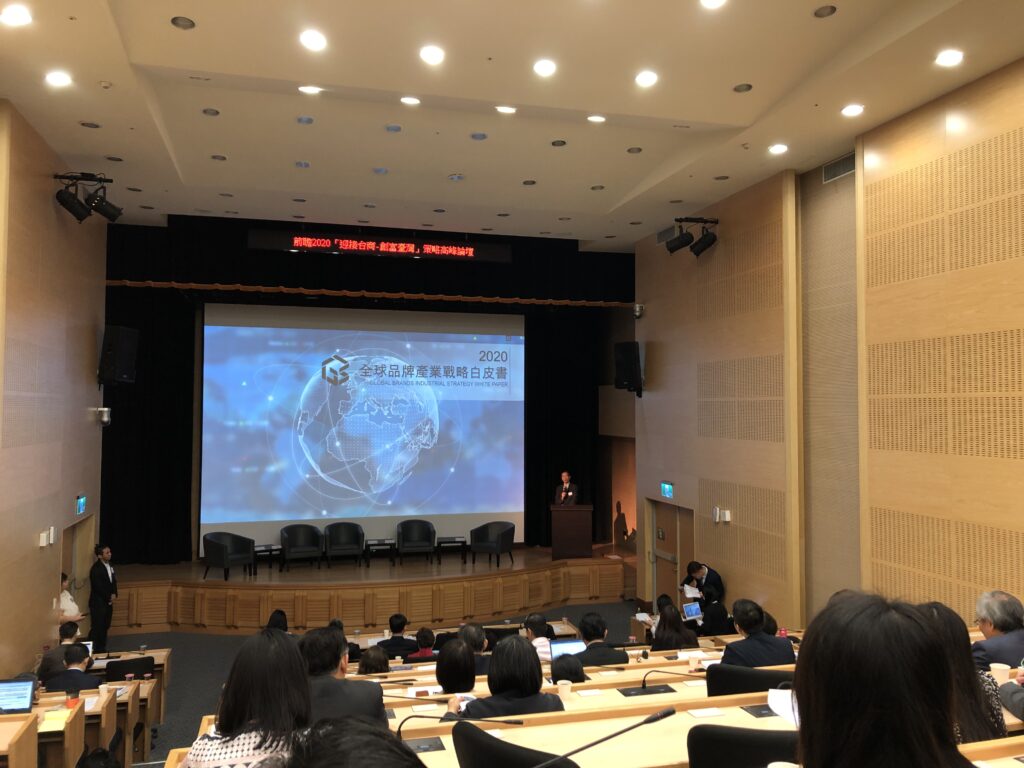
As the trade war between China and the United States seems to be heading towards a long-term war, the trend of global supply chain relocation has brought momentum to Taiwan, with Google and Microsoft expanding their investments in Taiwan, and the Taiwanese government launching policies to attract Taiwanese businessmen's capital to return to Taiwan, Taiwan's stock market is among the best in Asia in terms of cost/benefit ratio and rate of return. The "Welcoming Taiwan Businessmen. At the "Foresight 2020 『Welcome Taiwanese Businessmen, Create Wealth in Taiwan』Strategy Summit" on December 17, 2019, especially the health industry and circular economy were most favored by all walks of life.
UNCTAD* estimates that Taiwan is one of the biggest beneficiaries of the accelerated shift in global supply chains.
National Development Council Director of Economic Development Wu Ming-hui pointed out that the WEF 2018 and 2019 Taiwan in the Global Competitiveness Report for two consecutive years in the world's top four innovators, and Taiwan's ease of finding skilled employees in the world's seventh, showing Taiwan's international competitive advantage, so the semiconductor industry, the Netherlands ASML, the U.S. Applied Materials, the Japanese company Dyamax, Micron to expand investment in Taiwan, the same move in the information and communications industry, such as U.S. Ultra Microcomputer, Google, Amazon cloud services company AWS, Microsoft, as well as the German company Merck & Co. The same move can be observed in the information and communications industry, such as American Super Microcomputer, Google, Amazon's cloud service company AWS, and Microsoft, as well as in the biotech and medical industry, such as German Merck Group, Hong Kong-based SHL, and Japanese biotech company Densho. In recent years, due to the uncertainty of trade between China and the U.S., many large factories in China are looking for countries to relocate to. This is an opportunity for Taiwan to accelerate the shift of the global supply chain, and UNCTAD estimates that Taiwan will be one of the largest beneficiaries, especially in information and communications and audio-visual products. In response to this trend, the Taiwan government has also put in place relevant policies to boost the momentum, such as assisting in quick financing, meeting the demand for land and a stable supply of water and electricity, and a dedicated platform for tax purposes, etc. In 2019, there will be 160 Taiwanese businessmen investing in Taiwan, amounting to about $709.7 billion. In terms of retaining and attracting talent, 508 employment cards have been issued, and the relocation of YouTube founder Chen Shijun back to Taiwan highlights Taiwan's international competitiveness.
*The United Nations Conference on Trade and Development (UNCTAD) in Chinese.
To welcome Taiwanese businessmen to create wealth in Taiwan, the health industry and circular economy are most favored by all walks of life.
As the trade war between China and the United States seems to be heading towards a long-term war, the trend of global supply chain relocation has brought momentum to Taiwan, with Google and Microsoft expanding their investments in Taiwan, and the Taiwanese government launching policies to attract Taiwanese businessmen's capital to return to Taiwan, Taiwan's stock market is among the best in Asia in terms of cost/benefit ratio and rate of return. The "Welcoming Taiwan Businessmen. At the "Foresight 2020 『Welcome Taiwanese Businessmen, Create Wealth in Taiwan』Strategy Summit" on December 17, 2019, especially the health industry and circular economy were most favored by all walks of life.
In the cloud era, business models will be more important than technology, software more important than hardware, innovation more important than experience, and online more important than offline.
Huang Qiyuan, President of Blue Wave Asia, believes that the U.S.-China trade war will be a long-term confrontation, China and the United States will eventually decouple and diversion, foreign enterprises and foreign businessmen to accelerate the escape from China, Microsoft, Google embraced Taiwan to increase investment in Taiwan, foreign private equity funds to invest extensively in Taiwan, Taiwan's off-shore wind power is also highly optimistic about the foreign businessmen. However, Taiwan's SMEs also have challenges to face, such as intelligence and digitization. The future is the era of the cloud, in which business models will be more important than technology, software is more important than hardware, innovation is more important than experience, and online is more important than offline. Another key to the success of Taiwanese enterprises in the cloud era is globalization, and Hon Hai is the most well-known case, Hon Hai's merger and acquisition of Sharp, high-profile frame Trump went to the U.S. to set up factories, and so on, are the footprints of the globalization of Hon Hai.
Assisting Taiwan to incubate the strength of the R&D championship team cannot be based on technology alone, but also on the availability of talents, internationalization, and government funding.
ITRI Vice President Peng Yumin from Taiwan's population aging rate to see business opportunities, so the ITRI actively develop home health care technology, for example, from the hospital statistics per bed care patients fall an average of 1.5 times a year, the ITRI development of fall detection technology will be able to play a role in the future research and development of the direction and focus of the smart life, sustainable environment, but the ITRI to help Taiwan to develop the strength of the Championship team! We can't just rely on technology, but also have talents and internationalization in place.
Kao Chi-chu, chairman of ITRI, pointed out that Taiwan's investment capital for new innovation is seriously insufficient, with the annual amount of $600 million obviously lagging behind that of South Korea, and suggested that the Taiwan government should make changes to the policy of new innovation industry, such as tax deductions, encouraging and relaxing the investment of domestic and foreign financial and insurance institutions, and the government fund to take the lead in investing, and so on.
Mr. Chien Li-chung, General Manager of the SFC, said that Taiwan's capital market has multiple options to fill the capital gap, such as listing, over-the-counter (OTC), creating an OTC, and emerging OTC, and that the STO, a securities-based token issuance, is also under study.
Wang Yongxin, Director of Securities and Futures of the FSC, pointed out that in order to promote Taiwan's return to Taiwan for listing and fundraising, the IPO examination time has been shortened to 6 weeks, and the special law on the foreign capital repatriation management campaign implemented on August 15, 2019, allows repatriated foreign capital to be eligible for rental tax benefits, with the actual tax rate ranging from 4-51 TP3T.
Building Taiwan into Asia's Financing Center
The chairman of the Securities Dealers Association, Ms. Herman Hoffmann, pointed out that Luxembourg is surrounded by first-tier international trading markets such as London, Frankfurt, and Paris, but the Luxembourg Stock Exchange is characterized by its focus on financial commodities, and its trading turnover far exceeds that of Taiwan's. The Luxembourg Stock Exchange is smaller than Taiwan's, and its geographical environment, surrounded by powers, is similar to that of Taiwan. Luxembourg's land is even smaller than Taiwan, the geographical environment surrounded by the Great Powers is also very similar to Taiwan, the Taiwan government obviously also has a niche for development, so when the Taiwan government called out to create Taiwan as the financing center of Asia at the same time, the government relaxed the OBU and DBU restrictions on the movement of funds, OBU account opening restrictions are also relaxed.
The chairman of the Futures Association, Mr. Mi Yiyong, pointed out that Australia, Canada, Japan, the Netherlands, Switzerland, the United Kingdom, and the United States are the world's top seven markets for retirement asset management, but the investment targets of these seven countries have an average of as much as 40% of the investment in the capital market, and the bond market accounts for an average of 30%, which is not quite the same as Taiwan's general imagination, and even Taiwan's as much as 50% of the retirement planning is configured to the life insurance industry, and therefore, he suggested the government to Therefore, he suggests that the government should guide the life insurance industry to invest in Taiwan's capital market.
The Secretary General of the Federation of Hong Kong Monetary Authority, Mr. Wu Dangjie, saw the government's ambition and intention from the policy planning of Singapore's determination to become Asia's financial capital, when Singapore was concerned about the cultivation of talents from 2003 to 2005, starting from the bottom, and then amending the special law, and abolishing the estate duty, ten years to sharpen the sword and there is a small piece of land in Singapore, but enough to proudly stand out in the world, so he encourages the government to create a diversified investment environment, and to encourage financial owners to lead the development of a diversified investment environment, and to encourage financial owners to develop a diversified product design, which will help to improve the financial market. He therefore encourages the government to create a diversified investment environment and encourage financial owners to guide product design and relax investment targets.
Chairman of the Board of Directors of the Association of Investment Consultants (AIC), Mr. Hsieh Chang, observed that in recent years, the awareness of environmental protection has increased, so there are many local companies in Taiwan whose eco-friendly product designs have gained high visibility globally, such as shoes made from recycled coffee grounds, bamboo residue, and other green materials, and that the characteristics of Taiwan's small and medium-sized enterprises (SMEs), in particular, are that the first generation of entrepreneurs have good technology, while the second generation has smart brand marketing practices, and that the two are twice as effective when they are combined.
Taking on the world with the "Taiwan Team" is the future direction for Taiwan.
The chairman of the Global Brand Association, the organizer of the event, pointed out that Taiwan's industrial momentum is very strong and the capital market is abundant, but he noticed that the vision and confidence of Taiwan's modern young people are on the low side. In fact, it's not difficult to make Taiwan the world's number one, and there are already a lot of invisible champions in Taiwan, so in the next 30 years, Taiwan will have to be the world's number one. Taiwan's land is limited, but gathering all of Taiwan's strengths to build a large fleet of ships to face the world with the "Taiwan Team" is the future direction of Taiwan. Switzerland has a population of only 8 million, but it has become a brand-name country, so Taiwan can also develop in this direction.
The 2020 APC advocates that it is very important for Taiwan's capital market to be re-upgraded. Over the past decade, the technology industry has been doing very hard work, and it needs to be restructured, and Taiwan's development of the big health brand industry is very promising.
*Source: Global Brand Management Association