
Insight
The Importance of CSR and Brand Management from World Earth Day

Every year, with the arrival of World Earth Day on April 22, the spotlight is once again on reminding businesses of the importance of sustainability. Last year was not only the 50th anniversary of World Earth Day, but also a year that saw a new strain of coronavirus strike the globe, causing humanity to rethink whether or not they are taking too much from the environment. On April 22-23 this year, President Joe Biden will host an online climate summit, inviting leaders from 40 countries to participate, demonstrating the determination to lead the global fight against climate change; World Magazine recently reported that New Zealand will launch the world's first financial climate change bill, hoping to accelerate the pace of carbon reduction by enterprises through the power of finance, through the assessment of the environmental risk of enterprises as the basis for investment or lending. In addition, the European Union and China are also formulating relevant regulations on sustainable finance, so it can be seen that how enterprises should respond to the global demand for sustainable development is still a major issue that should not be overlooked.
(Read the full story at https://www.cw.com.tw/article/5114402?from=search)
Process has always been concerned about the protection of the earth's environment, and many times to social care to send out for the realization of corporate social responsibility (CSR) voice, Process Pro Brand Taiwan Branch Honorary Advisor Lee Kuo-rong mentioned that World Earth Day in 1970 in the U.S. campuses of the environmental movement, since 1990 on the world stage, became a government-led international activities, but also In 2006, former U.S. Vice President Al Gore used the documentary "The Unwilling Truth" to raise the world's attention to the issue of global warming, reminding the world that the environment is being consumed by mankind. As World Earth Day reminds us of the importance of environmental protection, and that no one is exempt from it, Process also puts forward three reminders in the hope of helping companies internalize CSR into their brand DNA, and making their businesses sustainable:
1. Coexistence is the key to co-prosperity, and the sustainable development of enterprises must be based on the sustainability of the environment.
"From the economic side of the industry, only on the premise of environmental sustainability can enterprises co-exist, co-prosperity, towards sustainable development, in short, not to kill the chicken to get the eggs, the environment is good enterprises will make money. said Mr. Li. In this way, enterprises can adjust their operations internally, pursue energy conservation and regeneration, and use clean energy to achieve the goal of carbon reduction, while externally, they can meet the expectations of consumers and gain their support. As a result, companies have shifted from the traditional profit orientation to focus on CSR in order to meet the expectations of society. For example, China's 13th Five-Year Plan encourages environmentally friendly companies to locate in the country, while Taiwan's government encourages support for the electric motorcycle industry. When carbon reduction becomes a global government policy, the government's direction of industrial development will also change, such as tax cuts and subsidies to encourage enterprises to move towards a sustainable model, which will affect their operational policies. On the other hand, as consumers become more environmentally conscious, companies that violate environmental principles will be resisted.

ProcessPro Taiwan's Honorary Advisor, Mr. Lee Kuo-Jung (left) and General Manager, Ms. Yang Shu-Yan (right) shared the importance of corporate sustainability and branding.
2. CSR and SDGs are all about sustainability and need to be connected to the core competencies of the enterprise to maximize their effectiveness.
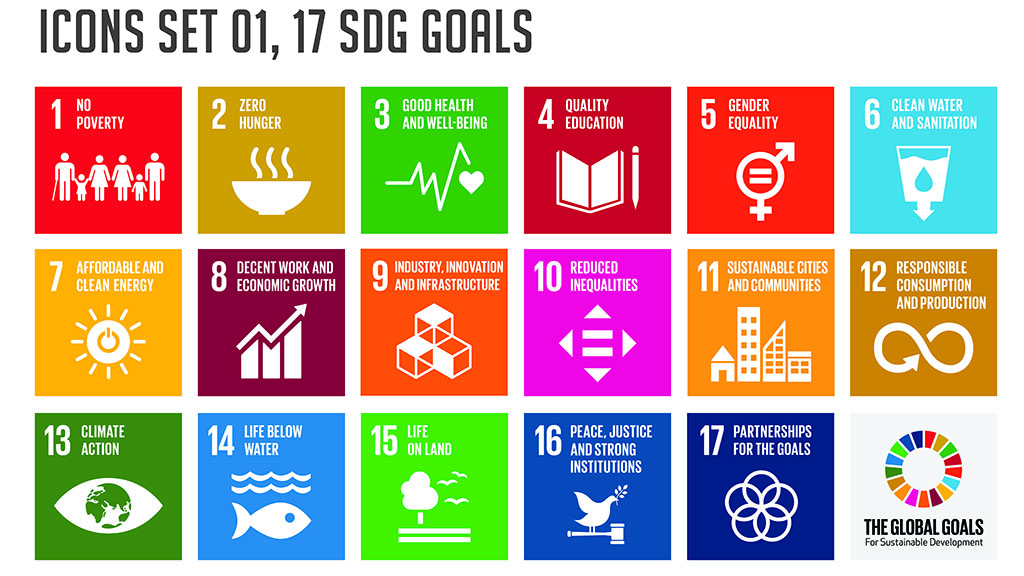
CSR is an important part of brand management, but also has its limitations. The purpose of the existence of enterprises is to make profits, and to do a good job within the scope of their ability must rely on cooperation with the government, non-profit organizations and other parties to jointly implement social responsibility. Its scope is broad, some people look at the ESG principles, E refers to the environment (environment), S refers to social (social), G is governance (governance), and even from the United Nations' global sustainable development goals (SDGs) of "economic growth", "social progress" and "environmental protection". We can even select from the 17 items of the SDGs (Sustainable Development Goals), namely "economic growth," "social progress," and "environmental protection," to develop in a direction that is related to the core values of the company.
The realization of CSR needs to be linked to corporate core competencies. For example, recently, a machine tool company mobilized a team to make masks to help the community; Unilever, which targets women and children, has been sponsoring women and children for a long time, which is linked to the core competencies of health and sustainability and responds to the needs of the community.
3. Generation Z is a sensual consumer and cares more about whether a company is trustworthy or not.
Mr. Lee believes that consumer needs and consumption styles are very different in different eras. Philip Kotler, the godfather of marketing, advocated "Marketing 1.0" in the era of lack of civil biomass, which only sought mass production, while 2.0 focused on product differentiation, and 3.0 branding must be value-oriented, aiming at the pursuit of value, and need to treat consumers as people with thoughts, emotions and spirit, and the company should have a more ambitious mission and vision, and be able to solve social problems with the concept of sustainability to reduce the negative impact of business operations on society and the environment. The company should also have a more ambitious mission and vision, and be able to solve social problems and reduce the negative impact of business operations on society and the environment with the concept of sustainability.
Martin Kessler, Founder and Managing Partner of Process Pro Brand Group, has also pointed out that branding is not only about design and logo, but also about mission, vision, positioning and most importantly, corporate values.
Sue Yeung, General Manager of ProcessPro, further said that Generation Z consumers are more thoughtful, ethical and critical, so companies need to express their stance and values on specific issues when operating their brands, or take on more social responsibility in their production, operation and marketing processes. In fact, this is also a way for companies to optimize their brands and connect with the younger generation, in order to achieve "sustainability".

The Process brand has gained attention and recognition for its innovative visual design combined with environmental issues.
In order to help THERMOS Cuisinart, the world's leading brand of vacuum insulated cups and bottles, to realize its CSR objectives, Process has worked together with the brand to realize the spirit of public welfare by developing the Snow Leopard series of merchandise with the protection of endangered animals as the core, as well as cooperating with the WWF Association in touring to advocate for environmental protection. Continuing this brand strategy, in 2019, Process will also assist in the development of insulated bottle graphics, developing related design themes under the vectors of "innovation" and "care". Focusing on stray and endangered animals that are of concern to the general public, we chose to use the combination of a dog and a cat, and a Taiwan black bear and a sika deer, and utilized the innovative design of "map reversal" to successfully arouse the attention of social issues.

Read more:THERMOS Cuisinart Bottle Design
Taiwan's chicken essence brand primona Dream Chicken, the beginning of the development of organic farms, and then in response to customer demand for organic crops to raise chickens, Process Pro refined extraction of the brand's main purpose - "For Health, For Good Healthy heritage, eternal and unswerving", highlighting the brand's friendly to the environment and the core value of the product to do with the link to be canceled by the consumers! Recognized by the cancellers.

Read more:primona dream chicken
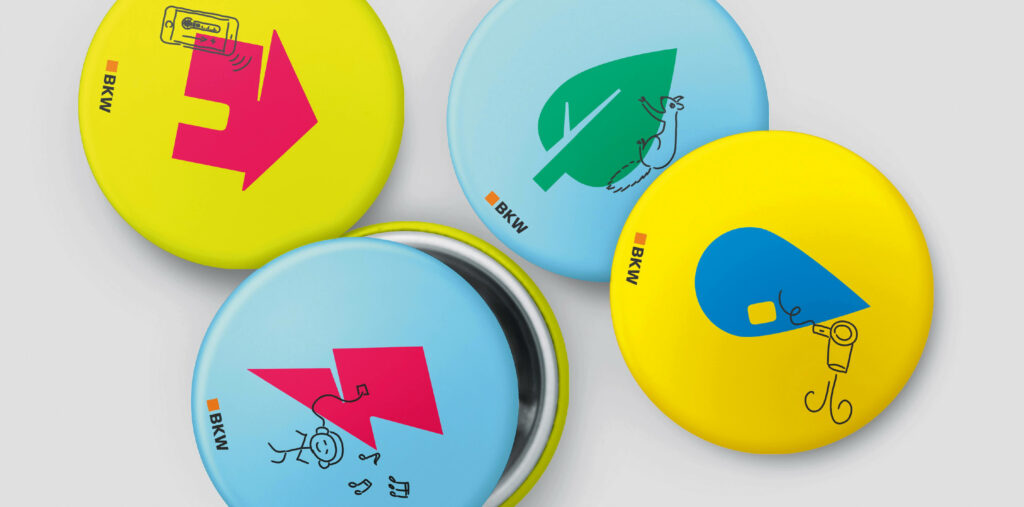
The relationship between CSR and branding is inextricably linked and intertwined. Take BKW, a Swiss state-run to privately-run power company, as an example, after the rebranding of the Process Pro brand, due to the need to bring in more new technological talent for its innovative services, it went on to develop an employer-branding refurbishment to attract the right kind of staff, which is also a realization of the relationship between CSR and branding innovation from the inside out.
Read more:BKW
CSR is also evolving. While corporations used to realize CSR in the hope of increasing brand awareness, it is difficult for one-off public service activities to resonate with the new generation.