
Interview
How Brands Increase Business Value
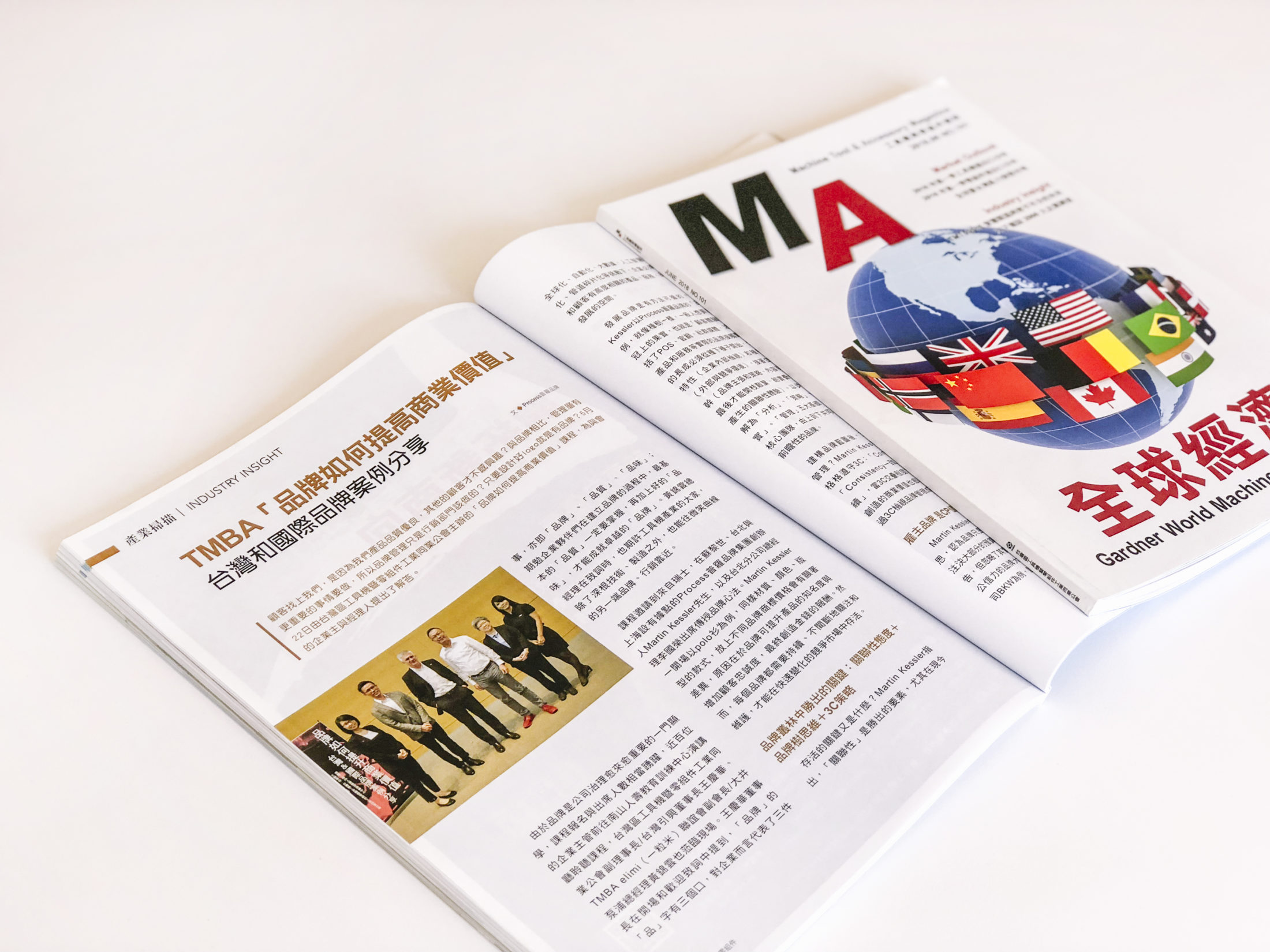
[MA Magazine Report]
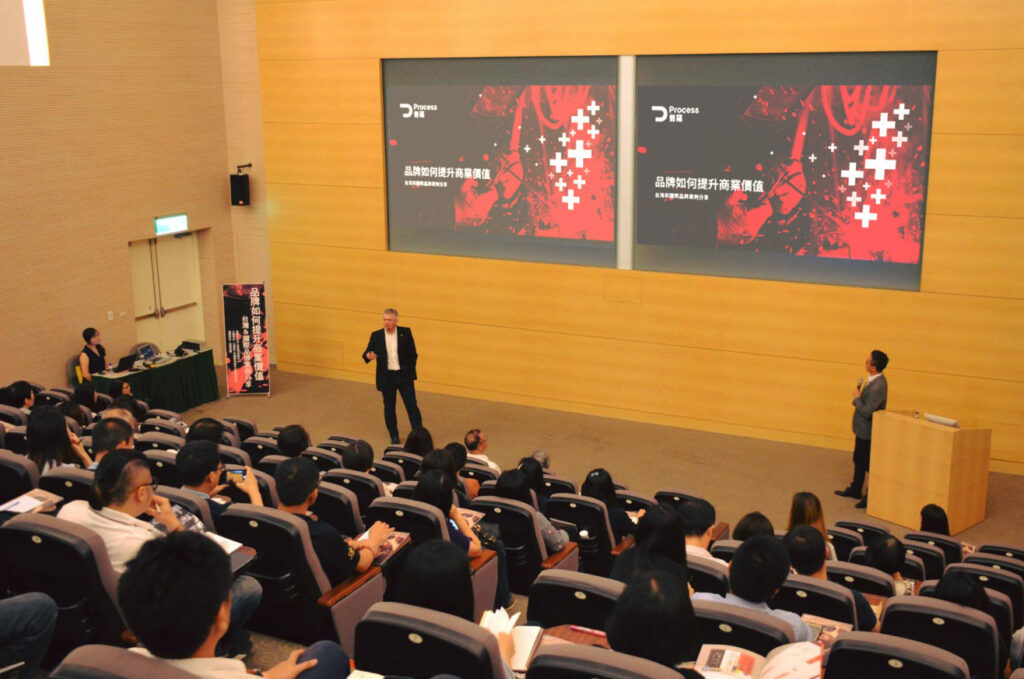
Are customers coming to us because our products are of good quality and other customers are not interested? The management has more important things to do than branding, so brand management is only for the marketing department? Process is honored to be hosted by the Taiwan Machine Tool & Component Association for the "How Branding Can Increase Business Value" course, which provided answers to the questions of the business owners and managers in the meeting.
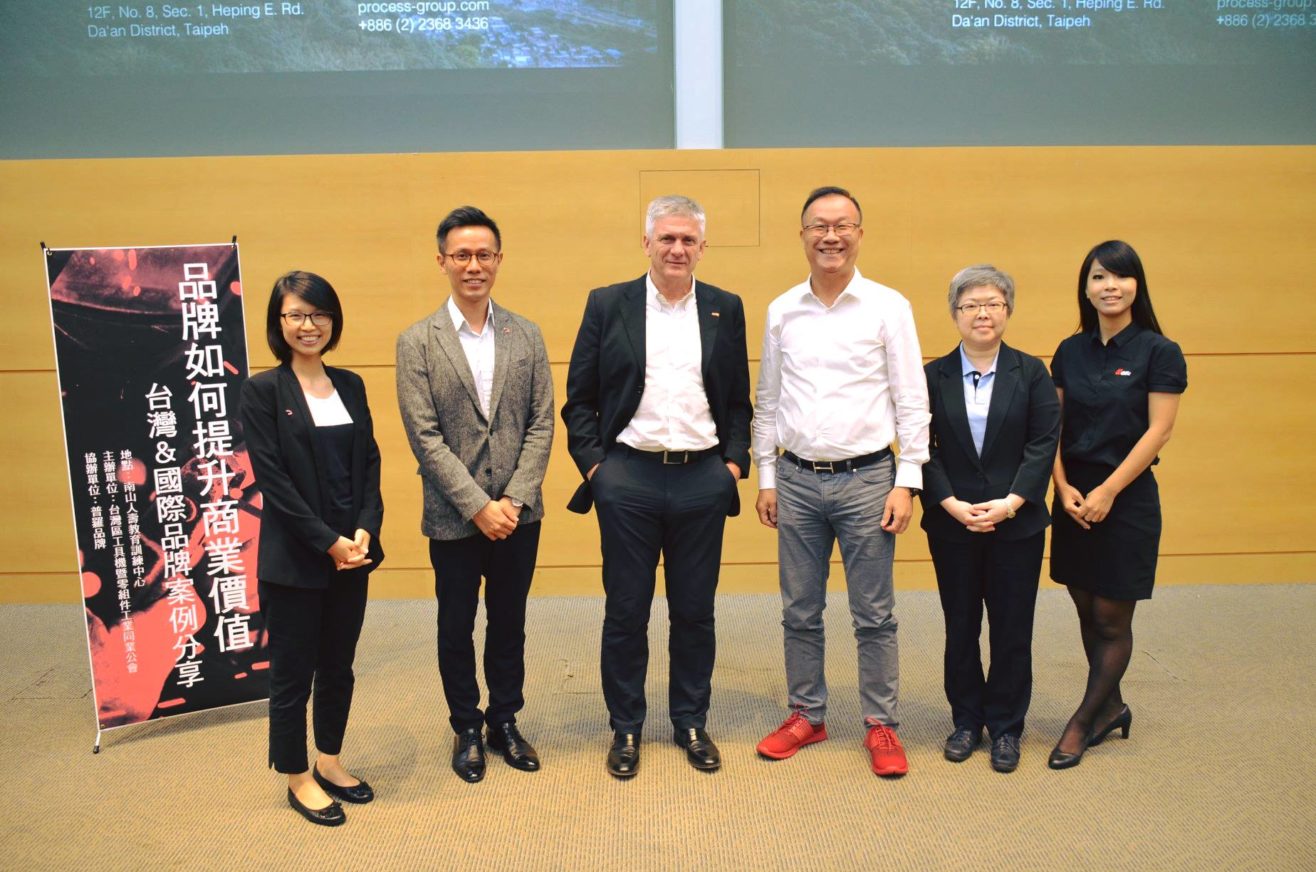
As branding is an increasingly important subject in corporate governance, the course was well attended, with nearly 100 corporate executives attending the lecture hall at the Nanshan Life Education and Training Center, as well as Wang Ching-Hua, Vice Chairman of the Taiwan Machine Tool and Component Industry Association, and Huang Jin-Yun, Vice Chairman of the TMBA elimi (one grain of rice) Association. In his opening and welcome speech, Mr. Wang mentioned that.
The character "品" in the word "brand" has three mouths, which represent three things to enterprises, namely "brand", "quality" and "taste"; we encourage our business partners to master the basic "quality" in the process of building a brand, coupled with good "taste", in order to achieve excellence in the "brand"!
In his speech, Mr. Huang Jin-yun, General Manager of the company, also expressed his hope that everyone in the machine tool industry, in addition to plowing into technology and manufacturing, can also move closer to branding and marketing at the other end of the smile curve.
The course invited Mr. Martin Kessler, founder of Process Pro Brand Group from Switzerland with offices in Zurich, Taipei, and Shanghai, and former General Manager of the Taipei branch, Mr. Ronnie Lee, to teach branding techniques. The reason for this is that branding can increase product awareness and customer loyalty, which ultimately creates monetary rewards. However, every brand requires continuous and uninterrupted attention and maintenance in order to survive in the rapidly changing competitive market.
The Key to Winning in the Brand Jungle: Relationship Attitude + Brand Tree Thinking + 3C Strategy
Martin Kessler pointed out that "relevance" is the key to success, especially under the challenges of globalization, automation, big data, artificial intelligence, mobility, and pipeline fragmentation, companies must develop products and services that are highly relevant to their customers in order for their brands to have room for growth.
There is a way to develop a brand, and Martin Kessler cites the "brand tree" of Process as an example. Like planting a tree, what people want to pick is the fruit on the crown, that is, the "customer experience", and the fruit includes actual brand touchpoints such as the POS, website, social media, events, exhibitions, products and services, etc., but the fruits have to be grown from the seed. However, the growth of fruits must start from planting the seeds, first understand the characteristics of the seeds (internal inspection) and planting soil conditions (external and competitive environment), then grow a solid tree trunk (brand proposition and strategy, content and communication strategy), and finally branching out and fruitful (the correlation between the customer and the brand experience). In terms of steps, it can be broken down into five foundations: "analysis", "strategy", "concept", "implementation", and "management", which bring together the senior management and the core team of a company to create a brand with consensus and foresight from top to bottom.
After building a brand blueprint, how to manage it effectively in the long run?
Martin Kessler points out that businesses must comply with the 3Cs:Conciseness, consistency and continuity. The more the 3Cs overlap, the more successful the brand is and the higher the business value it creates, reminding companies that they can regularly review the effectiveness of brand management through the 3Cs.
Employer branding is the most CP-valued investment
Martin Kessler also mentioned a common corporate myth that branding is only an external image project, and therefore most of the budget and time is spent on external communication, such as advertisements, while neglecting the fact that internal employees are actually the most cost-effective and credible brand ambassadors. He cited BKW, one of the top three energy companies in Switzerland, as an example to illustrate how a company can further extend its brand to the employer brand after completing the overall branding process. He used the example of BKW, one of the top three Swiss energy companies, to illustrate how a company, after completing its overall branding, can further extend its branding to the employer brand by examining the challenges, setting goals, establishing concepts, and then developing the design of touchpoints of branding experience between employees and the company, so as to promote the employees' identification with the company and thus create value together.
Compared to Swiss enterprises, Chinese enterprises are more often faced with the challenges of "second generation succession", "OEM to private label", and "domestic brand to international brand". Therefore, if they can follow the five steps of brand development, create a consensus on brand strategy together with their internal core team, and if necessary, add the professional assistance of an external brand consultant and design consultant, the brand construction of the enterprise can be carried out smoothly.
Published in MA Magazine Issue 101, 2018.06
Read more
MA Magazine >>