
Insight
Differences in branding between the East and the West from the experiences of Taipei, Shanghai and Zurich
Founded in 1995, Process, a Swiss brand, has offices in Zurich, Taipei, Shanghai and Chengdu. Over the years, Process has executed many branding projects for well-known companies in Europe and Asia, providing professional brand consulting, strategy and design services.
Many people are curious about the differences between Eastern and Western cultures and concepts. Does Process face different requirements and challenges when dealing with different customers in the East and the West? Or how to find a balance between globalization and localization? We invited Martin Kessler, founder of Process Pro brand, Yanding Ke, Taiwan Honorary Consultant Rong Li, China General Manager Xiangya Huang, and Taiwan Creative Director EPILEDS YEH to talk about the differences in branding between the East and the West, based on their rich experiences and observations.

The senior team of Process Pro brand who shared their experience in brand building (from left) Taiwan Honorary Consultant Rong Li, China General Manager Xiangya Huang, and Taiwan Creative Director EPILEDS YEH.
In general, which parts of the book are most likely to show the differences between Eastern and Western cultures?
LI Kwok-wing (hereinafter referred to as LI)In general, the naming, design style and co-creative process show the differences not only between the East and the West, but also between different regions.
Wong Sheung Nga (hereinafter referred to as Wong)Take the naming part, in China, if it is an end-consumer oriented industry, it is usually required to have a name that is as straightforward and concrete as possible, and that is directly related to the industry. Customers don't like names that are too literal, so it's best to have a name that makes consumers think intuitively and is easy to understand. For example, the name "DDT" is derived from the local term "D" for taxi; or "HungryMo" is a food ordering platform that is related to eating.
Lee: Although Taiwan customers do not require naming to be so plainly spoken, they still reject the use of unfamiliar words in naming, whether in English or Chinese, and usually want the name to be easy to pronounce and easy to call. In addition, many customers insist that the name should be completely related to the industry, so that it is easy to associate with it. However, the bigger problem we face is that it is often very difficult to register such a name when registering a trademark.
yip shun 鋐 (hereinafter referred to as yip)We will usually come up with a name that suits the spirit of the company, based on the core values of the company and the needs of the client (e.g. size of the company, need to be localized or internationalized).
Li: However, we have also encountered the experience of proposing many names with good meanings, but they were all rejected by the client. Later, we learned that the customers pay more attention to feng shui and numerology, so no matter the name in Chinese or English, we will take it to a fortune teller to calculate the strokes, in case the strokes are in conflict with the founder or the enterprise itself, we will not accept it. This should also be an interesting and unique feature of Taiwan compared to other countries!
Martin Kessler (hereinafter referred to as M)Globalization: At this stage of globalization, the country is no longer a trading border, and as a result, brand naming is becoming more and more global. Switzerland, in particular, is a multicultural and multilingual country, and the market is therefore accustomed to internationalized corporate and product brand names. Basically, the more international a company is, the more its naming must transcend local influences. If a brand is more localized, the influence of the local culture is more obvious.
"Because a brand name is often used for decades, it's important to think long-term when naming a brand. After all, what seems right in the local market today may not be right for the future of their own brand."
Martin Kessler, founder of ProcessPro (pictured above, second from left), shares his views on the brand.
What are the different preferences and differences between the East and the West when it comes to logo design?
Huang: Usually, Chinese clients prefer images of concrete entities. In addition to the company name, there is also a logo graphic. Many clients also want to design a graphic image or even a mascot, such as a rabbit for Xiaomi, to facilitate the brand's marketing and promotion.
However, we once had a French client who wanted to establish a brand in China, and not only asked for the design of the logo and graphics, but also wanted to design the whole system. In contrast, it was more of a holistic approach.
Lee: Although customers in Taiwan do not have special requirements for physical images, they still have high expectations for logo design, believing that the logo should be able to express the spirit and characteristics of the enterprise, and that it is best to be able to let customers understand all the stories at a glance within a single logo.
As a recycling industry, zerozero is their core value. In order to realize this concept, the design team used the shape of zero as the idea of the logo, together with the circular graphic design. In order to realize this concept, the design team used the shape of 0 as the idea of the logo, together with the circular graphic design.
(Read more:
zerozero)

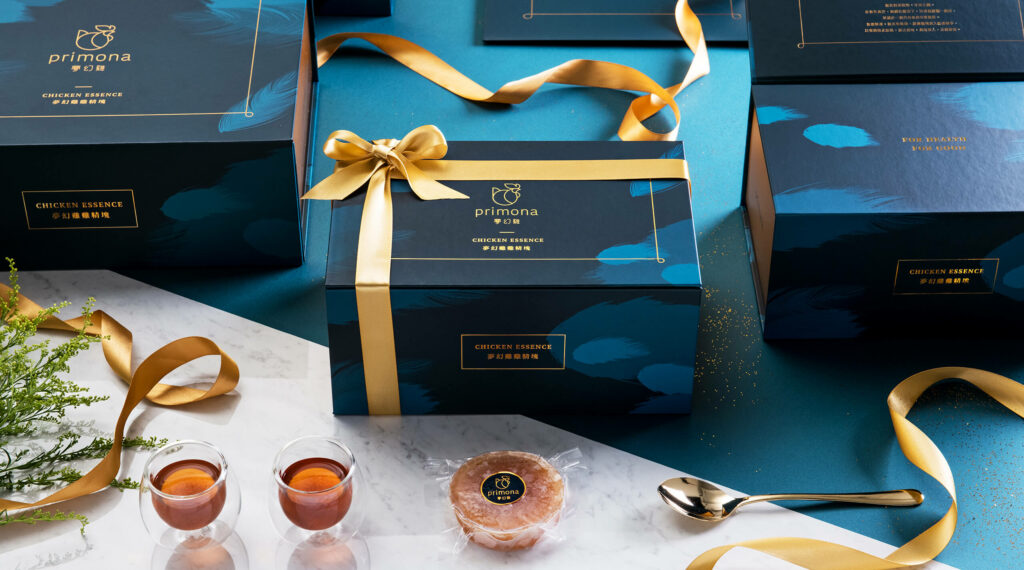
Another project of Primo, primona Dream Chicken, the core product is the round cake shaped package with chicken essence drops, which is a very unique package form in the market. Taking the core product characteristics of the brand as the design conceptual elements, we captured the chicken in the form of chicken dripping and expressed it in the shape of a round cake to create a brand logo with strong brand identity and representation for the client.
(Read more:primona dream chicken)
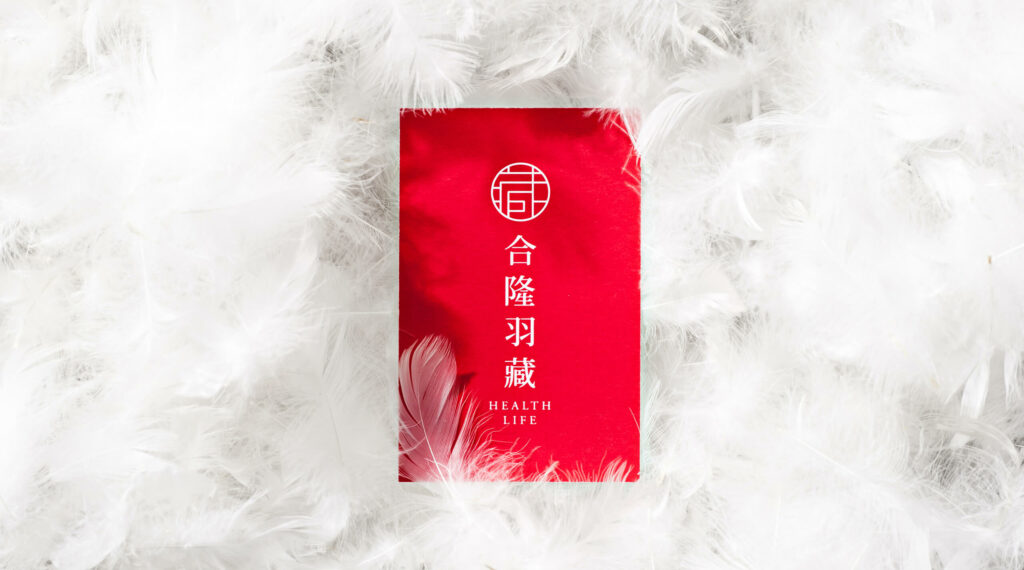
In another project, He Long Yu Zang, the core value of the brand is to realize the good quality originated from the East and the rich experience for many years, and we hope to reflect the origin of the brand in the brand logo. Therefore, by referring to the form of the traditional treasure house, the word “藏” in the name of the brand, which is the word for classic collection, was combined and embodied in the design of the logo.
(Read more:Hlomo Hizo (1854-1912), Japanese writer and poet, author of "The Hlomo Collection)
M: In my opinion, even in the different cultures of the East and the West, there is no great difference in the meaning of a company's or product's logo. Western companies also attach great importance to the meaning of their logo, which is the cornerstone of their corporate identity. However, in Switzerland, and in the West in general, there is perhaps a greater awareness that corporate image cannot be controlled by a beautiful logo alone. Trademarks need to be ideally rooted, implemented and communicated in a way that maximizes their impact. Let's just say that Western companies do take their logos seriously, but always realize that the foundation and content of the brand is just as important.
Is there such a marked difference in the overall design style?
YE: In many of the cases we have studied, Western companies emphasize simplicity and systematization in business communication, but Eastern companies are more emotional and want to convey not only the spirit of the company and a high degree of recognition, but also if they can tell a little bit of a story, even better. Especially for clients who have switched from OEM to branding, they would like to see their branding design to be "low-profile and high-profile", and they would care more about uniqueness and richness, comparatively.
Huang: Chinese companies like to follow the trend of the times, the most popular and contemporary elements, it is best to add in the design, for example, a while ago the popularity of the color scheme of Morandi, many customers will ask "colors are not too bright"; or small freshness is the trend, there are customers would like to brand the design of the natural feel of the style and so on.
Lee: However, as brand consultants, we often suggest that the design style should be classic and neutral, so that the future expandability and applicability will be high. So we would ask the client to think about the percentage of his business plan, and how big the turnover and market development is. If the proportion of local development is very high, it can indeed cater to local trends; however, if the distribution is even and the market target is international, the design style must be neutral, and then adjusted according to the changes in different contact points, that is, the so-called "neutral" style."Globalization of Brands, Localization of Communication"。
Puro has always emphasized the process of creating a brand with its customers. What are your observations in this regard?
M: In recent years, co-work has become a popular term in the West. "Co-work" means that company management (and even brand managers) need to be more closely involved in the brand identity formation process. For example, by inviting corporate department heads and brand consultants to participate in internal workshops, or even by setting up and providing workspaces for brand consultants.
This way of working allows for a closer exchange of knowledge and experience between the two parties. The corporate side has a deeper and more direct insight into the brand planning and design process. The brand consultant also gains more professional knowledge of the industry to which the company belongs, and receives more immediate feedback during the ongoing process.
In Zurich, we can work directly with our clients anytime, anywhere. We believe in and practice closer cooperation with our clients and the benefits it brings.
HUANG: This part of the business is still relatively new in China. The value of co-creation and consensus is not yet well understood. Many companies are still business-oriented, relying on connections and reputation, customer preferences, and even a sense of superiority that "we are more local than foreigners. In the past, there were many enterprises that did not have a R&D department and would seek out Pro's clients because they wanted to package their products as imports, relying on Pro's advantage of having a western heritage but understanding the domestic market.
However, slowly, some brands that were originally in the real estate industry, especially those located in third-tier cities, are beginning to be more willing to participate in the co-creation process as the economic consumption power of the sinking markets increases, and these brands hope to bring in more foreign ideas and expertise to increase their brand value and prepare for future market expansion.
Lee: Taiwanese companies are more respectful of Western professions, but in the process of co-creating, we have observed that if the second generation takes over the business, it often takes more effort and time to convince the previous generation of the concepts; however, if the owner of the company is willing to do brand building, the success rate will be higher. However, if the owner is willing to build a brand, the success rate will be higher, because branding is not only about visual design, but also about re-adjusting the organization and thinking of the whole enterprise, in order to reveal the core values of the brand. If the boss has such a consensus, and pulls in the responsible units of each department, the whole process of co-creation will become a cooperation that "belongs to all of us", which is very helpful to the centripetal force of the enterprise itself and its execution.
Yip: Especially when Asian customers express their needs, they are often vague and ambiguous in their wording, so we need to clarify what they really want through the guided process. The more involved the client is, the easier it is for us to organize our communication to capture the client's real needs and at the same time let the client understand their own responsibilities and obligations.
HUANG: Yes, I think the concept of counseling should be established. Our branding company is like helping enterprises tailor-make a set of cheongsam or suit that fits their body shape, but after wearing it, whether or not their actions are in line with the temperament and demeanor of the suit is the key to whether or not they can make the suit stand out in terms of its value. Although many entrepreneurs in China are young and successful, without much cultural baggage of generational succession, it is still necessary to participate in the whole process of brand building, and not to have the idea that "it's just a matter of marketing".