
Insight
To convey the brand's sustainable uniqueness through the power of design.

Sustainability has become an obvious subject that global enterprises cannot ignore. Besides being closely related to their business model, it allows brand customers to experience the uniqueness of the brand through the brand's external performance and the realization of its sustainable values and propositions. The brand's sustainable behavior can be effectively perceived by the customers.

(From left) Process Pro's Creative Director, EPILOGS YEH, General Manager, YEUNG Suk-yin, and interviewer, WEI Yuan-ling, in the group photo of the online sustainable interview.
To execute sustainable communication, we need to respond to the needs of our customers, consider our core competencies, and prioritize the parts we want to communicate with our customers.
Whether the customer is a brand or a consumer, the value of sensibility is often linked to the idea of sustainability. Whether B2B or B2C, sustainable design focuses on manufacturing processes and recycled materials, such as textile products that recycle PET bottles, plastics, and fishing nets into materials that can be used as fabrics for apparel, or glass products that give recycled glass the value it needs to bring meaning to the user.
The difference is that B2B companies are mostly responding to brands, manufacturers and distributors.In addition, there is a need for immediate communication, which often requires many round trips.Therefore, sustainable communication in the production process is the main focus.In the past, NIKE asked them to make samples. Functional textile suppliers such as Zhongliang Industry, based on the need for more real-time, more digitalized communication process, the introduction of digital sampling services, such as NIKE to make a pair of shoes, Zhongliang must send more than three kinds of material sampling, the introduction of digital sampling, the material can be applied to the design, such as with the designer's idea to match and then make the actual product sampling, greatly reducing the communication time and consumables.
In expressing the concept of sustainability, Nakara not only uses environmentally friendly materials and manufacturing processes, but also visually expresses its unique competitiveness through the use of circular and wrapping shapes, and by combining different materials, Nakara is able to demonstrate the company's unique competitiveness.
Case reading: TLC Zhongliang Industry
B2B communication is more focused on the "perceivable" customer experience with consumers, the services provided by the brand must allow customers to feel in themselves. For example, the well-known sustainable brand Tea Seed Hall, the most source, using natural raw materials, not only does not hurt the skin, water recycling back to the earth will not cause environmental burden, the new version of the bottle design reduces the 44% plastic, not only to reduce the cost of raw materials, but also very friendly to the environment. Visually, it adopts amber, grass and other earth colors, from raw materials to packaging, closely linked to the relationship with the earth.

(Source:teatime snack)
A brand has a voice, sustainable visual communication should be in line with the brand's existing tone and have a sense of empathy with the customer base.
If you want to express sustainability directly by vision, usually use green and other earth colors, but in fact, it still depends on the level of expression, for example, the down raw materials brand Allied Feather & Down, has always been concerned about the issue of humane rearing and sustainability, and constantly communicate with customers that geese and ducks feathers are humanely reared. In recent years, most of the down products have been sold directly to mountaineering clothing brands. In the B2B business model, when dealing with brands, the brand image has moved from natural to fashionable style, communicating sustainability through exhibitions, tracing the down story through a thematic journey to the roots, creating a connection with nature, and linking the concept of sustainability through the style that has always been in place.
Although it is a communication of sustainability, it does not use much green, but rather low-color images to convey a different state of mind to the environment, and through this way, the purpose of sustainability is presented concretely, which is a very distinctive and differentiated way of expression.
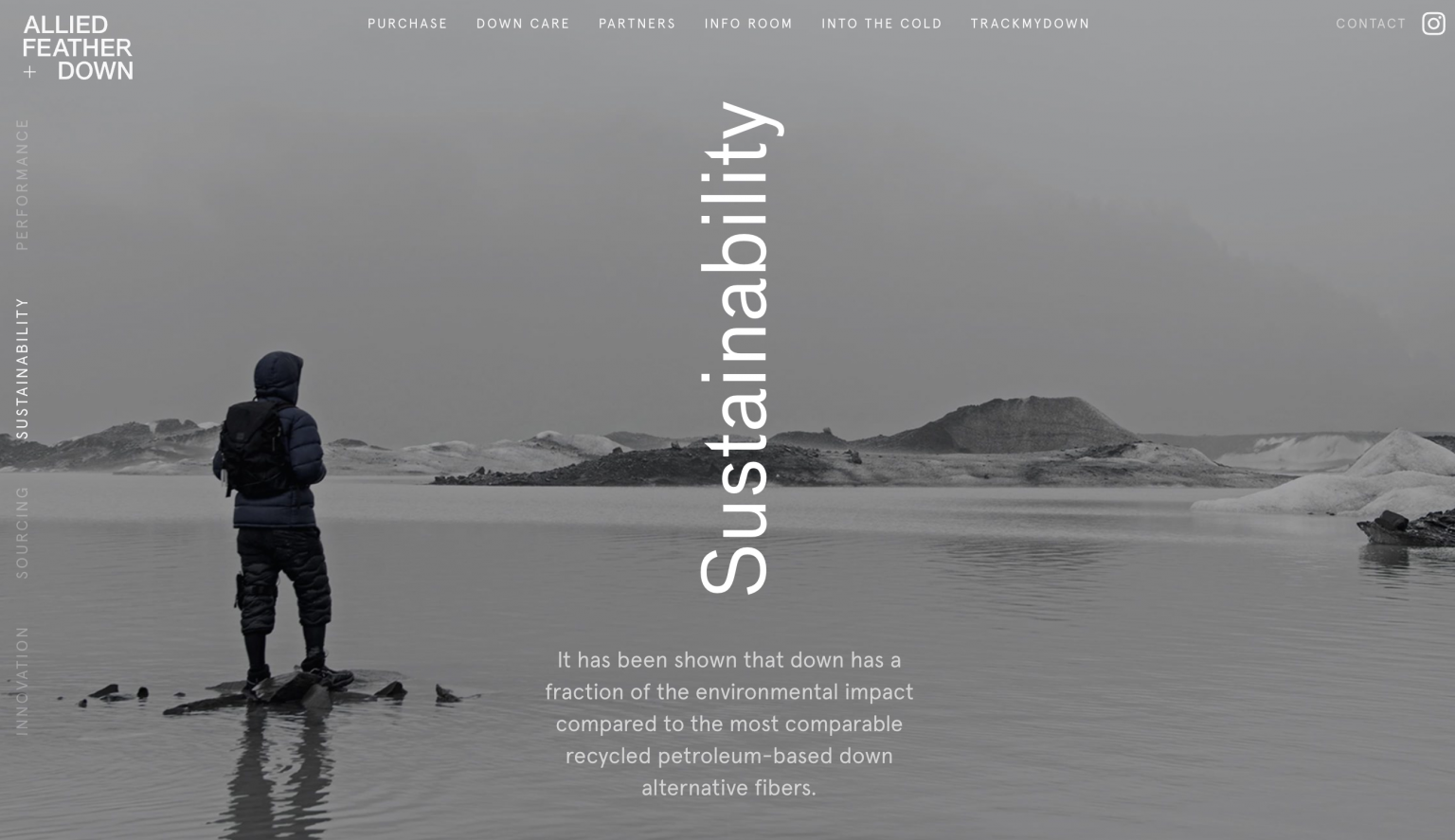
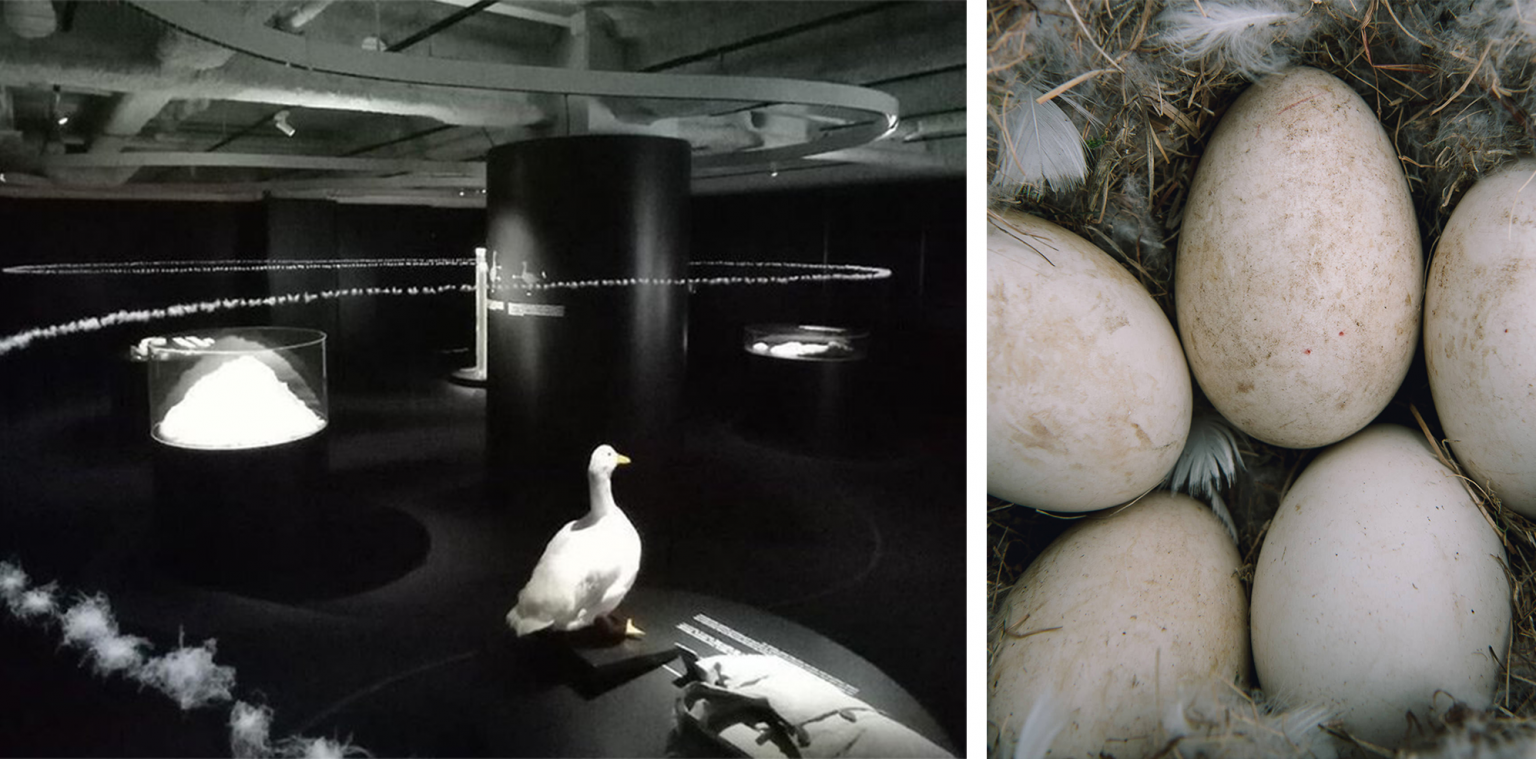
Allied Feather & Down Official Website (Source:Allied Feather & Down)
Native brands that appeal to sustainability are fully realized in the visual recognition system.
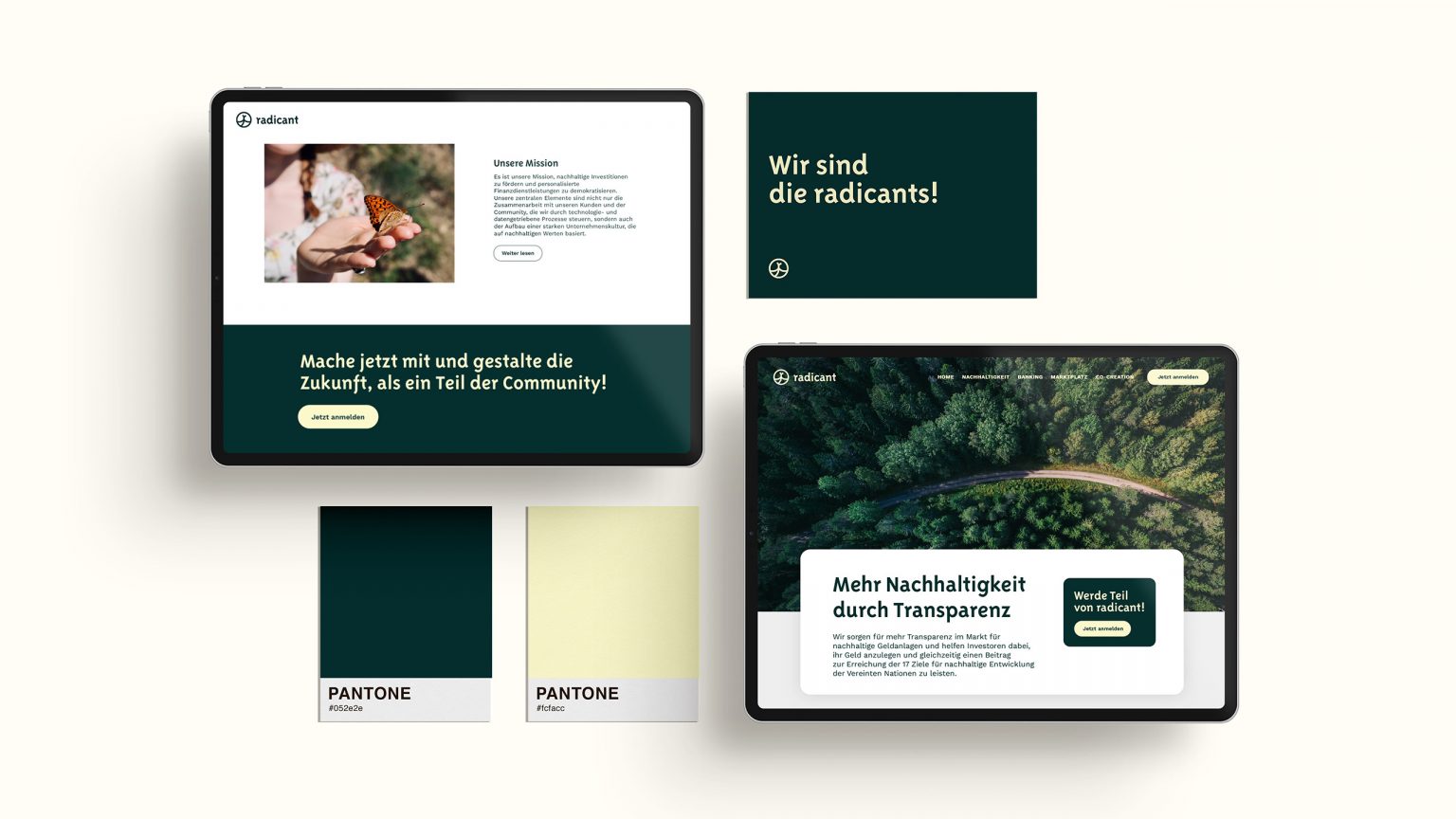
In Switzerland, Pro was working on the brand strategy for radicant, a new sustainable digital bank that wanted to create an image of transparency, diversity and uniqueness in information. Pro used images to convey the brand's spirit, using an anti-radiation plant as the corporate identity, and the biological characteristic that the new shoots that grow during the process of growth will be separated from the old roots, symbolizing inheritance and sustainability, and using green and beige colors as the overall visual collocation. In the case of this kind of sustainable native brand, the concept of sustainability can be taken into account in every communication detail, from the design of the corporate identity system to the transmission of messages and the visual performance of each contact point, and then be manifested.
Case Study: radicant Sustainable Digital Banking
Michelin Tire, a non-sustainable brand, has launched a green tire that is "airless and puncture-proof". Although it is not easy to express the spirit of sustainability directly under the company's logo, it is supplemented with various sustainable images and messages, announcing that it will invest more resources in research and development of environmentally friendly formulas and upgrading of recycling technology at all communication points, demonstrating the brand's determination.

(Source:Michelin tire)
Sustained brand communication with the localization of the five senses of experience carefully created to convey the value of the idea
The use of local vocabulary and the possibility of adapting to local values is a key for international brands to enter new markets, as well as to communicate the spirit of sustainability.
Aesop, an internationally renowned brand that focuses on humanistic values and the pursuit of naturalness and high quality, adopts the market strategy of "internationalization of brand and localization of communication", with different store designs and styles of material application around the world. The new store opened in Hsinchu not long ago uses the architectural style of the Japanese era, and the space is based on the century-old glass industry of Hsinchu, which is inspired by the recycled brown glass made from 100% and added to cement mortar. The store in Barman, Sydney, Australia, is made of old houses in the area, and on the basis of the original material and texture, recycled materials are used to give play to it, which is a brand communication that will skillfully link localization and sustainability. In terms of customer experience, Aesop's amber-colored bottles and materials, the staff's attire, the store's scent, and the space are carefully crafted from the senses of sight, smell, and touch to convey the brand's idea of sustainability.
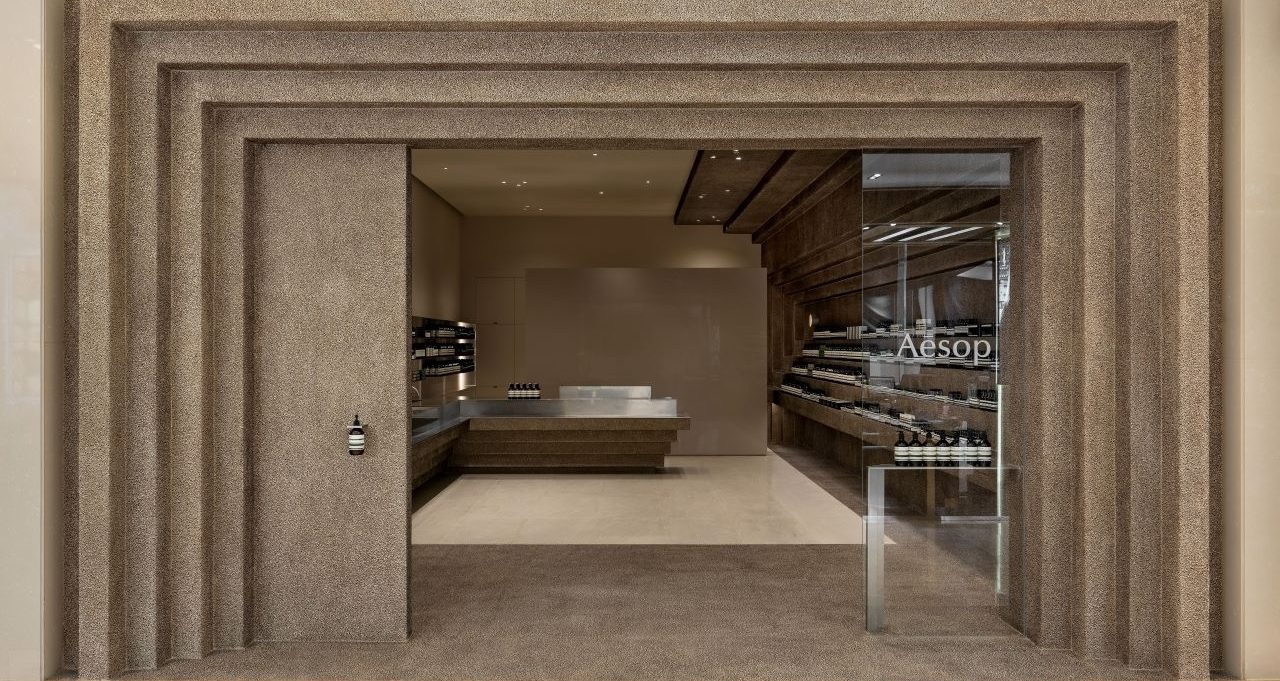
Aesop Taiwan Hsinchu Branch (Source: Aesop)Aesop)
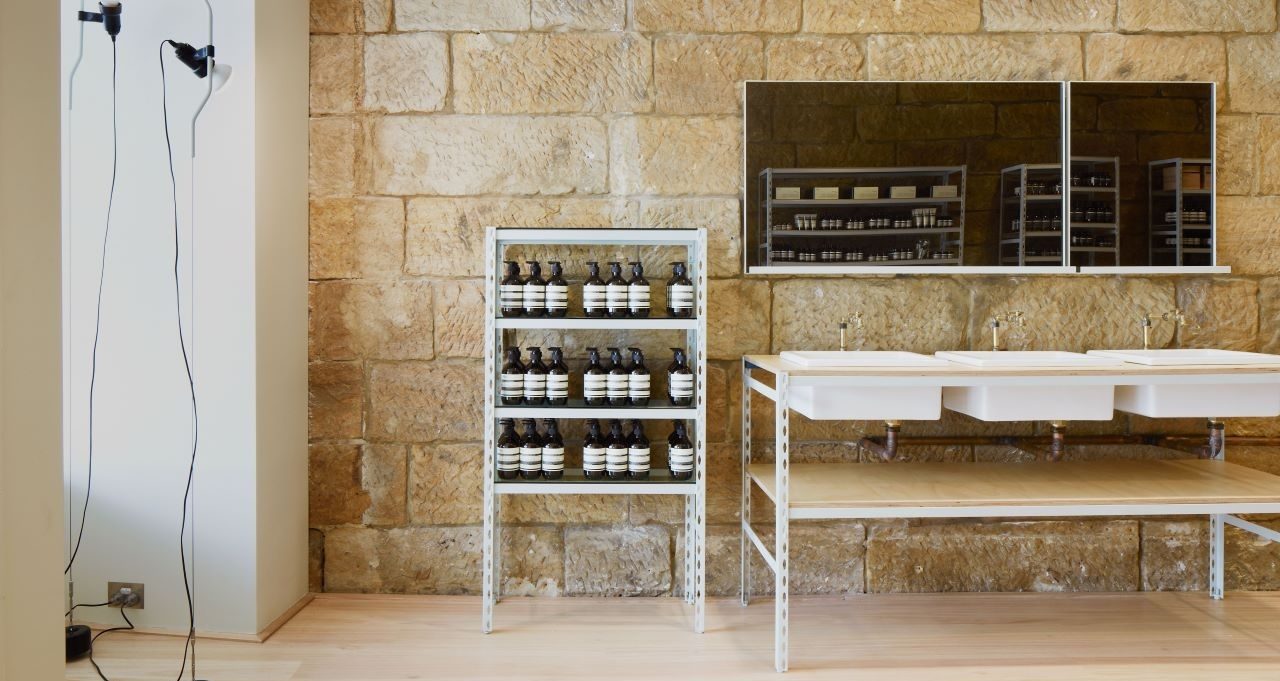
Aesop Barman, Sydney, Australia (Source:Aesop)
Want to improve your brand's sustainable communication through design?
Feel free to chat with us!