
Interview
Digital Transformation Trends from Business Models and Brands (above) Introducing digital tools, creating corporate competitiveness, and accumulating brand value.

The epidemic has drastically changed people's lifestyles, and digital transformation has gone from being a catchphrase to an urgent necessity. Digital transformation is only a process, and the most important goal for enterprises is to realize business transformation and create a second profit model. This time, we invited Diane Shen, Creative Director of BMI Strategic Design Partnership, and Jules Li, Honorary Consultant of Process Branding Taiwan, to share the relationship between digital transformation, enterprise business model and branding and the development trend with their years of professional experience.
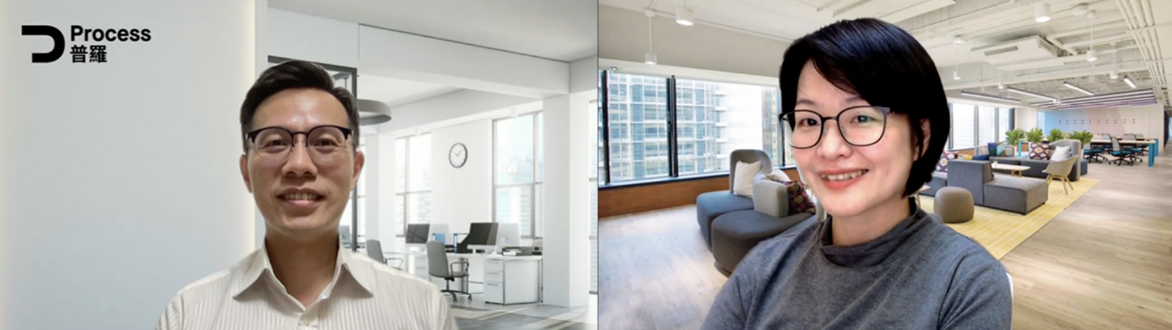
(Left) Jules Li, Honorary Advisor of Process Pro Brand Taiwan and (Right) Diane Shen, Creative Director of BMI Strategic Design Consulting Partnership
Branding strategy is based on a business model.
Jules: Most brands are built on the basis of business operations, and while good branding can contribute to business success, the management of brand strategy must be guided by the leadership of the organization. The purpose of brand strategy is to translate corporate strategy into an experience that influences the views and behaviors of the target audience. This experience comes from the value proposition in the business model of the enterprise, and the brand is an intermediary, mainly oriented to the target group, in order to create, transmit, and obtain value, the enterprise must have the key activities, resources, partners, cost structure, revenue streams, customer relations and channel elements of the composition and design, many enterprises in the brand strategy would like us to solve all the problems of the sales, in fact, different management companies have different expertise. In fact, different consulting firms have different specialties, and the design of the business model relies on professional firms such as Fong Lok.
Digital technology is the foundation of all transformation
Diane: Transformation is about finding the next possibility to create value. For brand clients, the purpose of transformation is to create a better service experience for customers; for enterprises, the purpose of transformation is to enhance competitiveness and create differentiation; and for internal employees, the purpose is to invest their time in more valuable things. Digital technology is the mother of all transformation, whether it is from the back-end production, manufacturing, research and development, front-end contact with customers, and delivery of value, all of which are inseparable from the application of digital technology. Digital transformation is to "find the next possibility of creating value through digital technology", to customers, to enterprises, to partners, to go beyond the physical limitations.
Creating a second growth curve is on the road to digital transformation.
Diane: The spirit of digital transformation is to use digital technology to change the mode of operation, to improve efficiency, and to know what we didn't know before. For example, in today's Netflix economy, if Netflix only changes the revenue and does not create a second growth curve, it cannot be considered as a digital transformation; however, if it can show its independent personality through digital technology, so that there are different types of interpretations of the brand's characteristics, find out the potential customers, and change the way of sales, and the original physical store can be converted into a service venue to provide a more valuable service experience, or further through the introduction of digital technology to Or, furthermore, through the introduction of digital technology to capture customer information, so as to anticipate customer demand, and thus change the revenue and cost structure, in order to be able to say that it is on the road to digital transformation.
(Image source: unsplash)
Digital media as a tool to develop diversified revenue from content
Diane: The traditional paper media is facing a great challenge of digital transformation. In addition to a completely different publishing cycle, internal processes, staff roles and work objectives have to be reorganized, and we have to think about how to maximize the value of the content, such as engaging in a "diversified revenue transformation" to create more revenue through the content, such as converting the content into education-related to develop the education business, or developing the entertainment business through the entertainment version, such as curating exhibitions, selling event tickets, and operating a ticketing platform. The company has also started to develop its business through the diversification of its content, such as converting it into education-related content to develop the education business, or developing the entertainment business through the entertainment section, such as curating exhibitions, selling event tickets, and operating a ticketing platform, which of course also has digital elements in it.

(Image source: unsplash)
Back to the content itself, converting textual content into multimedia formats to meet the needs of different segments and develop long-term relationships with customers through subscription. According to the phenomenon of paid subscription in the media, workers often want to use the information immediately in their work, so some media convert the content into online learning courses, and some platforms, such as the World Media Group, have become the foundation for diversified offline to online audiences, such as parent-child, business, and education, in terms of the content.
Make content appear in the right place using the right medium, and make good use of data for precise marketing.
Diane: On the other hand, paid content has evolved towards the extremes of quick-to-absorb summarized content and in-depth long-form reporting. Longer, more in-depth analytical reports, as well as the transformation of complex text into graphic content that's easy to understand, are all things that listeners are willing to pay for. People's behavior and purpose of using digital tools have changed. Through digital tools, it is easier for listeners to search for, organize and digest information, so that the content can be used in the right medium and appear in the right place, and to think about how to handle the content from the customer's usage context and perspective. Digital application is closely related to accurate marketing. After introducing digital capabilities, many customers use new platforms or digital channels to make sales and contact customers, but they do not have more insights after accumulating rich customer data, just like "beggars holding a pile of gold". The ability to analyze data is an important internal capability in the digital business model.
Digital Tools Enable Diverse Brand Presentations
Jules: The client's concept of branding is constantly changing, from the early recognition of logo design to the overall strategic thinking. In the beginning, brands' digital transformation was relatively one-dimensional, mostly turning paper catalogs into online content and placing ads on portals and news media sites. Now, as communication channels are becoming more fragmented and segmented, it is important to better understand the needs of customers and their experience journeys in order to capture people's limited attention.
Nowadays, more and more enterprises are digital native brands, and their own business model has already put digital thinking and behavior into practice in all aspects of the value chain; some successful e-commerce companies, on the contrary, have been invited by traditional channels to physical stores to think about how to link online and offline; some digital service providers are also constantly adjusting their models. These companies know that not only the front-end advertising and marketing activities are important, but that they can maintain the consistency of the brand in the back-end of the different links, delivering a consistent brand message, and accurately allowing the whole journey to continue to accumulate, so that the company can turn the good impression into an asset to move forward, and to accumulate the outside world's impression of the brand. These digital native brands are very good at using data to optimize communication with customers at all touch points.

ProcessPro Brand assisted HODRMEN to carry out the brand optimization project. Based on the foundation of the brand strategy, HODRMEN uses self-media as the core of communication, and integrates online and offline interfaces with more diversified digital tools to continuously maintain the connectivity with customers.
Case reading: HODRMEN MEN'S RESEARCH TECHNOLOGY®
Digital Transformation is an Important Weapon for Enterprises to Face Environmental Changes
Diane: The epidemic has changed people's way of working and living, breaking down time and geographical constraints, online fitness, working from home has become the norm, and everything has gone online in a short period of time, which has also made people rethink their values of life. By 2022, enterprises have observed that the expectations and needs of employees have changed, and that the old work patterns are no longer applicable, making it even more challenging for enterprises to recruit and retain talents. In addition, climate change and wars have led to rising raw materials and supply chain restructuring, making globalization partially irrelevant, and it is necessary to seek localized and regionalized development, and to strengthen work processes, customer contact, and customer relations through the continuous introduction of digital technology in order to be resilient in the face of various environmental challenges.

(Top row, left to right; bottom row, left to bottom right) Interviewer Yuanling Wei; Diane Shen, Partner Creative Director, Strategic Design Consulting; Sharon Pan, Partner Community Manager, Strategic Design Consulting; Jules Li, Honorary Advisor, Process Pro Brand Taiwan; Han Chen, Partner Project Manager, Strategic Design Consulting; and Angel Yang, General Manager, Process Pro Brand Taiwan, BMI. Han Chen, Partner Project Manager of BMI, and Angel Yang, General Manager of Process Pro Brand Taiwan Branch.
Do you want to introduce digital technology business model to create multiple values for your brand?
Feel free to chat with us!