
Insight
Swiss Mirror: Global Thinking Enables Taiwan's Enterprises to Transform and Revalue
With a population of only 8 million, Switzerland is home to several globally dominant mega-corporations in food, watches, pharmaceuticals, banking and commodities, and is ranked as the world's 16th largest exporter, topping the World Economic Forum's (WEF) Global Competitiveness Report for the eighth consecutive year.
During the same period, Taiwan's various industries, which share a high degree of similarity with Switzerland's innate development conditions, are in the throes of breaking away from the OEM and manufacturing mentality, and enterprises and the government are committed to exploring and establishing a new model of how to break through and allow Taiwan's enterprises and brands to reach out to the rest of the world. Switzerland, a small country 10,000 kilometers away, may provide a good example.
We invited Prof. Chunshan Chen, Chairman of Global Brand Management Association, and Mr. Guo-Jung Lee, former General Manager of Process Taiwan, to analyze the success of Swiss brands and share the challenges faced by Taiwanese enterprises and the New Southbound/New Eastbound strategies before the start of the "Swiss Brands Forum in Taiwan" on 3/15, so as to help Taiwanese enterprises to think about the road of branding together.
Global Brand Thinking x Global Management Experience x Digital Transformation for Accelerated Business Evolution
Mr. CHAN, Chairman of the Board:
In the past, Taiwan enterprises encountered two major difficulties in their transformation. The first one is global competition. Due to the fact that the operation mode in the past was to communicate with a single customer, Taiwan enterprises lacked the global branding mindset and global management business model, and they were even weaker in cross-country and cross-cultural management. Therefore, Taiwanese companies need to have global brand thinking and global management experience in order to compete in globalization.
Second, Taiwan's digital transformation is too slow. Digital actually can quickly help small brands with a small investment towards a larger possibility, and Taiwan in the entire digitalization process, whether it is digital interaction, content, analysis of the lack of investment in these three, which also makes Taiwan enterprises in the entire digitalization, globalization of the brand competition will be relatively weak.
Large enterprises need to strengthen their global management, while SMEs can flexibly extend their global brand experience.
From there, the problems of Taiwan's large enterprises and SMEs are slightly different. In the large enterprises need to carry out brand transformation, Taiwan's large enterprises have 90% for ODM manufacturing industry, in the global brand management is weaker, need to be strengthened from the vision of global management, mode and talent. The lack of ODM baggage on the small and medium-sized enterprises, can be more flexible in the extension of the global brand experience.
Jules:
Echoing Chairman Chen's view, large and small companies have their own approach to branding and management. In the process of helping companies build their brands, we have found that there is a myth among Taiwanese companies that branding is less important for smaller companies. While everyone talks about big companies and big brands, I believe that the DNA of a company, regardless of its size, is its brand identity, and it has nothing to do with whether your company has only five employees or thousands; just like big companies, smaller companies need to differentiate themselves in the marketplace, and they need to prove their independence in the marketplace time and time again. Like the big brothers in the industry, both are facing the same challenges. There is no doubt that people talk or tend to talk about the big brands, but at the end of the day every brand has to show why they exist in the market, why they exist. That's the challenge that they have to face, and I really don't think it has anything to do with the size of the company.
Swiss business is all about branding! Using Switzerland as a Mirror, Taiwan Needs to Move Toward National Brands
Mr. CHAN, Chairman of the Board:
Switzerland is about the same size as Taiwan, with a population of 1/3 of Taiwan's. Surrounded by European powers, Switzerland ranks high in global competitiveness and people's happiness, which gives Taiwan a good reference direction.
Swiss brands are the number one brands in all enterprises and industries, or hold the highest value in the industrial chain. The key factor is that the Swiss do business as brands, rather than distinguishing between the two, and use this model in every detail and business strategy to construct their business model.
Take the famous food manufacturer Nestle as an example, Nestle Capsule Coffee does not regard itself as a coffee machine or coffee bean manufacturer, but rather focuses on medium and long-term strategies by selling capsule coffee into the first floor stores of famous department stores, creating different life experiences for coffee lovers in order to cultivate long-term consumers. From this, we can see that Swiss brands are characterized by deep thinking, which we call deep innovation and deep branding, that is, we do not look at the success or failure of a single product after three months on the market, but rather satisfy the needs of consumers in the long term and create consumer trust.
Taiwan needs to carry out stage-by-stage branding: corporate branding → industrial branding → talent branding → national branding.
Taiwan's business model is different from Switzerland's, so the change in Taiwan to follow Switzerland's example can be divided into several stages. Among them and from the enterprise brand to strengthen cooperation, because a single brand of marketing required by the overall back-office management costs are too high, Taiwan should learn from the Swiss experience of long-term organization of the brand A-Team into the market to lift each other, if we can create 20-30 brands per year to follow the Swiss model, which will be the first step in the change. The second is to create industrial brands in industries where Taiwan has strengths, and the third is talent branding. Cultivating international and bilingual talents will be a good spokesperson for Taiwan's internationalization. When Taiwan has a corporate brand, an industrial brand, and a talent brand, a national brand will naturally be established.
Switzerland's global mindset is also reflected in its design, which employs the highest common denominator of linguistic communication among all human beings.
The founder of Pro brand first contacted Taiwan 10 years ago, he mentioned that Taiwan and Switzerland are very similar, no matter in the quality of talent, environment, Taiwan is next to the mainland as a large market, Switzerland is also surrounded by Germany, France and other major countries, but the Swiss are not directly competing with these countries, but to find their own characteristics in the market, talent, and then develop these unique points, targeting the watch, medical, financial and other industries. Instead, the Swiss have identified their unique characteristics in terms of market and talents, and then developed these unique features by focusing on the watch, medical, financial and other industries.
Switzerland's global mindset can also be seen in its design. From strategy to identity design, Swiss brands do not emphasize the Swiss style, but rather take the globally recognized and common design as the design standard, so Swiss brands will not be affected by the differences in regional cultures. The most fundamental reason is that the Swiss brand was founded with a global layout in mind, so the design also adopts the greatest common denominator in terms of human language communication, and returns to the most simple and precise design that is also closely integrated with the brand's globalization strategy.
With the brand we helped build in Taiwanzero zeroFor example, although its brand and services are mainly marketed in Taiwan, the brand identity design is presented in a style that can be understood by the international community, as evidenced by the iF design award in Germany in the beginning of 2018. If zero zero is to enter overseas markets in the future, a globalized brand design language will lay a good foundation.
Currently, Taiwan's manufacturing industry, whether it is OEM to branding or rebranding, is emphasizing the ability to enter the international market rather than a brand that is exclusive to the Taiwan market, and therefore hopes to design a brand identity based on global needs. In the past few years, Probrand has successfully assisted enterprises in rebranding their brands, and will also be present at this forum to share its experience.
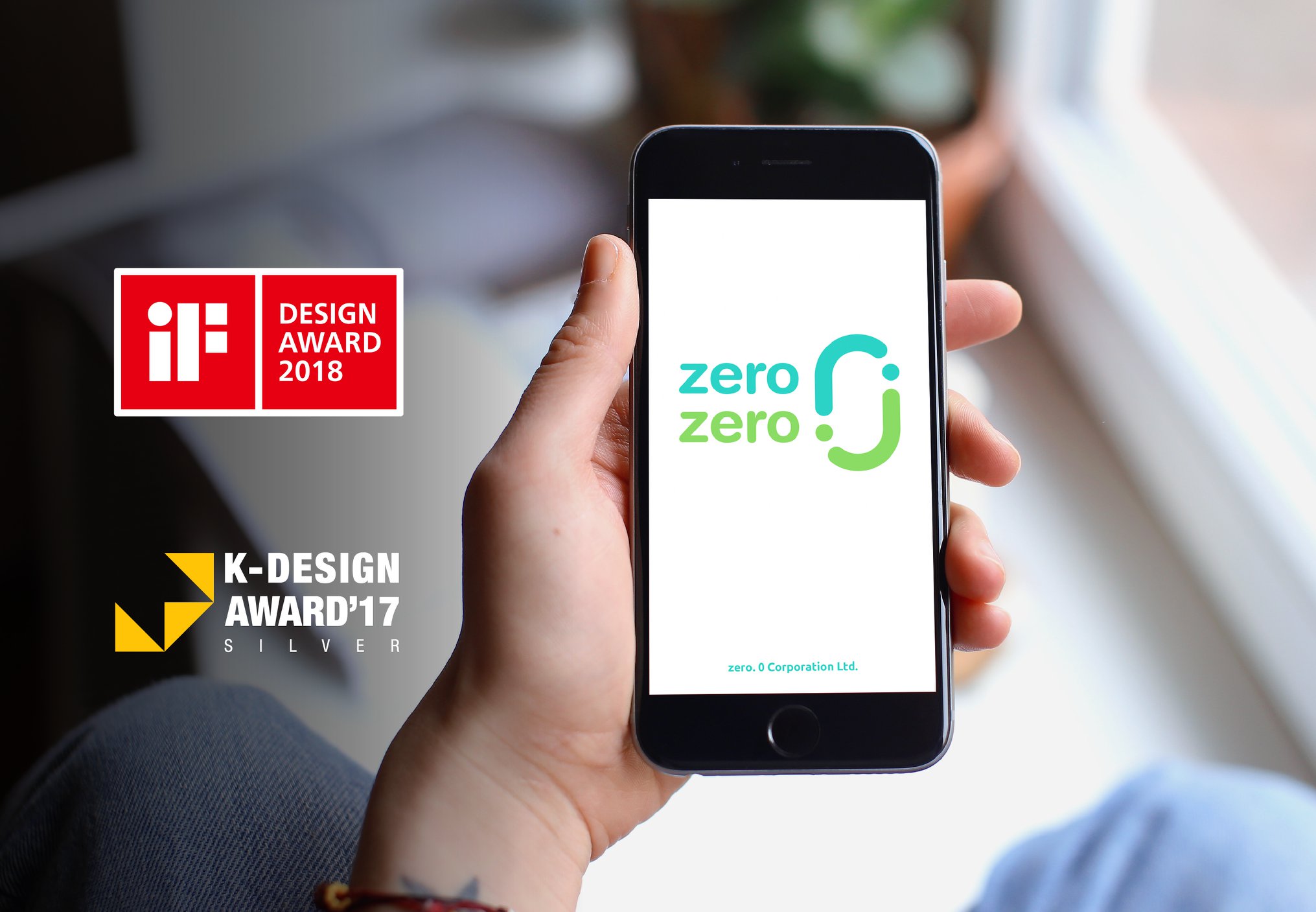
(Pro's branding project in collaboration with zero zero was recognized with the 2018 German iF Design Award and the 2017 Korean K-design Design Award.)
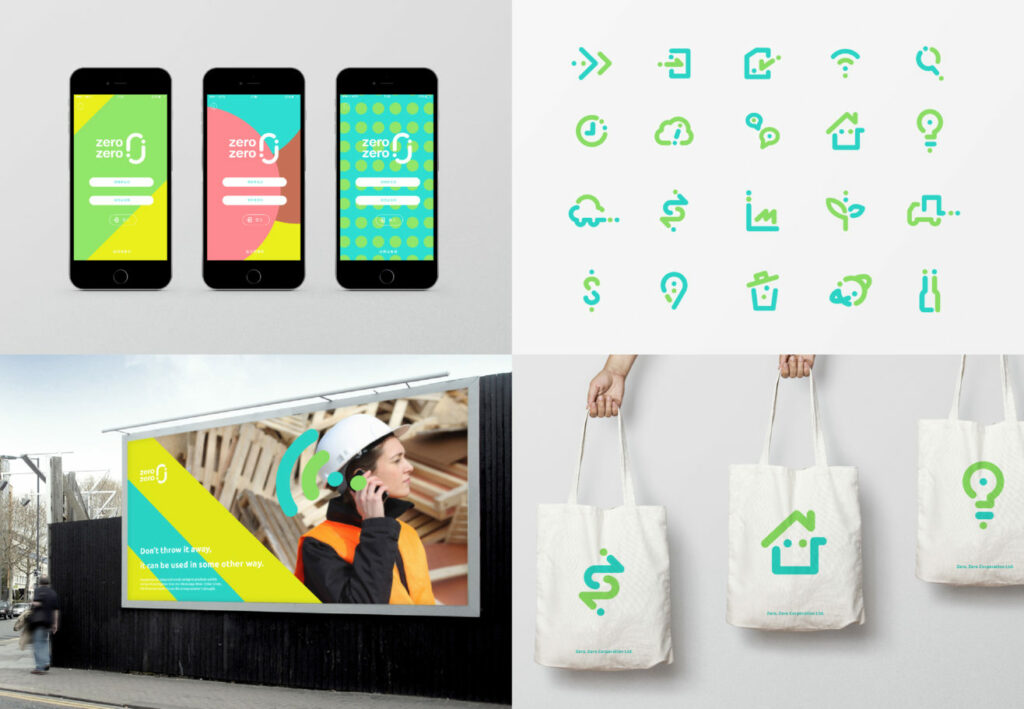
(At this stage, although zero zero's main market is Taiwan, the brand identity design is presented in a style that can be understood by the international community, which lays a good foundation for the future overseas market).
It is proposed to use the New Southbound and New Eastbound, together with the four niche industries, as the entry point for Taiwan's government and enterprises to focus on.
Mr. CHAN, Chairman of the Board:
Taiwanese companies need to have a clear self-positioning and consider themselves as global brands that can provide different experiences to customers from the moment they set foot in Taiwan. Following the government's New Southbound and New Eastbound policies, together with the four niche industries: ICT industry, smart city, health industry, and cultural and creative industry, there are good opportunities for Taiwan enterprises.
From the evolution of the Chinese market, we can see a very good case of emerging markets. There are only two types of brands left in China, namely, international brands and local brands, and in the past, in the 1990s in the Chinese market, Taiwan manufacturers unfortunately did not enhance their brand value to become an international brand, and in fact, lost a very good opportunity to practice global brands, and we can no longer afford to miss out on the opportunity of the new southward direction.
The New Southward: Demonstrating Corporate Brand Positioning and Value Proposition, A-Team Collaboration for Group Fighting
The New Southbound represents a market with a population of 2 billion and a rapidly growing GDP. When low prices and low costs are no longer Taiwan's strengths, value propositions and brand positioning need to be emphasized. Among them, enterprises need to have a vision to think about the market in 5 or even 10 years, and it is also recommended that enterprises cooperate with each other to strengthen the overall strategy of Taiwan's A-Team, which are the goals and positioning of Taiwan's brands that need to think about in the future of the New Southbound policy, and to avoid repeating the failure experience of Taiwan in the Chinese market in the 1990s.
New Orientation: National and Corporate Brands with High Value, High Functionality and CP Value
The New Orientation is aimed at the US market with a population of 300 million and high income, Taiwan should be able to assemble itself in the US market as a country and enterprise brand with high value, high functionality and CP value in the future. In the future, the New Orientation will not only combine the existing business models in ICT and smart manufacturing industries, but also follow the successful models of Seattle's 85oC and Din Tai Fung to think about the future direction.
Combining the strengths of four niche industries to make Taiwan the Switzerland of the Orient
Secondly, in the short-term layout of the niche industries "ICT industry" and "smart city", Taiwan's strengths in ICT industry can be utilized to promote Taiwan's enterprises, talents and national brand in AI and smart cloud. As for the "health industry", the aging population has led to strong demand, and if Taiwan can combine the two strengths of ICT and healthcare, the future is promising. In addition, global resources will be shifted to Asia in the future, and if Taiwan wants to seize the opportunity to become the Switzerland of the Orient, we must focus on strengthening our soft power in the cultural and creative industries such as culture and innovation, tourism, and food and beverage, and explore our own unique cultural discourse to become the leader of the discourse, so as to increase the value of the overall national and corporate brand.

Grasping the industry trend, branding power helps enterprises to break through!
If Taiwanese companies are to market globally, they need to think globally in terms of their business model and branding. Brands also need to have a clear vision, and once that vision is established, it is important to start with the end in mind and then push back, seeking key partners and resources to create value together. In the past, Taiwanese companies prided themselves on providing good quality products at low prices, but in the future, as we enter the branding stage, we must think about value propositions, whether they can solve the pain points of the target audience or satisfy their benefits, creating customer value, rather than just reducing costs and improving functionality without solving the actual needs of the customer. Therefore, in the future, in the eastbound and southbound markets, the first priority for Taiwanese companies is to understand the needs of the target group and create brand value.
AboutJules Lee
Jules is the Honorary Brand Consultant of Process Pro. He has worked for Singapore International Bookstore, New Zealand Tourism Board and Australian Tourism Board in Taiwan as an industry reporter and PR consultant. His rich experience in client service has sharpened his market insights, communication and management skills in branding, as well as all-around PR and marketing experience. He has served a wide range of clients, including Emirates Airline, Cuisinart, Allie Nutrilite, Unilever, Cathay Capital Holdings, Contact Singapore, Lucky Buckle, Airbnb, and many other well-known companies.
About Chen Chunshan
He is currently the Chairman of the Global Brand Management Association (GBMA), a professor at the Intellectual Property Research Institute of Taipei National University of Science and Technology, an independent director of Citibank, and a former chairman of the Public Television and Cultural Affairs Foundation and Chung Hwa Television Co. His rich experience in organizational leadership and risk management has given him keen socio-economic insights, and he has authored books such as Global Trends in the Next Ten Years, Interpretation of Cross-Straits Economic and Trade Policies: Cross-Straits Economic and Trade Relations and the Future of Taiwan's Economy. He is also the author of books such as Global Trends in the Next Decade, Cross-Strait Economic and Trade Policy Interpretation: Cross-Strait Economic and Trade Relations and Taiwan's Economic Future. This time, he was invited to share the challenges faced by Taiwanese companies and their southbound/eastbound strategies in the Brand Forum, which will surely help Taiwanese companies to successfully create brand differentiation in the international market.