
Insight
Create with consumers and gain insights into new business opportunities for brands.

In the era of brand co-creation, it is critical to identify a positioning that "differentiates" you from your competitors. Leveraging key resources and activities, we are constantly exploring ways to innovate in order to build a highly relevant and unique proposition. In addition, collaborating with external experts and internal colleagues can inspire more innovative products and services, and co-creation of products with customers in particular is also seen as an important strategy to further strengthen the emotional bond between brands and consumers.
The success of a brand does not only come from the strength of its products or services, but also from its ability to build a deep emotional bond with its target audience. Co-creation with customers also builds a deep sense of brand loyalty. Because consumers feel that their voices and opinions are valued and integrated into the development of the brand, through active interaction and co-creation, brands can create a unique product or service with shared values. This kind of customer-driven innovation can help brands to challenge traditional concepts and experiment with new business models and marketing strategies.
The concept of brand co-creation has emerged in the marketplace, and the collaboration of companies with external consultants, internal colleagues and consumers has become the key to success in practicing innovation in the marketplace. Hence the importance of brand co-creation at all three levels.
We work together with external experts to strengthen our brand leadership.
Nike is committed to providing innovative athletic products and services. To continually improve product performance and the athletic experience, Nike partners with external sports science experts to explore athletes' skills, physiology and real-world needs. Through co-creation, they work together to design and develop innovative products and technologies to improve performance and reduce injuries. This co-creation between the brand and external experts not only enhances the competitiveness of the product, but also raises the brand's profile as a leader in the field.

(Nike's Vaporfly 3 running shoe, dubbed the "most powerful shoe in the game," boosts speeds by about 4% in races. Image source:Nike)
Coca Cola has worked with fashion designer Karl Lagerfeld to create unique product packaging and imagery, launching limited edition fashion design bottles and collaborating with Jean-Paul Gaultier to create specially designed gift boxes. These collaborations not only bring design innovation to Coca Cola, but also bring higher fashion and artistic value to the brand, appealing to a wider consumer base.

(Designed by Coca Cola in collaboration with Karl Lagerfeld, the bottle is silhouetted in Karl Lagerfeld's signature ponytail shape. Image source:Coco Rocha Facebook page)
We work together with internal colleagues to stimulate collective wisdom and improve team cohesion.
Co-creation also emphasizes internal co-creation and cooperation between colleagues. Close cooperation between different departments and teams is essential for the realization of Co-creation, as internal colleagues are able to share knowledge, skills and resources, and cross-departmental discussions can promote and stimulate innovative products and services. Internal co-creation can also increase collaboration and communication between teams and improve efficiency.
Google has implemented an internal innovation program to encourage employees to share and express their creativity and ideas. In this program, Google provides an innovation platform where they can submit innovative projects internally and participate in cross-departmental teams. This internal co-innovation activity promotes knowledge sharing and cross-functional cooperation, and stimulates employees' creativity and innovation.

(Google Labs integrates internal innovation services with long-term investment development programs. Image source: Google Internet company)
P&G (Procter & Gamble) has established a Brand Innovation Group, comprised of people from different departments. The goal of the group is to foster brand innovation and growth through cross-departmental collaboration and knowledge sharing to drive new product development and marketing. The Bauchau Beauty Division launched a 3D interactive virtual immersion experience that combines innovation and the Responsible Beauty program to understand the full scope of the brand's message, both internally and externally. This collegiality allows P&G to transcend traditional departmental boundaries and break down walls within the organization in order to inspire others, drive progress and accelerate positive change. Increase innovative, high-quality products.
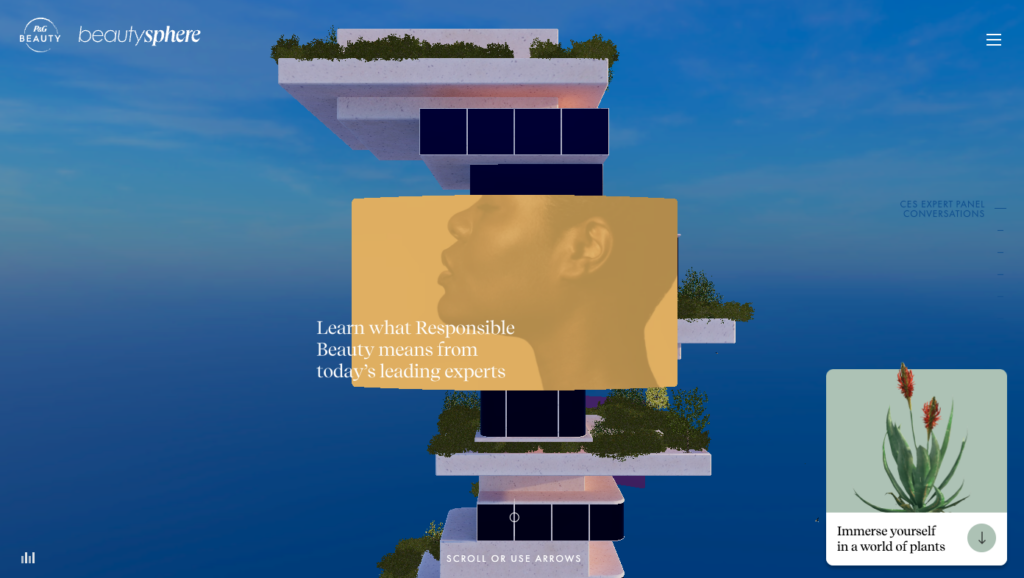
(Bauchau Beauty launches the Responsible Beauty program, which combines innovation and responsible beauty. Image source:beautysphere)
Create with consumers and gain insights into new business opportunities for brands.
The core of brand co-creation is the communication with consumers. Consumers are no longer just passive recipients of products and services, but are seen as key participants in the innovation process. Through interaction, interviews and research, brands can understand consumers' needs, preferences and expectations, and then co-create products and services that better meet market needs. It also builds consumer loyalty, word-of-mouth and brand identity, while providing companies with valuable market insights and innovation opportunities.
LEGO has set up a platform for consumers to submit their own design concepts and vote and evaluate them with other consumers. When a design receives enough votes, LEGO will evaluate it and consider it for production as an official product. In this way, consumers can directly participate in the creation and selection of LEGO products, and jointly shape the direction of the brand. At the same time, this kind of co-creation activity increases consumers' sense of participation and loyalty to the LEGO brand. When a design is successfully produced as an official product, consumers feel proud and are willing to buy and collect this special LEGO set.
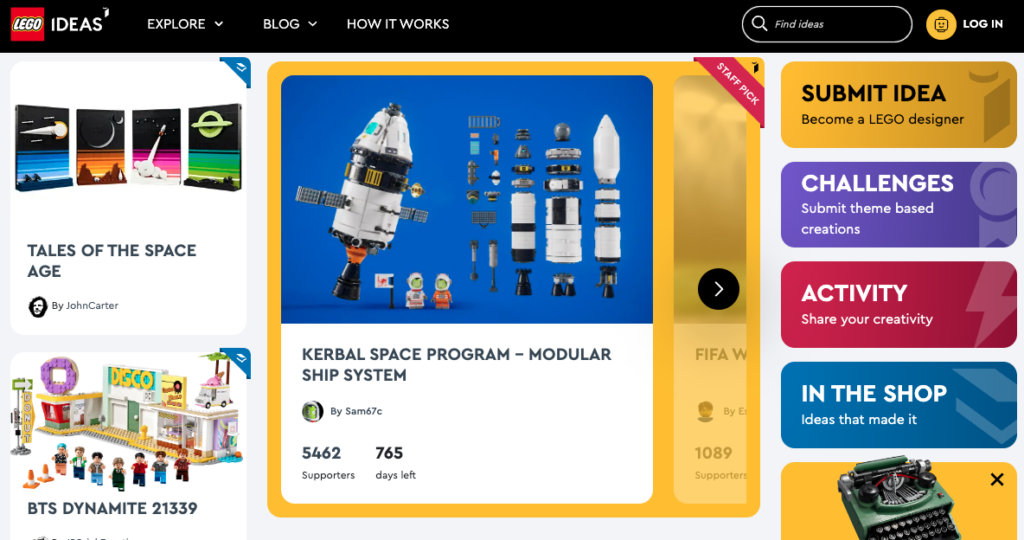
(Fans on the LEGO IDEAS platform provide their own "creative ideas" and open it to the public for voting. Image source:LEGO IDEAS)
GoPro has set up a community video sharing area to encourage consumers to share their own videos with GoPro's official social media platform. Consumers can show their creativity and communicate with other consumers through this platform, and GoPro will also select outstanding videos for promotion, transforming consumer stories into brand stories with a closer connection, and increasing the interaction and connection between consumers and the brand in this mode of co-creation.
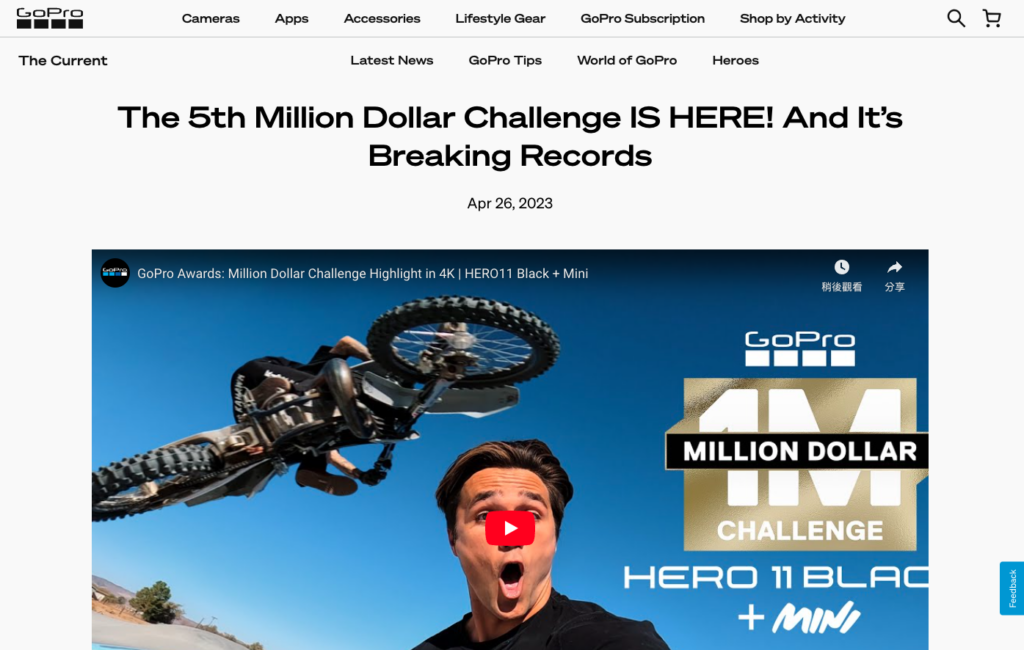
(GoPro's marketing strategy regularly organizes video-sharing events for gamers to increase consumers' bonding with the brand. Image source:GoPro (mobile phone company))
In short, co-creation requires a spirit of experimentation and learning. Co-creation emphasizes collaboration between companies and external experts, internal colleagues and consumers. Co-creation can help brands gain market insights, innovative thinking and expertise, and accelerate the process of product development and brand building. In doing so, companies need to embrace uncertainty and be willing to learn from failure and optimize their positioning to differentiate themselves from their competitors. Through multi-party co-creation, the company can gain a deeper understanding of the real needs of consumers and increase trust in the brand, which in turn builds loyalty and enhances brand value.