Interview
PRORIL's Vice President, Mr. S.D. Wu, on Corporate Succession: Finding Value in the Past, Thinking of the Present in the Future
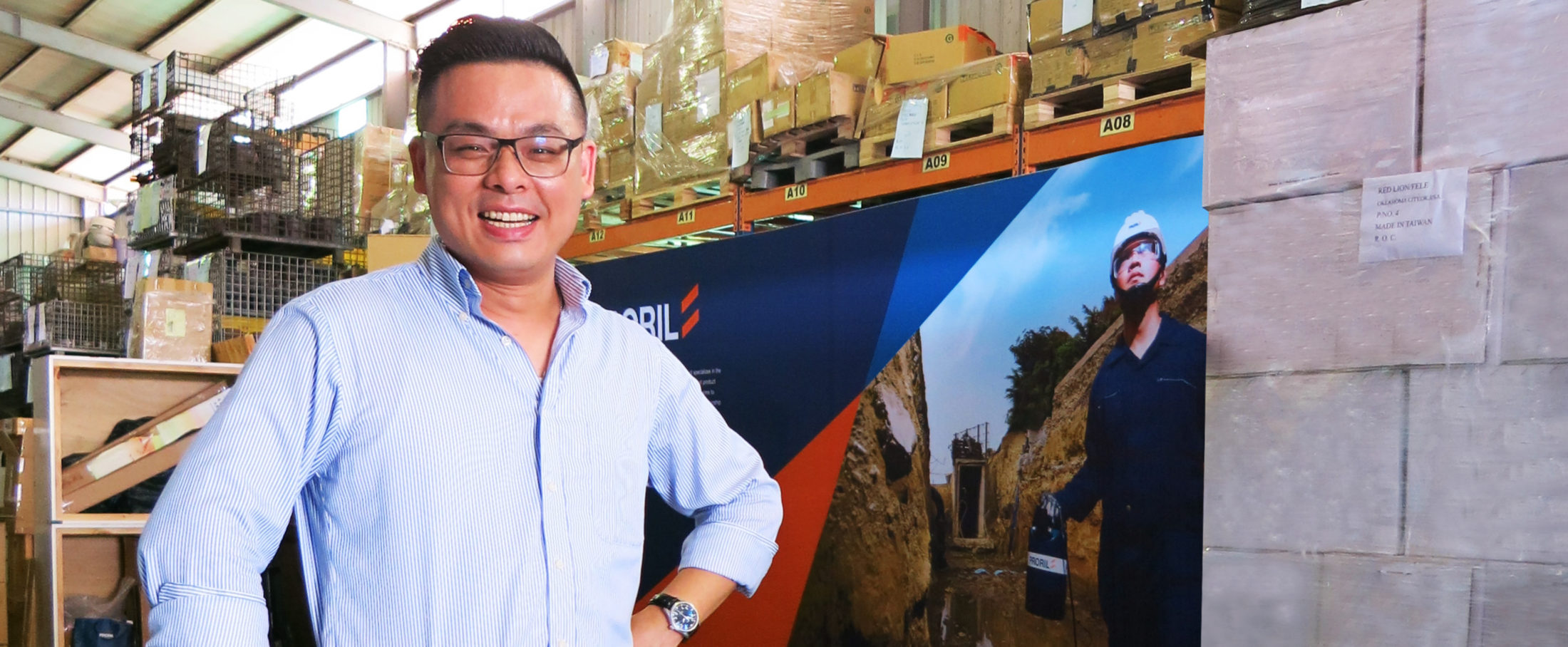
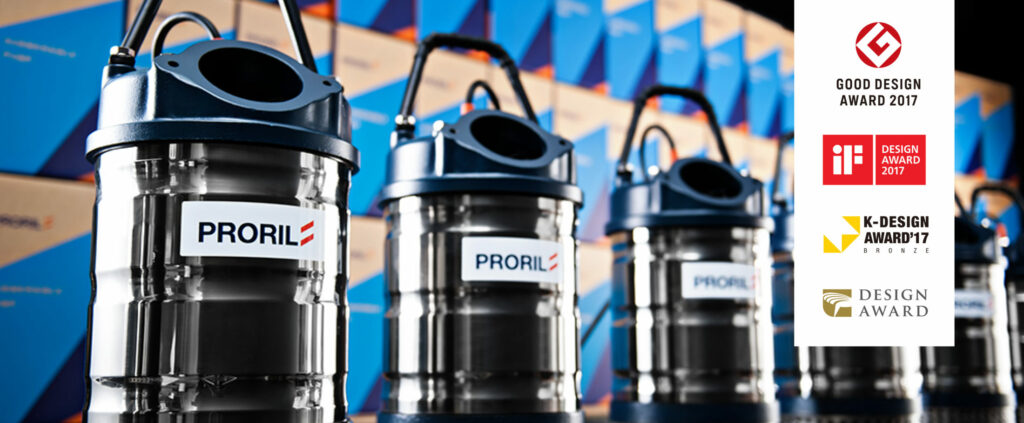
PRORIL, a pump brand from Taiwan that has just won the Good Design Award in Japan, has been assessed by the judging panel as "PRORIL's design is not only a novel change for traditional industrialists, but also an indicator of the visualization of brands in the same industry through the linkage between the industry and design". Since the launch of the brand, PRORIL has not only swept the world's design awards, but has also continued to develop new markets with great success. The important driving force behind this is the second-generation successor, Mr. Wu Shidun, who is now the vice president of the company. Taking over a small and medium-sized enterprise from traditional OEM to brand building is not only a difficult and long road, but Wu Shidun affirms, "It's a road we must take.
Good Design Japan Good Design Award Winning Files
Title: PRORIL Brand Design
Category: B3-01 Commercial Media - Content / Branding - CI
Designer: Process Pro Brand
Manufacturer/Customer:Fang Sheng Mechanical & Electrical Co.
Design description: PRORIL transformed from the traditional pump OEM to establish its own brand, and create a dynamic and professional brand image for the international market. The brand identity is formed by simplifying the concept of upward rotation of water in the pumping process. In the design and application of the dynamic visual structure of the unique identification elements, and other competing brands to make a comparison, the visual performance of the variability, but also have a consistent brand characteristics.
According to the 2016 White Paper on Small and Medium-sized Enterprises, Taiwan's small and medium-sized enterprises amounted to 1.384 million, accounting for 97.69% of the total number of enterprises in Taiwan, and most of them are in the form of family-owned enterprises, with a quarter of them having been founded more than 20 years ago, and facing the opportunity of second-generation successors one after another. However, with the changes in the general environment, the second generation of successors have to face more internal and external challenges than before: internally, how to gain the recognition of senior employees within the enterprise, and externally, how to carry on the precedence of the past and the future, and to strike a balance between the continuation of the previous generation of business and innovation, is actually not easy.
Letting go is the greatest support for the second generation.
When it comes to succession, Mr. Wu feels lucky to have a father who is willing to let go. He said that many second-generation people, after learning a lot of basic management theories, will have a lot of new ideas when they see the company operating in the traditional way, but this is often the beginning of the conflict between the two generations. The first generation will think, "This is the way I built my fortune," but the second generation will think, "The times are different, so how can we make progress if we don't reform?
Wu Shidun said he often expressed his opinion that the company should be this way or that way, but his father just replied to him lightly, "If you want to do it, you go ahead and do it. In the past, he always thought that his father was unwilling to support the betting, after all, he is a seasoned veteran, who would believe a young kid who is just starting out in society? But as he grew older, he realized that these words were in fact the greatest support his father had ever given him, because "he was really willing to let me do it," Wu Shidun said.
Take the brand construction as an example, the whole company needs to spend a lot of time, money and resources to cooperate and organize, and no one is sure of the results after doing it, everything seems to be an unknown, but the general manager thought that since Wu Shidun put forward this proposal after evaluation, "If you want to do it, let's go for it. These words allowed Wu to rest assured that the transformation would take place, and he personally participated in the entire process, experimenting, identifying problems and making corrections, and finally launching the PRORIL brand, which has been recognized by all sectors of the community.
The biggest challenge of succession is not only to take the lead, but also to set the stage.
When it comes to the succession of the second generation of an enterprise, the general public's stereotypical impression is that "the resources are all left behind by the first generation, so as long as the second generation takes over and doesn't mess up, it's fine", but in fact, in addition to "taking over the first", there is also a very important mission, which is to "kick-start the future". Wu Shidun said that the previous generation had worked hard and spent several decades to create the kingdom, and the successor should of course think carefully about "what are you, what will the company become in the next 10 or 20 years?
What will I say about this company 10 years from now?
It was this idea that made him constantly think and evaluate the future direction of the company. If the status quo is maintained and other developing countries rise up and take away the OEM market with lower costs and prices, what should we do then? Although PRORIL is a small company that started out as a traditional OEM, this shortcoming has become another advantage because it doesn't have the burden and difficulty of changing the name of an existing brand, which makes Wu even more certain that it will move forward in the direction of brand building. "Since we have to do it sooner or later, why don't we start early and do it now?" he says. said Mr. Wu.
Successors understand more about corporate values and culture through brand building
During the actual collaboration with Process, PRORIL spent a lot of time reorganizing internally. "We had a lot of questions to answer because that's how we could really tailor the brand," laughs Wu. "Process had a lot of questions for us to answer, because that's how we can really customize the brand for the company," laughs Wu, "but in the past, we just knew how to work, we didn't even think about these questions.
Although it is time-consuming to think about these issues, it is also an opportunity for everyone to reacquaint themselves with themselves and find their self-worth. Mr. Wu also said that in the process of looking back, he was able to slowly understand the management philosophy of the previous generation, and at the same time, he observed that the entire company has a corporate culture of "allowing mistakes", which encourages employees to try new jobs and positions, and emphasizes the inheritance of work content. The deeper he understands the past, the clearer he knows how to lead his employees and the more affectionate he feels towards the company.
"The previous generation started from scratch and worked their way up to the present, and in the process, they relied on trial and correction to get better and better. No one is born knowing everything, so we let our employees try different jobs in the factory. It doesn't matter if they make a mistake at the beginning, because it's only when they make a mistake that they know where the problem is and how to improve, and mistakes are the best teachers. Mr. Wu believes that "emphasizing on inheritance and constant revision" is the DNA of PRORIL's corporate culture, which makes him realize that the growth of an enterprise does not lie in its performance, but in its people. Especially in this kind of small and medium-sized enterprises, the value and achievement of the employees are far greater than the value of the output itself, because each employee represents a family, and the family can only be stabilized if the employees can work and earn an income, and will not be broken easily.
Corporate succession emphasizes communication and respect between the two generations.
In contrast, Wu Shidun's succession path seems to be relatively smooth, but he also emphasized that communication between the two generations is very important, Wu Shidun said, "In fact, everyone's starting point, are for the good of the company, so communication should respect each other, and jointly for the search for a balance between the two points to discuss. He pointed out that the first generation of operators in place, so the younger generation should not only recognize the other party's efforts and do, but also to study and learn their way to success; the first generation should also be recognized, the second generation is willing to take over, rather than choosing to go their own interests, it means that they are willing to carry the responsibility, and should let go of the opportunity to allow them to try to have practice. Making mistakes is the best way for the second generation to learn, and I believe that even if they mess up at the beginning, the first generation must have the ability to help remedy the situation. Otherwise, if they never dare to let go of their responsibilities, and when they really need it, the next generation is not yet ready to take over the reins of the company, the company will undoubtedly be exposed to a greater risk.
For the second generation to take over the reins of the company, brand building is a good way to examine the value of the company and at the same time unite the company's centripetal force, and with its own brand, there will be a criterion for future planning and decision-making, so that the company will not lose its focus or shoot at random, and will be able to focus its resources on branding, so that the company can continue to go on for a longer period of time and more steadily.