Insight
XYZ Generation III Brand Memory

Brand memory is the convergence of people's impressions and feelings about a brand, and it is the sum of brand experiences that are gradually formed in the process.
For example, today's Generation X, Y, and Z have different brand memories: Generation X, which emphasizes brand history, quality, and reliability; Generation Y, where social values, sustainability, and interaction with consumers are more important; and Generation Z, a generation of young people who place more emphasis on brand innovativeness, technology, and performance in a digitalized world.
As a result, the way brands interact with their customers is heavily influenced by personal life experiences and the context of their environment and time. So, let's explore how classic brands interact with all generations!
Representative brands of each generation
In the darkness of the office building, we were the only one left lit up, reflecting the moonlight that was particularly bright tonight, as if we were trying to fight against the night of the whole city. The team was exhausted after the marathon battle.... As the PM, I wanted to give the team a boost, so I volunteered to go to the convenience store to bring back recharged energy drinks for everyone, and asked them what they wanted to drink. Two voices broke out of the crowd, "RedBull!
Suddenly there was silence... Kim, who had just graduated this year, asked in a small voice, "What was that that Ken said...?" The team suddenly bursts into laughter, "Hahahahahaha! There's an age difference!
Well, it's true that every generation has its own representative brand.
Brand memory is the deep impression of a brand in the minds of consumers, and since consumer behavior is both emotional and rational, consumers of different ethnic groups, ages, or values will have different links and preferences for the same brand, and these different memories and values are intertwined to form a rich impression of the brand.
Generation X: I'm practical and only want what I need.
In the 60s and 70s, when Generation X was in the midst of the world's post-war turmoil and the world economy was facing the challenge of inflation, the affordable RT-Mart, the durable Levi's jeans, and the fuel-efficient Toyota automobiles became the favored brands and common memories of the Generation X. The Generation Xers are now in their 60s and 70s, when the world was about to recover from the post-war turmoil and the world economy was facing the challenge of inflation.
As a channel for the general public to purchase daily necessities, RT-Mart has created efficient supply chain management, inventory management and improved distribution efficiency through the introduction of information systems, etc. It has transformed this advantage into a low-priced strategy to reward customers and gain high satisfaction. At the same time, it has created its own brands to control costs and provide consumers with competitive products to choose from, which has attracted a large number of consumers to enter its stores and allowed for rapid store expansion amidst the economic uncertainty. This has enabled the Company to attract a large number of consumers to its stores and expand rapidly in an uncertain economic environment.

(Source: RT-Mart website)
Generation Y: I buy more than just goods
Generation Y is represented by brands such as Amazon, which started out as an online bookstore and has since expanded into a full retail channel; Patagonia, an outdoor brand created to protect the planet; and Apple, which has set the world's trends and created a whole new era of cell phones. The history of the retail industry can be traced back to ancient Rome, when people exchanged and purchased goods on the streets of the marketplace, and what makes Amazon, the leader of the epochal retail industry, stand out in such a historic and competitive market? What makes Amazon, the leading retailer of its time, stand out in such a historic and competitive marketplace?
The economic growth and technological revolution of the late 20th and early 21st centuries brought about relatively steady growth in the global economy, and the rise of digital technology changed the way people live and work. Amazon stood at the head of the wave of the times and grew at an astonishing rate together with the Internet industry; however, economic development also brought about a burden on the environment. Amazon, as a visionary enterprise, committed to contributing to the environment while growing, making its environmental goals public for the first time in 2014, and continuing to strengthen its progress. Because of its courage to make promises and actually fulfill them, Amazon has won the recognition and appreciation of Generation Y, and its subsequent subscription services are also in line with the public's shift from a "product-centered" to a "customer-centered" consumer mindset, which replaces the previous one-time buyout relationship and replaces the "product" with "service" as a long-term business to meet the real needs of the consumers, making it still standing today. This is the reason why the company is still standing today.
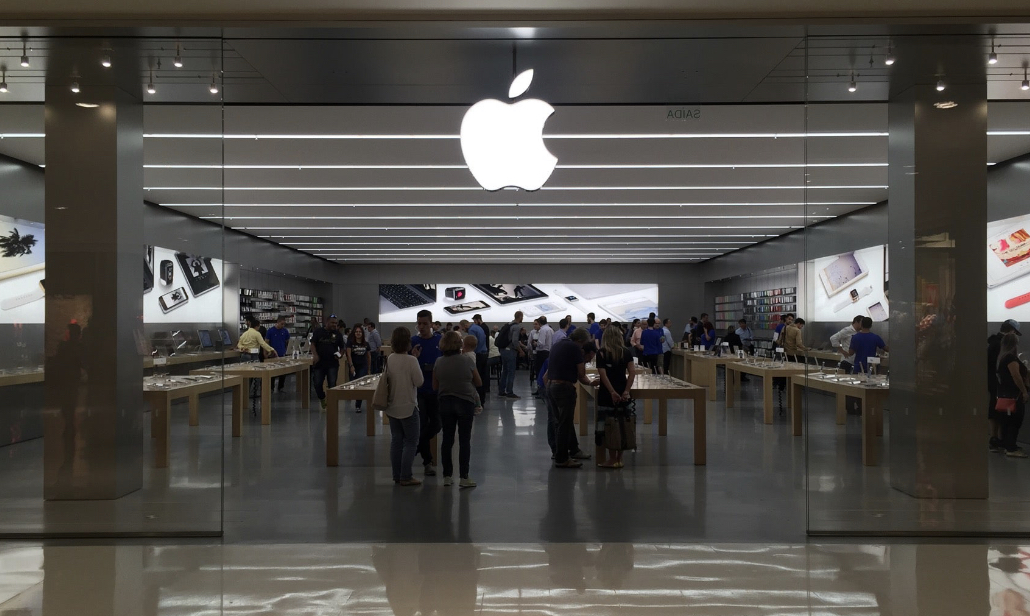
(Image source: Apple official website)
Generation Z: I don't follow the crowd, I lead the way!
Some of the most popular brands amongst Generation Z are Laka, Topologie and TikTok.
Laka Cosmetic's brand philosophy is to "love beauty regardless of gender", hoping to break down gender boundaries and convey the message that "your beauty shouldn't be defined, create your own rules in your own way, your own beauty, without competition. Topologie's founder has injected the soul of this bag accessory brand with an adventurous spirit, and each series of products retains the flexibility to be matched with each other, giving customers the freedom to create their own style.TikTok, a new short-form social media platform, not only replaces the static content sharing of the previous social media platforms, but also reverses the perspective of posting to "other people", and sends the post from the perspective of "oneself", and provides It also provides editing functions such as editing audio and video content of songs, which is more suitable for displaying creators' personalized features and capturing listeners' attention.
For Generation Z, the choice of brands is a vehicle for them to express their self-consciousness and uniqueness. TikTok fits the values of instant interaction and self-expression that Generation Z emphasizes, and has thus risen to become the mainstream social media platform of this generation, and has also become a new type of consumer diversion point that is different from the previous online and offline retailers. With the advantage and loyalty of the vast number of users, merchants are actively investing their advertising and marketing budgets in anticipation of turning the flow of people into a flow of money.

(Source: Topologie official website)
RT-Mart, Amazon, and TikTok represent the consumption patterns of Generations X, Y, and Z. Although the three brands have very different styles in terms of their business models, sales channels, and brand values, all three of them have a large number of users and enjoy global recognition in their respective generations, and all of them emphasize on interacting with consumers and displaying a considerable influence on the global market.
Generation X emphasizes on the practical experience and high C/P value of consumption, and RT-Mart's many offline physical stores satisfy the public's need for convenience, product comparison, and competitive pricing to capture the hearts of the people. Generation Y not only seeks to provide the basic functions and benefits of consumption, but also seeks for a deep service experience, emotional satisfaction, and even self-expression. Every purchase is a vivid expression of values, and Amazon is winning hearts and minds with its "customer-centric" strategy and commitment to the environment. Through continuous optimization to keep pace with the times, Amazon has accompanied the growth of Generation Y, and together they have become the backbone of the modern era. TikTok, with its flexibility, creativity, and ease of self-expression, has risen to prominence in the fiercely contested social marketplace, and has become a big hit with the Generation Z community.
Conclusion
In conclusion, cognitive and emotional brand memories are intertwined to create a unique bond between consumers and brands, and this relationship is strongly influenced by generational characteristics.
The examples of RT-Mart, Amazon and TikTok show how successful brands combine innovation, commitment and strategies that align with specific generational values to build a large customer base and stand out in the marketplace. They have flexibly utilized technology, social media and environmental commitment to build deep connections with different generations of consumers and become iconic brands of their time.
In the future, with the development of new technologies and the evolution of consumer values, brands will continue to play an important role in leading generational consumption trends. Understanding generational differences and respecting and catering to the needs of different groups will be the key for companies to maintain their competitive edge. In this ever-changing market environment, brand choice and consumer behavior will continue to evolve, making it a dynamic and challenging field.
Want to be a brand that lasts? Talk to us!