Interview
How to design the exhibition booth?
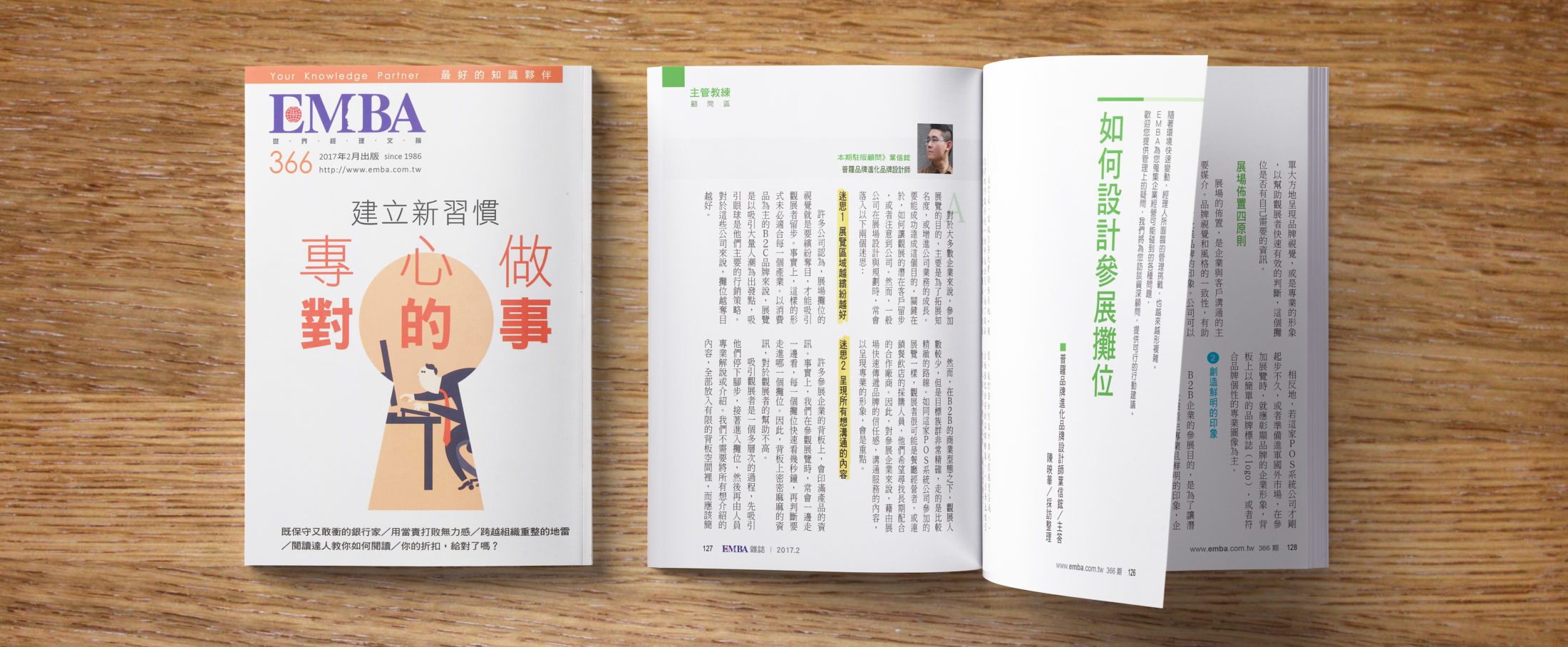
EMBA Magazine Interviews
For most enterprises, the purpose of participating in exhibitions is to expand their visibility and increase their business growth. How to achieve this goal? The key lies in how to make potential customers stay and notice the company. However, companies often fall into several myths when designing and planning exhibition venues. How can a company effectively strengthen its brand image through exhibitions?
Myth 1: The more colorful the exhibition area, the better!
Many companies believe that the visual appearance of exhibition booths should be colorful in order to attract visitors to stay. In fact, such a format may not be suitable for every industry. For consumer goods-based B2C brands, exhibitions are designed to attract a large number of people. Attracting eyeballs is their main marketing strategy, and for these companies, the more eye-catching the booth, the better.
Myth #2: Presenting everything you want to communicate
Many exhibitors' backboards are full of product information. As a matter of fact, when we visit exhibitions, we often walk and look at each booth for a few seconds before deciding which booth to enter. Therefore, the dense information on the backboards is not very helpful to the visitors.
Attracting visitors is a multi-level process. First, we should attract them to stop and enter the booth, and then the staff will explain or introduce the products professionally. We don't need to put all the contents we want to introduce into the limited space of the backboard, but should simply and generously present the brand's visual or professional image to help visitors to quickly and effectively determine whether this booth has the information they need.
Four Principles of Exhibition Venue Decoration
The layout of the exhibition hall is the main medium of communication between the enterprise and its customers. The consistency of brand vision and style helps customers to deepen their impression of the company's brand. Companies can refer to the following four principles to think about how to expand their brand by taking the core value of the brand as the starting point:
1. Choose a brand or a product
In exhibitions, whether we are brand-oriented or technology-oriented is the first question that enterprises must think about, for example, (Philips) is a familiar brand. For example, Philips is a familiar brand. If the purpose of Philips' exhibition today is to introduce its latest TVs, it does not need to focus on introducing its brand, but should try to introduce the technology and functions of its products as much as possible.
On the contrary, if the POS system company is just starting up, or is about to enter the foreign market, when participating in the exhibition, it should show the brand's corporate image, with a simple brand logo on the back panel, or professional images that match the brand's personality.
2. create a vivid impression
The exhibition purpose of B2B enterprises is to let potential customers have a professional and vivid impression of the enterprise, enterprises may refer to the following three directions:
(1) Own the brand concept.
A company must have its own brand philosophy. For example, it is Philips' brand belief to create innovations that are relevant to people, so Philips' innovations are relevant to everyday life. In terms of brand vision and product design, it is presented with a more rounded feel, with the main consideration coming from the feeling of being around people.
Another example is the sports brand Under Amour. While Nike and Editronics are usually endorsed by star athletes who have achieved great results, Under Amour takes a different approach based on the brand's philosophy of making athletes stronger. They emphasize how the company uses different functional materials to help athletes get to the next level, and this philosophy is reflected in their marketing strategy. Andromeda's spokespersons are usually second-tier athletes, or athletes who were once underappreciated.
(2) Design a unique brand image.
In this section, the company can think about how its brand is different from its competitors, so as to distinguish its own unique positioning and incorporate it into its brand image. For example, the brand image of a soft drink is often presented in blue, but Coca-Cola uses red to differentiate itself from other brands in the market. Creating a unique brand color and style can deepen people's first impression of the brand.
If the POS system company does not have its own brand logo, or brand visual image, it is easy to make customers wary, with a professional brand image, customers will be easier to generate a sense of trust in the enterprise.
(3) Think about brand touchpoints.
In an exhibition, a company should think about the possible touch points of the visitors and consider the environment and the visual context. For example, visitors will see the backboards of the booths, the brand videos shown, the brochures on the tables, and the company's service personnel. Whether it's the literature, the video or the staff, visual consistency helps convey a sense of professionalism and deepens the impression.
Therefore, it is important to put the same visuals as the backboard in the slide show and the literature. Especially, some visitors may not come to the exhibition to ask questions, and they can judge whether to contact the company later by the literature they get at the exhibition. Exhibitors must also be uniformly dressed and have name tags to help visitors recognize them.
3. planning for a well-developed consumer experience process
The company's service personnel are the best spokespersons for the brand, and prior training on the consumer experience process is an important step. For example, this POS company had to make all the service staff understand the company's design of the experience process: when a visitor walks into the booth, he is first allowed to freely view or try out the system, and then after 30 seconds, the exhibitor will come forward to understand the needs and introduce the product.
In this part of the service personnel to introduce the product, should be prepared in advance, customers may ask questions and answers, and trained to each staff to systematically describe the advantages of the product. In addition, the machine can also be prepared in advance a few crisis management practices, for example, if the demonstration machine is broken how to deal with, or encountered when someone complains about the product should be how to deal with.
Interaction with visitors at exhibitions is a valuable asset for companies. Companies may want to prepare a questionnaire to record questions from visitors or features they care about, so that they can contact visitors in the future or provide them with regular updates to build a good relationship.
4. Provide simple and clear communications
The function of literature is to explain the information that the visitors cannot understand immediately on site, so that they can read it in the future, and it also helps to discuss or compare in the future. Therefore, when designing publicity, we should avoid lengthy text descriptions, and try to use images or videos to increase the sense of vividness, help readers understand the information faster and deepen their impression.
Exhibition focus for B2B enterprises: For B2B enterprises, it will be a key point to quickly convey the brand's sense of trust through the exhibition venue and communicate the content of services to present a professional image.
Reduce errors and save costs.
For B2B companies, the strategy of exhibiting at trade shows is often to keep a precise budget in order to save costs and increase the number of exhibitions attended. In the actual process of planning exhibition booths, pay attention to the following four points, you can save the production and communication costs.
1. Brand control
Brand control is a very important principle when participating in trade shows. Without brand control, certain mistakes may be made. For example, a company has a different marketing plan for each season. This season's show is to market product A, and the person in charge of marketing product A will contact the manufacturer directly. The manufacturer has designed a gorgeous exhibition space using popular LED technology, but the company's branding philosophy is steady and understated: or, in some overseas exhibitions, the agent is in charge of the show, and on the back panel of the exhibition space, the agent prints its own branding logo even bigger than yours. All these may cause confusion to the customer's impression of the brand, and make the enterprise's brand image more and more blurred.
To avoid this and to ensure long-term brand consistency, it is recommended that a "brand champion" be established within the organization and that a brand manual be developed. The "Brand Maintainer" is responsible for communicating the brand's philosophy and image to the partner companies.
For example, if a brand wants to be generous in its presentation, since everyone may not have the same image of "generous", it is necessary for the brand manual to strictly define the brand image. For example, the brand logo can not be changed into which colors, the brand image can only be used in which places, the agency logo can not be larger than the brand logo, etc..
2. Communication of front-end operations
Many companies often start to design the booth layout after deciding to participate in the exhibition, and after completing most of the design, they realize that it does not meet the purpose of this exhibition. Before designing the exhibition space, companies should first clarify the purpose of the exhibition, the way of product marketing, or the message that the public relations department would like to convey, etc. With this step, they can unify the exhibition space for this year. With this step, the main vision of the exhibition hall can be unified for this season or this year. This can save the cost of back and forth communication, and also avoid the mistakes caused by poor communication.
3. Selection of exhibition tools
Many B2B companies sell their products not only in the Taiwan market, but also need to participate in major overseas exhibitions to expand their business territory. If the setup of each exhibition, such as display cabinets, tables, or backboards, needs to be constructed by local manufacturers, this, along with the venue rental fees and on-site labor costs, can be a huge expense for the company and is not very environmentally friendly.
It is recommended that companies choose modularized equipment that is more cost-effective and lightweight. It is more cost-effective to set up the exhibition area with simple tools. Some companies think it is not cheap to buy modular equipment, but considering that the tool can be used many times and spreading the cost over each exhibition, they will find that it is much more cost-effective than making it every time.
4. venue, time and manpower constraints
One of the worst nightmares of an exhibition is when the layout of a hard-designed exhibition space goes wrong or is not completed on schedule. Therefore, companies need to pay attention to the size of the exhibition venue, the time and process of construction, and the arrangement of staff deployment. When exhibiting overseas, if the production of the exhibition venue is entrusted to local manufacturers, the construction and completion time should be paid attention to.
If you are bringing your own display tools and large machines, you will need to calculate the time and cost of shipping or air freight, especially since shipping time is usually longer.
People often don't remember the name of an exhibition, but they do remember one of the paintings inside, because images are easier to remember than words. Taking the purpose of the exhibition and the brand concept as two materials, we can create a professional visual that belongs to ourselves, and consistently apply it to the exhibition venue decoration, literature, and service personnel and other contact points, which will help to increase the chances of potential customers stopping by.
Brand touchpoints: In an exhibition venue, companies should think holistically about the possible touchpoints of visitors and consider the environmental and visual context.
Participation in Exhibition Inspection Form
- Clarify the purpose of the exhibition and the main visualization of the exhibition hall.
- Ensure that the main visualization of the exhibition hall is consistent with the corporate brand personality.
- Booths, literature, videos, and people, showing a consistent vision.
- Exhibitors are able to systematically describe the features of their products.
- Provision of easy-to-read, graphically-illustrated publicity
- Pay attention to the setup time and manpower arrangement
[Case Sharing]
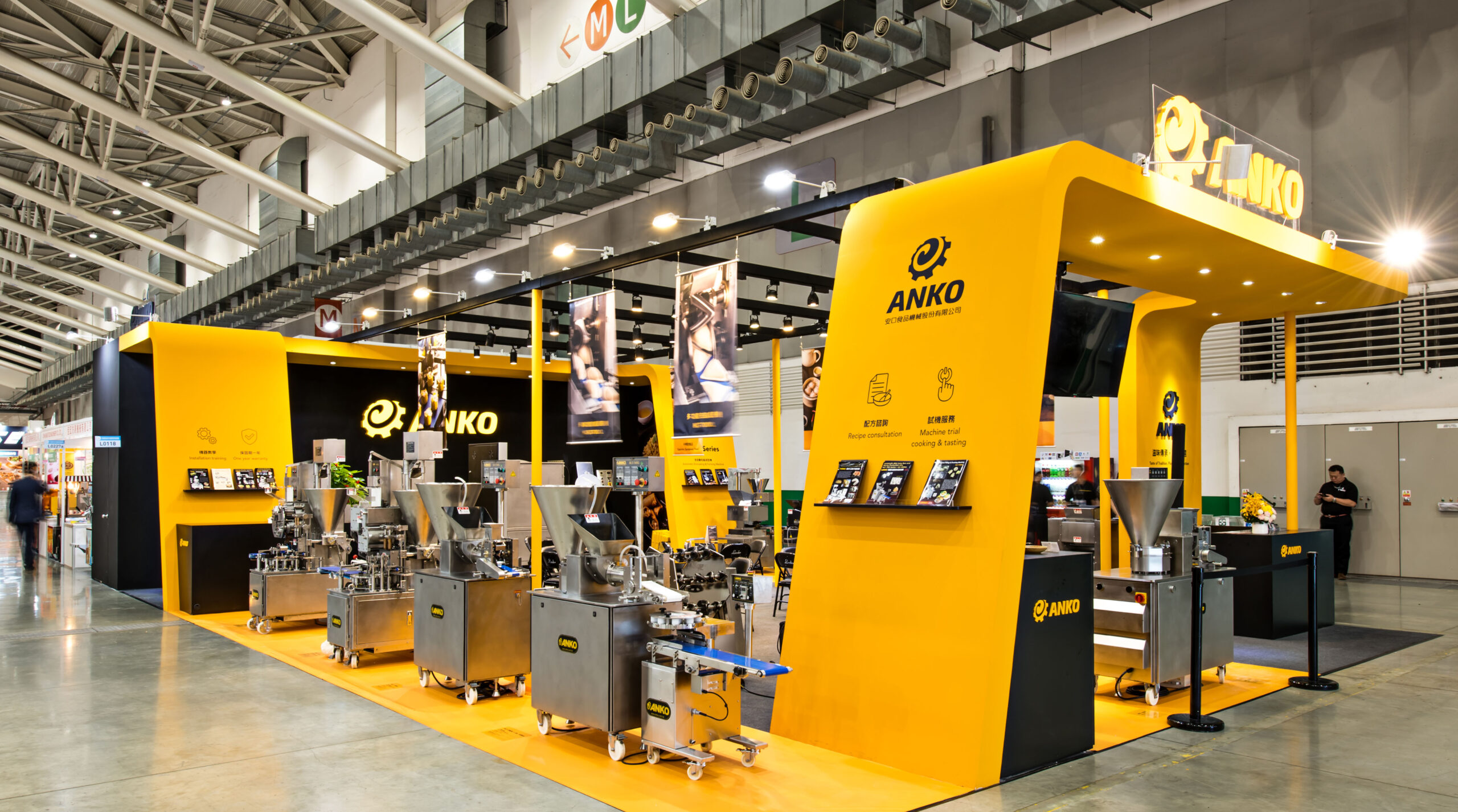
Established in 1978, ANKO Food Machinery is the leader of Taiwan's food machinery industry. Sensing that the Taiwanese market is too small, ANKO has been expanding overseas since the early days of its establishment, from traveling across the ocean to meet customers face-to-face to persuade them to place orders, to participating in international exhibitions and exhibitions every year through the website, expanding its territory to five continents around the globe.
Want to know more about ANKO machinery>>
[Case Sharing]
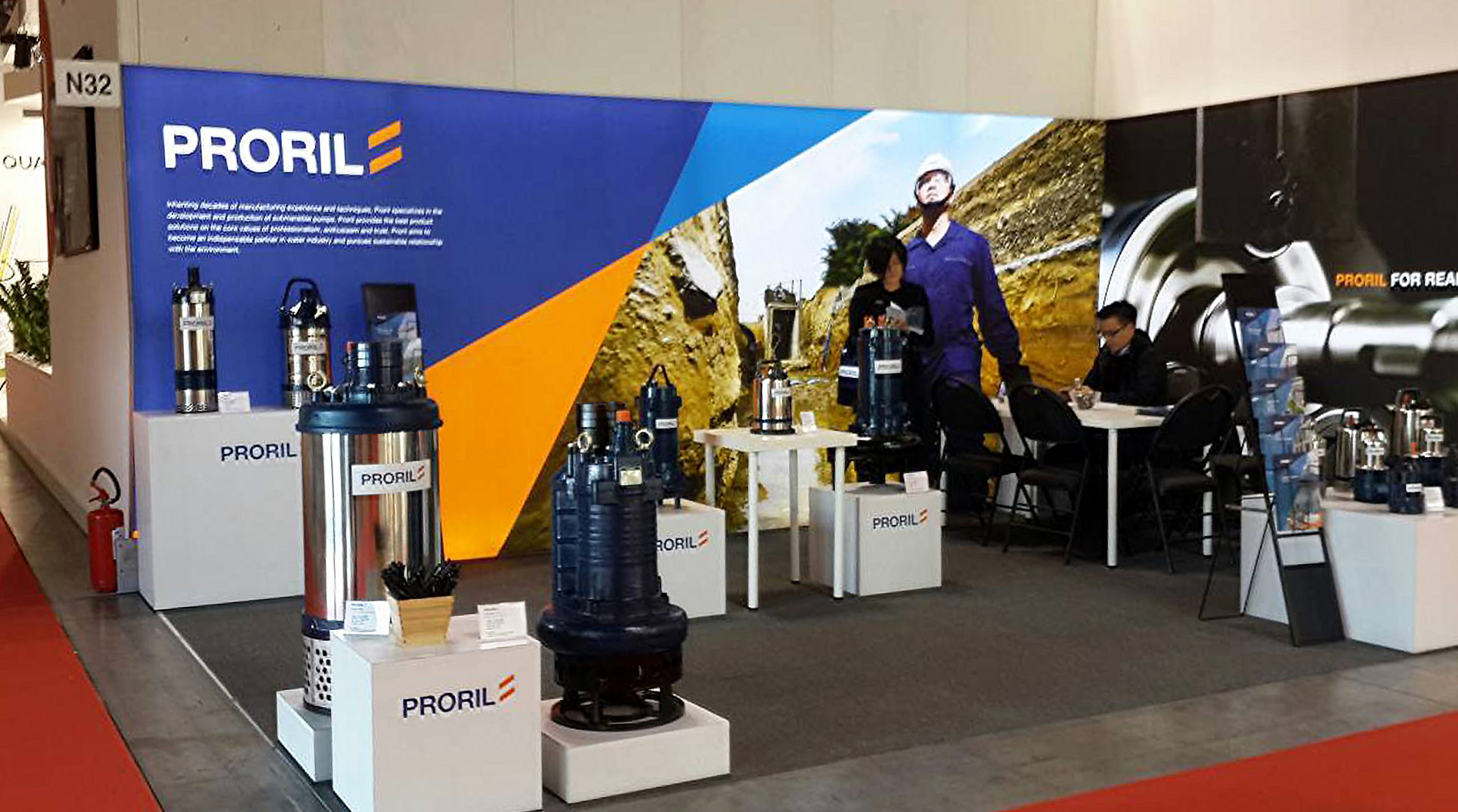
PRORIL is a local enterprise in Kaohsiung, Taiwan, specializing in the manufacture and production of submersible pumps. Previously, the company has specialized in OEM production, and the world's most famous pump brands are its customers, and its technology is well recognized. Proril assisted Fang Sheng E&E to develop its own brand, and renamed the brand Proril in English based on the two qualities of Professional and Reliable. In terms of corporate identity design, we took the bright sun and blue sky of Kaohsiung and established a blue and orange logo design that is robust and prominent and has been used in a series of product development to build a consistent Brand image. With the establishment of brand identity and image, Pro further assisted Fong Sheng E&M in developing product design, introducing the new brand design and spirit into the products, thus Fong Sheng E&M presented a highly consistent brand image and design language from brand to product.
Want to know more about PRORIL FANG SHENG MACHINERY>>