Insight
Why are Taiwan businesses in Shanghai losing ground? On the Importance of Brand Evolution

Shanghai's Huaihai Road is lined with fashion boutiques and large department stores, and is a popular place for many top shopping centers to compete with each other, but one of the most talked-about topics recently was the saddening loss of the Pacific Department Store Huaihai Road, a subsidiary of Taiwan's Far Eastern Department Store Group, which ended its business and withdrew from the battle. Why did this once popular and most successful Taiwanese business icon in China go from strength to strength in the space of 20 years? It is worthwhile for all Taiwanese enterprises, or those who are looking at the global market, to learn from the reasons behind the decline.
As early as 1997, the Pacific Department Store in Shanghai occupied the most elite location on Huaihai Road, and its initial opening was filled with crowds of people, setting off a new page of prosperity in the Huaihai Road commercial center, as well as being the Group's most fruitful indicator of the Group's revenue, and a good example of the success of all Taiwanese businessmen who have successfully entered the retail market in China.
However, in the face of the massive rise of China's e-commerce, coupled with the establishment of various new department stores around the neighborhood, the original red Pacific Department Store could not smell the atmosphere of brand reinvention, not only the space of the shopping mall appeared old, stationed in the counter brand is no longer attractive, and finally at the end of 2016 formally withdrew from the Shanghai Department Store Circle, became drowned in the fierce competition of the ten miles of foreign fields of yesterday's yellow flowers.
When Taiwan's traditional SMEs begin to try to enter the Chinese and overseas markets to compete with other global brands, they often lack a complete mindset of brand system and construction. Once faced with competition and challenges from all directions, they rush to respond with discounts, advertisements, and other tactics, which can easily fall into the predicament of hitting the bandwagon and running away, and seeing the trees but not the forest. Take Shanghai Pacific Department Store as an example, not only is its brand image and stores old, but it also lacks a clear brand positioning. Neighboring department stores, such as Hong Kong Plaza, focus on high-end brands, while K11, which is directly across the street, specializes in young, personalized, and strongly designed brands. In comparison, Pacific Department Store's brand positioning is awkward and unsuitable.
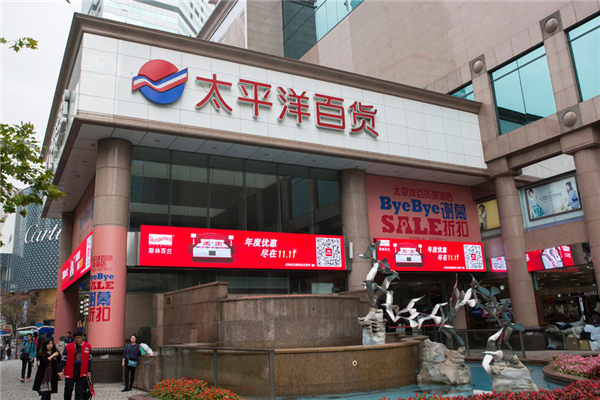 Pacific Department Store Shanghai
Pacific Department Store also tried to play the "Taiwan brand" in the later stage, trying to introduce many famous Taiwanese brands and related promotions, but like the "Taipei Style Street" in Shanghai at the end of last year, the main focus on "Taiwan" is no longer able to attract Shanghai people, who have a high degree of internationalization and difficult tastes. From the withdrawal of Pacific Department Store from Shanghai to the loss of attractiveness of the "Taiwan" brand, this is a big warning. Not only Taiwanese businessmen should be aware of this, but all brands, companies and even governments that want to enter the international market should look at this issue. The Taiwan brand should be re-created rather than continue to consume the profits it has accumulated in the past.
To address this issue, Process Pro suggests:
1. "Prioritization" of brand thinking: Before constructing a brand, do a good job of preliminary analysis and positioning, the brand has to face the challenges of the next five to ten years or even longer, and needs to strike a balance between the real challenges and the vision of development.
2. Brand building "systematization": After the strategy is clearly defined in the early stage, it must be systematically implemented and carried out. In the process of promotion, in addition to price, we should not forget to create value and invest in the future of the brand. All of this can be achieved through the systematization of the brand.
Insight