Insight
How can companies empower brand value through sustainability?

(Text: Yang Shuyan / General Manager of Process Pro Brand Taiwan)
Sustainable ESG is no longer an emerging issue in the modern world, with government agencies and businesses practicing it in their own ways. When "sustainability" becomes a social consensus, the development of enterprises is no longer an isolated individual behavior, but a deeper connection with the environment and society.
Despite the short-term impact of global volatility, sustainability remains a long-term trend driving brand premiums and corporate resilience. Sustainability is not a moral slogan, but a core strategy that has been upgraded to brand value and has become an important evaluation criterion for investors and consumers, affecting capital flow, sales performance and market share. Probrand helps companies embed ESG in their business models, optimize operations, and build strong ecosystems and supply chains by empowering consumers and helping partners transform.
The Value and Meaning of Sustainable Transformation
Sustainability transformation is not only a response to external expectations, but also an important way to create long-term brand value. When a brand recognizes sustainability as a core value and puts it into practice, it can create greater sustainable value through close collaboration with its supply chain partners, consumers and communities. And through the brand's sustainable behavior, consumers will develop a deeper sense of identity.
How brands are integrating sustainability into their products and services
It is important to realize that every brand can find its own path to sustainability based on its own characteristics. It's not about having a standardized process that is common to all companies, it's about looking back and seeing what your brand's core values are. Who is your customer base? What are the characteristics of your products? Then develop your own sustainability strategy.
A B2C brand from the UK LUSHKnown for its natural, handcrafted soaps and cosmetics, LUSH is committed to sustainability in every aspect of its products and offers a number of "naked" products that are made with natural, organic, fair-trade ingredients and are against animal testing. LUSH actively invests in ecologically diverse suppliers and farmers around the world.
LUSH's path to sustainability starts with the nature of its products, with waste reduction, ethical sourcing and active social engagement, in direct response to its customer base that values environmental protection and ethical consumption.

(Image source:LUSH)
And B2B brands Delta ElectronicsDelta Electronics, a leading provider of power management and energy-saving solutions, has a sustainability strategy that focuses on helping its corporate customers increase their competitiveness and reduce operational risks. In response to the trend of sustainability and the industry's demand for efficient energy management, Delta continues to develop high-efficiency products, such as power supplies and industrial automation systems, to help customers reduce energy consumption, lower costs, and comply with environmental regulations. In addition, we have introduced green building standards in our facilities, procured renewable energy, and established green supply chains with our suppliers in pursuit of sustainable development.
Delta's path to sustainability is based on leading-edge technologies and solutions that help business partners achieve their sustainability goals, thereby building long-term trust and partnerships in the industry supply chain.

(Image source:Delta Electronics Corporate Sustainability)
Three Key Strategies for Sustainable Rebranding
◼︎ Strategy #1: Internal reorganization to integrate sustainability into the core of the brand.
Brands need to re-examine their core values and take sustainability into consideration. By redefining the brand's sustainable positioning, establishing a sustainable mission, and integrating sustainability into product design or service processes, brands can build a sustainable image in the marketplace and establish a deep emotional connection with consumers. Sustainability is not just a marketing slogan, but a core spirit within the brand.
◼︎ Strategy 2: Expand sustainable communication and build brand recognition
Effectively communicate the concept of sustainability to consumers and leave a deep impression in their minds. It allows consumers to recognize the brand's sustainability efforts, which in turn creates an emotional connection.
◼︎ Strategy 3: Build a Sustainable Ecosystem and Create Shared Value
At the end of a brand's sustainable development, it usually establishes a sustainable ecosystem (supply chain management, partnership, community involvement, etc.) with suppliers, partners, and the community to jointly promote sustainable development. For example, in the case of a B2B brand, the concept of "shared value" allows the brand to create value for other stakeholders while pursuing its own sustainable development.
Differences in Sustainability Strategies between B2B and B2C Brands
As we learned in the previous paragraph, B2C and B2B brands have a different focus and impact on practicing sustainability.
In the case of B2C brands, the heart of the matter lies inEmpowering Consumers to Make More Sustainable Choices.The company's products have been designed to be more environmentally and socially friendly. By providing greener product design, transparent product information and actively advocating sustainability issues related to the industry, consumers are more likely to have access to environmentally and socially friendly products, and implicitly raise their awareness of sustainability.The sustainability empowerment of B2C brands is directly targeted at consumers, encouraging them to practice a more sustainable lifestyle in their daily consumption.
In contrast, B2B brands are more focused onEmpowering its corporate clients to achieve sustainable transformationThe company's mission is to help businesses reduce their environmental impacts and improve resource efficiency. Through the provision of specialized knowledge, technology, products and services, we directly help other business partners to reduce environmental impacts, improve resource efficiency, and comply with relevant sustainability standards and regulations. Examples include energy-saving equipment, renewable energy solutions, and sustainable supply chain management systems. In addition, B2B brands can also work in partnership to empower other suppliers to work together towards more sustainable production and operations.The sustainability enablement of B2B brands is an indirect but powerful contribution to the overall sustainability of the industry chain through their core business competencies.
It can be seen that B2C brands focus on enhancing consumers' sense of sustainability and their right to choose, and directly influence their lifestyles, while B2B brands focus on empowering their business partners with the ability to transform sustainably through professional knowledge and technology, and indirectly promote the sustainable development of the industry chain.
Next, we'd like to talk about what's important when doing Sustainable Rebranding.
Case Study: Q Burger
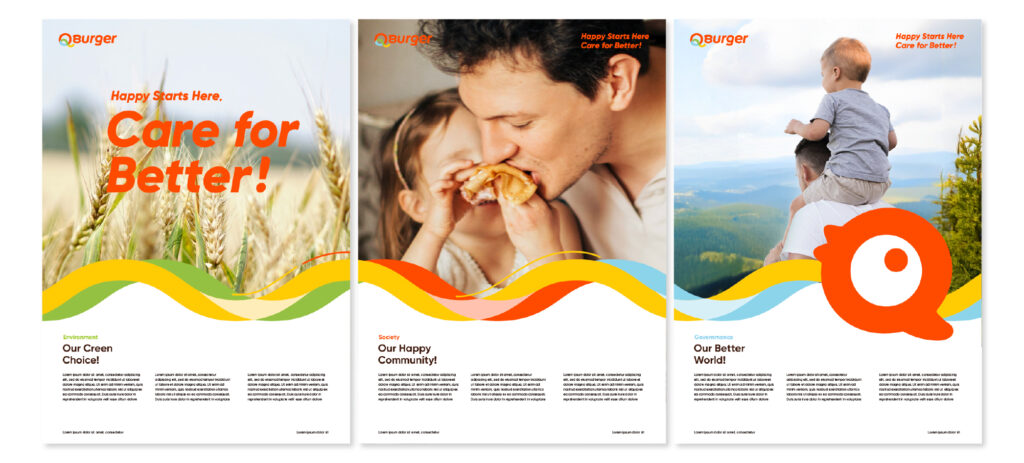
Under Pro's professional counseling.Q Burger In addition to actively embarking on the journey of sustainable rebranding in 2024, the company has also set up an ambitious vision of becoming "a happy practitioner leading sustainable food and beverage in Taiwan". They are determined to embed sustainability into their brand DNA by promoting green innovation through the use of technology, emphasizing the development of diverse talents, and actively collaborating with their supply chain partners. This sustainable rebranding project is not only a re-involution of Q Burger's corporate brand, but also an attempt to work hand-in-hand with stakeholders to transform the restaurant ecosystem into a sustainable operation, to build a restaurant brand that Taiwan can be proud of, and to let customers feel the sustainable goodwill and pride from Taiwan in every meal.

The symbiotic relationship and value of sustainability and branding
Sustainability has become a global consensus, and has risen from a moral responsibility to a core strategy for driving brand value. Today, ESG is not only a key indicator for investors to evaluate companies, directly influencing capital flows and investment decisions, but also deeply affecting consumer choices, determining market share and sales performance. Instead of treating sustainability as a PR exercise, leading brands are deeply rooted in a business model that optimizes operations, reduces costs and creates opportunities. By empowering consumers to make responsible choices and helping partners to transform sustainability, brands can build strong ecosystems that improve supply chain efficiency, reduce risk and increase brand loyalty.
While uncertainties such as changes in the world (e.g. Trump's policies) may affect short-term progress, the market's long-term trend towards sustainability remains unchanged. A clear commitment to sustainability directly translates into a higher brand premium and a more stable share price, and is seen as key to corporate resilience and long-term competitiveness.
Therefore, strategic sustainable rebranding not only conveys brand promise and wins recognition, but also expands market influence and enhances profitability, ultimately realizing symbiosis and co-prosperity between the brand and the environment and society, and establishing a long-term leading edge in the fierce market competition. In the face of changes, brands should take practical actions to adhere to the original spirit of sustainability and build competitive barriers that are difficult to replicate in order to continue to lead the market.